What’s next for Nepal after ‘Gen Z’ protests forced its prime minister to quit?

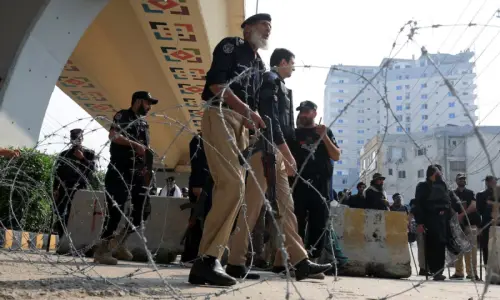
Nepal was plunged into political uncertainty after its prime minister resigned on Tuesday following widespread anti-corruption protests, triggered by a social media ban, that killed at least 19 people.
As the poor Himalayan nation once again stands at a crossroads, here is a look at what could lie ahead:
What is the immediate next step?
The army has asked protesters to take part in talks to reach a solution.
With the protesters — most of them young people belonging to “Generation Z”, implying they were born between 1997 and 2012 — having no single leader, however, it is unclear exactly who authorities can talk to.
“Gen Z should set up a negotiation team,” constitutional expert and former Supreme Court judge Balaram K.C. said, adding that the president should then hold talks with the team and others, including civil society members and the army.
What does the constitution say?
Under Nepal’s 2015 constitution, a successor must be appointed from the party that has a majority in parliament.
If no party has a majority, the president appoints a member able to secure one. They must then win a confidence vote within 30 days.
Failing this, any member claiming to have the numbers may be appointed, but if they cannot win a confidence vote the house may be dissolved and an election held.
With leaders of major political parties discredited in the eyes of the protesters, and many in hiding, it remains unclear whether protesters will accept this process.
Is an interim government possible?
While the constitution does not mention an interim government, experts have suggested that constitutional provisions be set aside temporarily for the creation of one acceptable to representatives of the protesters.
“Such a government can pursue the agenda for change that Gen Z want and also hold elections for a new parliament within six months,” constitutional expert Bipin Adhikari said, adding that such a government should have wide representation.
Who is ‘Gen Z’ likely to favour?
Among those likely to be favoured by protesters is Balendra Shah, 35, a rapper and music composer elected mayor of Kathmandu in 2022, who is popular among the youth because of his efforts to clean up the city.
Another possible contender is Rabi Lamichhane, a former television journalist who entered politics in 2022, creating his Rastriya Swatantra Party.
Local media reported that protesters broke Lamichhane out of prison on Tuesday, where he was awaiting trial for alleged misuse of funds.
Can a new constitution be drafted?
Nepal abolished its monarchy in 2008 and adopted a new constitution in 2015, despite protests against the charter.
Media reports say the protesters are also seeking a rewriting of the constitution. The charter permits amendments, but they have to be approved by parliament.