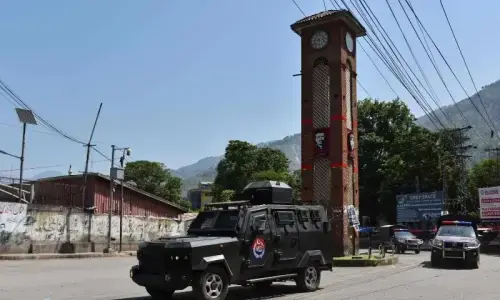
Rescuers scour debris as toll from occupied Kashmir flood rises to 60


 0
0
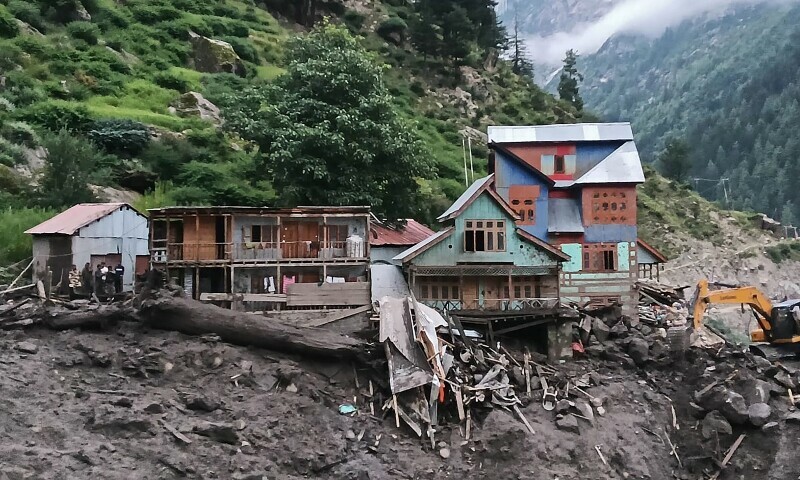
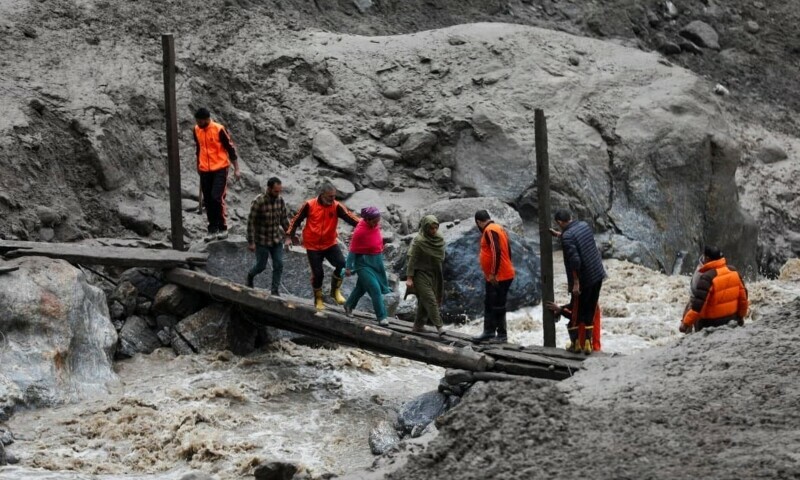

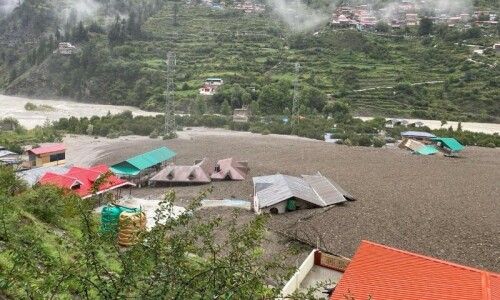
Rescue teams on Friday dug through mud searching for victims, a day after the latest deadly flood to crash through a village in India-occupied Kashmir’s Kishtwar district killed at least 60 people.
Dozens more are missing, including Hindu pilgrims who were visiting a shrine, after torrents of water and mud driven by intense rain tore through the village in the Himalayan region.
Officials said a large makeshift kitchen in Chisoti village, where more than 100 pilgrims were completely washed away by what Chief Minister Omar Abdullah reported was a sudden “cloudburst” rain storm.
Heavy earthmovers were brought to the disaster area overnight to dig through deep mud, huge boulders and rubble that the flood brought down the mountainside.
The army’s White Knight Corps said its troops, “braving the harsh weather and rugged terrain, are engaged in evacuation of injured”.
Emergency kit, including ropes and digging tools, were being brought to the disaster site, with the army supporting other rescue teams.
One survivor told the Press Trust of India news agency that he had heard a “big blast” when the wall of water hit the settlement. “We thought it was an earthquake”, the shocked eyewitness said, who did not give his name.
Mohammad Irshad, a top disaster management official, told AFP today that “60 people are recorded dead”, with 80 people unaccounted for. “The search for the missing has intensified,” Irshad told AFP.
Around 50 severely injured people have been taken to hospitals.
Floods and landslides are common during the June-September monsoon season, but experts say climate change, coupled with poorly planned development, is increasing their frequency, severity and impact.
Floods on August 5 overwhelmed the Himalayan town of Dharali in India’s Uttarakhand state and buried it in mud. The likely death toll from that disaster is more than 70 but has yet to be confirmed.
The UN’s World Meteorological Organisation said last year that increasingly intense floods and droughts are a “distress signal” of what is to come as climate change makes the planet’s water cycle ever more unpredictable.
Roads had already been damaged by days of heavy storms. The area lies more than 200 kilometres by road from the region’s main city Srinagar.
Prime Minister Narendra Modi addressed the spate of disasters in his Independence Day speech in New Delhi today.
“In the past few days, we have been facing natural disasters, landslides, cloudbursts, and many other calamities”, Modi said in his public address. “Our sympathies are with the affected people. State governments and the central government are working together with full strength.”