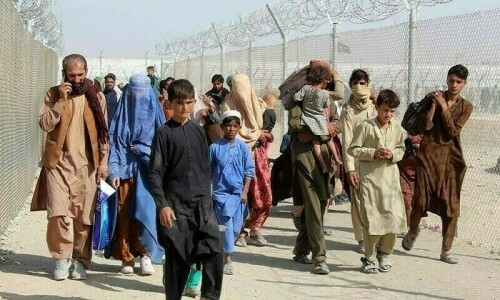
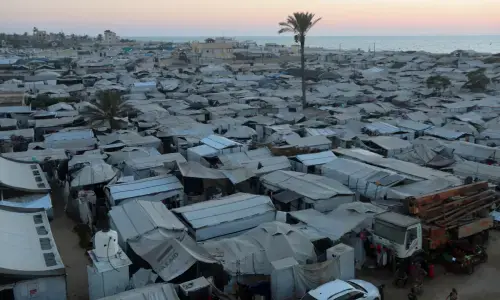
Pakistan says it has expelled more than a million Afghans in the past two years, yet many have quickly attempted to return — preferring to take their chances dodging the law than struggle for existence in a homeland some had never even seen before.
“Going back there would be sentencing my family to death,” said Hayatullah, a 46-year-old Afghan deported via the Torkham border crossing in Khyber Pakhtunkhwa in early 2024.
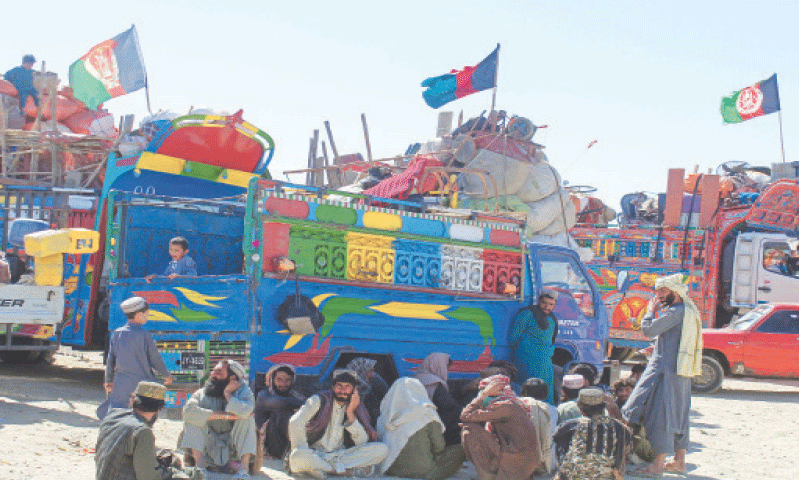
Since April and a renewed deportation drive, some 200,000 Afghans have spilled over the two main border crossings from Pakistan, entering on trucks loaded with hastily packed belongings.
But they carry little hope of starting over in the impoverished country, where girls are banned from school after the primary level.
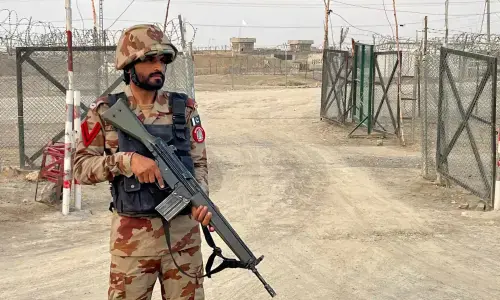
Hayatullah, a pseudonym, returned to Pakistan a month after being deported, travelling around 800 kilometres (500 miles) south to the Chaman border crossing in Balochistan, because for him, life in Afghanistan “had come to a standstill”.
He paid a bribe to cross the Chaman frontier, “like all the day labourers who regularly travel across the border to work on the other side”.
His wife and three children — including daughters, aged 16 and 18, who would be denied education in Afghanistan — had managed to avoid arrest and deportation.
Relative security
Hayatullah moved the family to Peshawar. “Compared to Islamabad, the police here don’t harass us as much,” he said.
Samad Khan, a 38-year-old Afghan who also spoke using a pseudonym, also chose to relocate his family to Peshawar.
Born in Lahore, he set foot in Afghanistan for the first time on April 22 — the day he was deported.
“We have no relatives in Afghanistan, and there’s no sign of life. There’s no work, no income, and the Taliban are extremely strict,” he said.
At first, he tried to find work in a country where 85 per cent of the population lives on less than one dollar a day, but after a few weeks, he instead found a way back to Pakistan.
“I paid Rs50,000 to an Afghan truck driver,” he said, using one of his Pakistani employees’ ID cards to cross the border.
He rushed back to Lahore to bundle his belongings and wife and two children — who had been left behind — into a vehicle, and moved to Peshawar.
“I started a second-hand shoe business with the support of a friend. The police here don’t harass us like they do in Lahore, and the overall environment is much better,” he told AFP.
‘Challenging’ reintegration
It’s hard to say how many Afghans have returned, as data is scarce.
Government sources claim that hundreds of thousands of Afghans are already back and settled in KP — figures that cannot be independently verified.
Migrant rights defenders in Pakistan say they’ve heard of such returns, but insist the numbers are limited.
The International Organisation for Migration (IOM) told AFP that “some Afghans who were returned have subsequently chosen to remigrate to Pakistan”.
“When individuals return to areas with limited access to basic services and livelihood opportunities, reintegration can be challenging,” said Avand Azeez Agha, communications officer for the UN agency in Kabul.
They might move on again, he said, “as people seek sustainable opportunities”.