UN slashes global aid plan over ‘deepest funding cuts ever’


 0
0

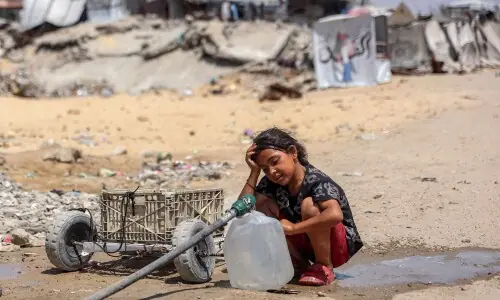
The United Nations said on Monday that it was drastically scaling back its global humanitarian aid plans due to the “deepest funding cuts ever” — leaving tens of millions of people facing dire straits.
The UN’s Office for the Coordination of Humanitarian Affairs (OCHA) said it was seeking $29 billion in funding for 2025 compared to the $44bn originally requested in December, in a “hyper-prioritised” appeal.
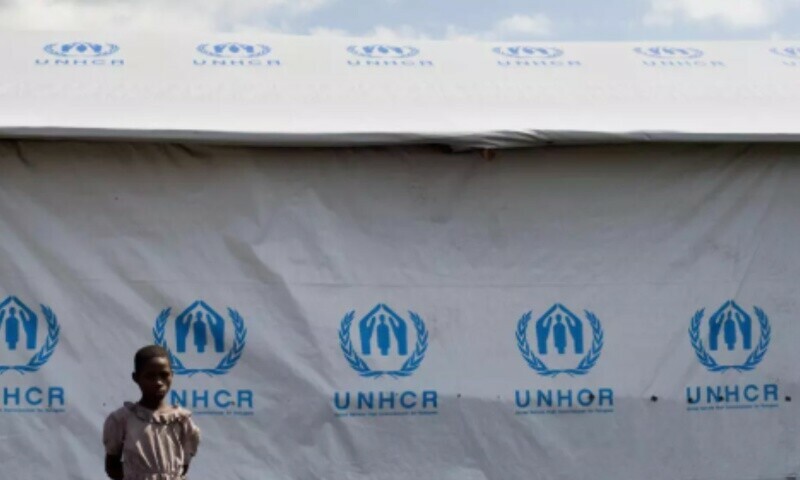
UNHCR, the UN refugee agency, said later on Monday that it would have to terminate 3,500 jobs, cutting 30 per cent of its workforce costs, as aid funding evaporates.
Since US President Donald Trump returned to office in January, the United States — the world’s top donor — has heavily slashed foreign aid, causing havoc in the humanitarian sector across the globe.
Drastic US funding cuts have had dramatic consequences for emergency aid, vaccination campaigns and the distribution of drugs to fight AIDS.
Other major donor countries have also cut back their contributions in the face of an uncertain economic outlook.
“Brutal funding cuts leave us with brutal choices,” OCHA chief Tom Fletcher said in a statement.
“All we ask is one per cent of what you chose to spend last year on war.”
‘Cruel’, ‘heartbreaking’
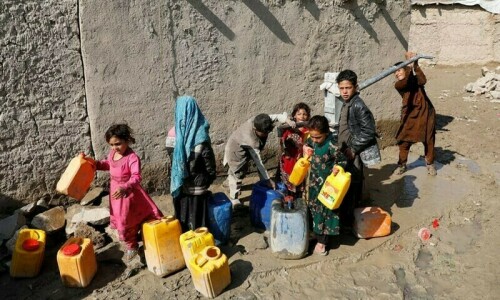
In late April, while visiting a hospital in Kandahar in Afghanistan, Fletcher warned: “The impact of aid cuts is that millions die.”
Almost halfway through 2025, the UN has received only $5.6bn out of the $44bn originally sought for this year — a mere 13pc.
In total, the original plan covered more than 70 countries and aimed to assist nearly 190 million vulnerable people.
Even so, that plan acknowledged that there were 115 million people the UN would not be able to reach.
“We have been forced into a triage of human survival,” Fletcher said on Monday. The mathematics “is cruel, and the consequences are heartbreaking”.
“Too many people will not get the support they need, but we will save as many lives as we can with the resources we are given,” he said.
Aid will now be directed so that it can “reach the people and places facing the most urgent needs”, with those in “extreme or catastrophic conditions” as the starting point, said Fletcher.
‘Red alert’
Fletcher’s call came as the UN’s Food and Agriculture Organisation (FAO) and World Food Programme (WFP) issued a joint early warning report identifying worsening hunger in 13 hotspots.
Sudan, the Palestinian territories, South Sudan, Haiti and Mali have communities “already facing famine, at risk of famine or confronted with catastrophic levels of acute food insecurity”, said the report.
“The devastating crises are being exacerbated by growing access constraints and critical funding shortfalls,” it said.
Yemen, the Democratic Republic of Congo, Myanmar and Nigeria are now considered of very high concern and requiring urgent attention to save lives, it added, with Burkina Faso, Chad, Somalia and Syria the other hotspots.
“This report is a red alert,” said WFP chief Cindy McCain. “Without funding and access, we cannot save lives. Urgent, sustained investment in food assistance and recovery support is crucial as the window to avert yet more devastating hunger is closing fast.”
Refugee agency slashes jobs
Washington previously made up more than 40pc of the UNHCR refugee agency’s budget — $2bn per year, the agency’s chief Filippo Grandi told the UN Security Council in April.
“In light of difficult financial realities, UNHCR is compelled to reduce the overall scale of its operations,” Grandi said in Monday’s statement.
UNHCR estimates that it will end 2025 with available funding at about the same level as a decade ago — despite the number of people forced to flee their homes having nearly doubled over the same period to more than 122 million.
“In total, approximately 3,500 staff positions will be discontinued,” the statement said, while hundreds of temporary workers have gone already.
“Overall, UNHCR estimates a global reduction in staffing costs of around 30pc,” the agency said.