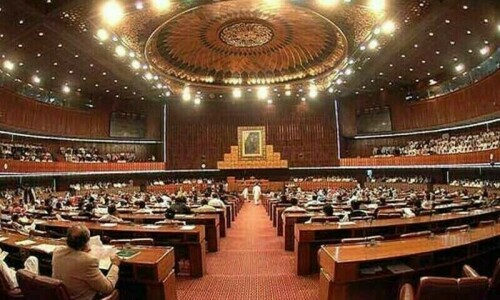
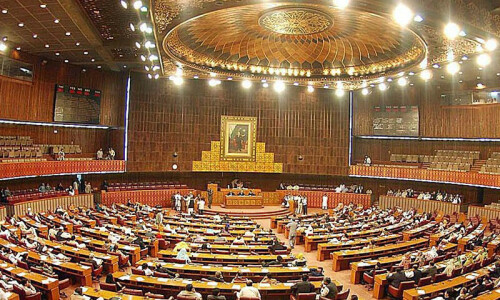
WHAT an exceptional legislature we have for these extraordinary times. At least that is the impression one gets from the one-year performance report of the 16th National Assembly compiled by Pildat, a think tank which conducts periodic analyses of legislative activities.
According to its findings, the 16th National Assembly managed to pass more laws in its first year despite convening for fewer days and hours than the preceding Assembly. In fact, the 47 laws it passed far surpassed almost all previous assemblies’ first-year output, and were almost “seven times the average number of bills passed during the first year by the four previous assemblies,” according to the Pildat president.
However, the Assembly’s increased output should not be mistaken for enhanced efficiency or improved conduct. The Pildat president regrets that “Most of the laws were hurriedly passed without any meaningful debate in the standing committees or within the full House amid strong protests […]”.
A cursory look at some of the laws is enough to bolster the impression that parliament has been acting merely as a rubber stamp for self-serving laws. For example, the 16th National Assembly enacted three amendments to the Elections Act of 2017, of which at least two are publicly perceived to have been aimed at, firstly, denying opposition candidates a fair chance at challenging their defeat in the general election, and, secondly, to prevent reserved seats from being given to the main opposition party.
Other ‘accomplishments’ included amendments to Peca, which the media fraternity, lawyers, and civil society are still protesting, as well as the decidedly anti-democratic Peaceful Assembly and Public Order Act, which has rendered all public meetings and political rallies in Islamabad subject to the local administration’s whims and wishes.
Then, of course, there’s the 26th Amendment, through which the judiciary has been brought to heel, and the Members of Parliament (Salaries and Allowances) (Amendment) Act, which has increased parliamentarians’ salary from Rs188,000 to Rs519,000 per month. Despite all these ‘landmark achievements’, the government is still not done improving its own lot at the country’s expense.
On the eve of the Assembly’s first anniversary, it more than doubled the size of the federal cabinet. As to why this was necessary, there is no polite answer.
Considering that the prime minister managed to achieve ‘so much’ in his first year with just 21 ministers, why did he need 24 more in his cabinet? The state must now find the resources to pay for their salaries, perks and privileges despite the dire state of the country’s finances.
It is quite disappointing that both the government and the Assembly remained completely unbothered by public perceptions in their first year. Their disdain damaged the image of parliament and reduced its standing in the eyes of the people.
Published in Dawn, March 1st, 2025