ISLAMABAD: The current National Assembly passed more laws in its first year than its predecessor, despite meeting for fewer hours, a clear indication that legislation was rushed through parliament.
Some of the laws passed during the first year of the 16th National Assembly have far-reaching implications, like the 26th Constitutional Amendment and the Prevention of Electronic Crimes (Amendment) Act, 2025.
In its annual analysis of the legislature, the Pakistan Institute for Legislative Development and Transparency (Pildat) noted that the 16th NA was convened for fewer working days and hours compared to the previous one.
Since the inaugural session on February 29, 2024, 93 sittings were convened with 212 working hours.
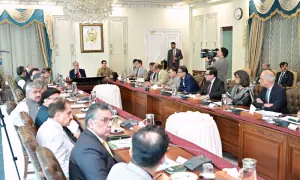
Pildat analysis shows bills were rushed through lower house without much discussion; PM attended only 17 out of 93 sessions
The 15th National Assembly, in its first year, held 96 sittings and met for 297 hours.
Despite a considerable reduction in working hours, the 16th NA passed 47 bills in its first year, up by 370pc compared to the 10 bills passed during the first year of the 15th NA.
Several laws were “hurried for passage” without review by MNAs and without being referred to relevant standing committees, Pildat noted.
The existing government relied heavily on presidential ordinances for legislation, as 16 ordinances were laid in the NA for approval, compared to seven in the 15th and 12 in the 14th NA.
This reflected a “growing trend toward executive-driven legislation”.
Attendance
Pildat also found that the trend of scant attendance by prime ministers remained consistent in the new government as well.
Prime Minister Shehbaz Sharif attended only 18 per cent of the total sittings — 17 out of the total 93 sittings.
His predecessor, Imran Khan, attended only 18 out of 96 sittings in the first year of the 15th National Assembly.
Before him, PM Nawaz Sharif attended only seven out of 103 sittings in the first year.
In comparison to PM Shehbaz, Leader of the Opposition Omar Ayub Khan attended 67pc of the sittings.
Mr Khan was also the most vocal MNA, with a recorded talk time of 13 hours and 28 minutes.
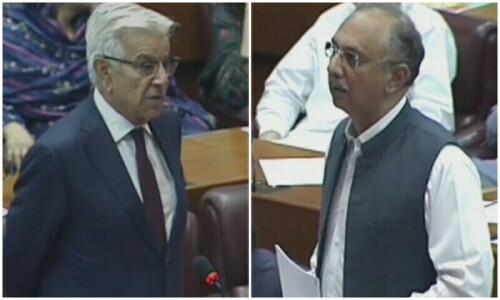
From the treasury side, Khawaja Asif, the minister for defence, spoke for 5 hours and 30 minutes.
Other MNAs with the most talk time were Bilawal Bhutto-Zardari, Attaullah Tarar and Maulana Fazlur Rahman. The overall attendance of MNAs declined to 66pc on average from 73pc during the previous assembly.
However, Pildat said the existing system makes no distinction between a member who attended the sittings for five minutes and someone present for five hours.
The cost paid by taxpayers for each MNA to attend these sittings stood at Rs37.9m.
The per-hour cost of a session in the first year of the 16th NA stood at Rs60.08m with an average budget per sitting of Rs136.96 million.
Other issues
The Pildat analysis highlighted that the current assembly violated its rule on the formation of standing committees.
Rule 200 of the Rules of Procedure and Conduct of Business in the National Assembly dictates that the standing committees must be elected within 30 days of the election of the prime minister.
PM Shehbaz was elected on April 3, 2024. However, committees were not made functional until May 17, well beyond the one-month deadline.
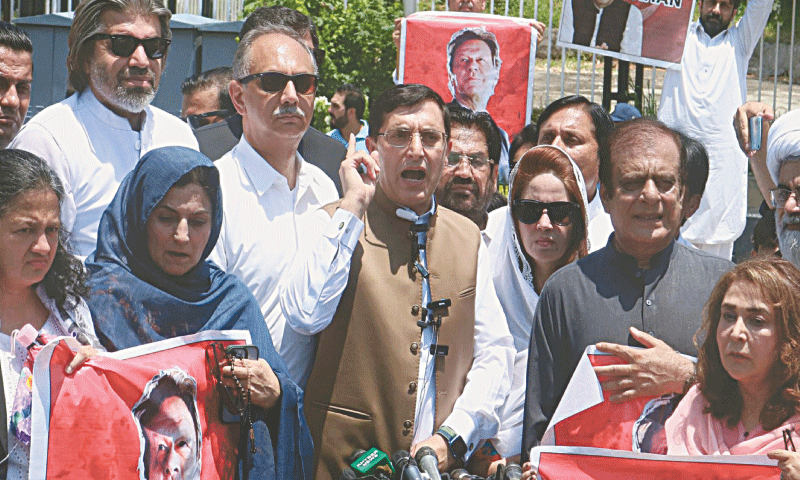
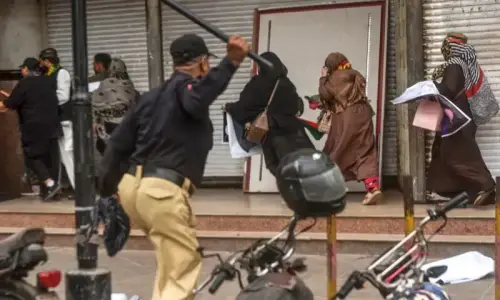
Parliamentary sanctity was also violated when plainclothes men entered the Parliament House and detained at least 10 opposition MNAs on September 10, 2024.
Those detained included Sher Afzal Marwat, Malik Amir Dogar and Zain Qureshi.
“The use of force within the Parliament House represents a significant challenge to the supremacy of the Parliament, raising broader questions about the state of democracy in Pakistan,” Pildat said. The speeches of opposition members were also censored by the state-run Pakistan Television.
Published in Dawn, February 28th, 2025