Mediation dubbed solution to prolonged litigation, Justice Shah tells LHC Bar


 0
0


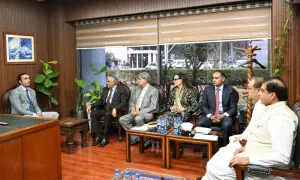
LAHORE: Justice Syed Mansoor Ali Shah, the senior puisne judge of the Supreme Court, on Saturday says the people who are fed up with prolonged litigation can find solution to their problems at the Alternate Dispute Resolution (ADR) system.
“Arbitration and mediation should be encouraged as adopting such systems has become essential,” he asserted speaking at a conference on ADR organised at the Lahore High Court Bar Association.
Justice Shah said with the new ADR law, the traditional courts would step aside and alternative methods would have to be adopted to resolve the people’s issues. He highlighted that there were currently only 13 judges for a million people, which showed the judges shortage and the challenges inherent in the judicial system.
Justice Shah stressed the need to abandon old practices, saying important cases were delayed due to the sheer volume of cases, pointing out that in 2023, 1.7 million cases were decided by the courts across Pakistan yet many remained pending. He said the alternative pathways must be created for litigants and expressed regret that the delays in case resolutions were often caused by lawyers and systemic issues like strikes.
Justice Shah suggested giving litigants the right to initially opt for mediation. He highlighted the significant differences between the judicial and mediation systems, stating that mediation would reduce costs and resolve more issues. He assured the lawyers that the ADR system would not create financial problems for them.
Under this approach, he said, the cases could be resolved in a single day.
Justice Shah noted that the ADR system aligns with the cultural values of Pakistan, ensuring that disputes were resolved amicably and without creating societal issues.
LHC judge, Justice Jawad Hassan said, “We now need to change the mindset of lawyers”.
He said the reconciliation could happen within two hours or two days.
The judge pointed out that the Supreme Court had formed a task force emphasizing the need to eliminate backlogs of the cases. He stated that Pakistan had laws for reconciliation but the implementation had been hindered due to public discretion.
Justice Asim Hafeez and Justice Sultan Tanvir Ahmed also spoke at the occasion.
Published in Dawn, January 26th, 2025