AS the state engages with the Afghan Taliban regime diplomatically, more forceful measures are also being employed to hit terrorist targets inside Afghanistan.
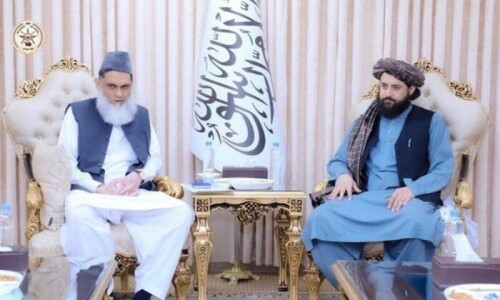
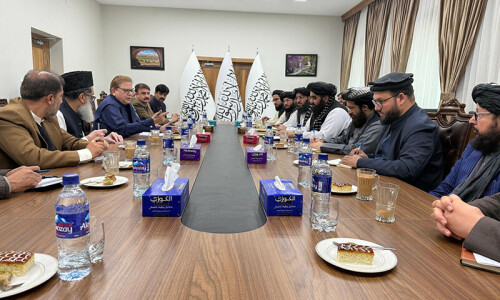
Perhaps this seemingly paradoxical approach has been employed to send the message to Kabul that while Islamabad is ready to talk, it is also willing to strike at anti-Pakistan terrorists inside Afghanistan if the Taliban fail to act. This appeared to be the gist of the state’s messaging after Pakistan’s special representative for Afghanistan met senior Afghan Taliban ministers on Tuesday, and later that night Pakistani jets bombed — as per security sources — TTP camps in Paktika.
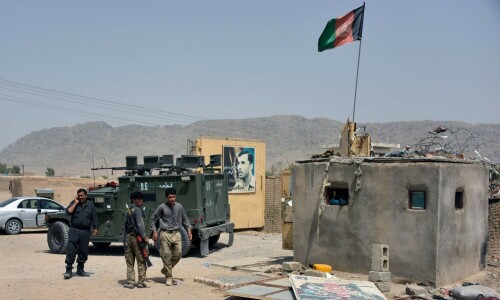
Conducting unilateral strikes is problematic, as it can spark a spiral of hostilities. But the state has communicated to the Afghan Taliban multiple times the need to rein in terrorist groups based on Afghan soil, without any concrete measures being taken by Kabul. Just last week, TTP terrorists attacked a post in South Waziristan causing the martyrdom of at least 16 troops. There have been hundreds of attacks conducted by militant groups in the outgoing year; many of these are believed to have been carried out by terrorists operating from bases located in Afghanistan.
Therefore, the military option has been employed by the government apparently to signal its unhappiness over the state of affairs. This is the second time in 2024 that Pakistan directly hit reported militant sanctuaries in Afghanistan, with the first strike occurring in March.
Yet the military option is fraught with risks, and should be a last resort in order to prevent a conflagration with Afghanistan. The state has done the right thing by re-engaging with the Afghan Taliban. Reports indicate that the Taliban government has started shifting militants away from the Pakistan border. Islamabad needs to encourage this process, so that malign actors are relocated far from our frontiers.
Diplomatic engagement should continue, with emphasis on the fact that cordial ties cannot develop if anti-Pakistan groups continue to operate with freedom from Afghanistan. Pakistan should also continue to coordinate with other regional states to send a common message to Kabul regarding the need for greater counterterrorism efforts by the Afghan Taliban.
Secondly, we must do more to protect our own frontiers. While it is expected of neighbours not to let their soil be used against us, protecting our frontiers is primarily our own responsibility. There needs to be closer monitoring of our borders to ensure that terrorists are not able to sneak in. Moreover, stricter action must be taken to ensure terrorist groups are not able to establish a foothold in Balochistan and KP, particularly in the former Fata region. Countering armed groups will continue to be a major challenge in 2025, and the state must proactively meet this threat in order to establish lasting peace.
Published in Dawn, December 26th, 2024