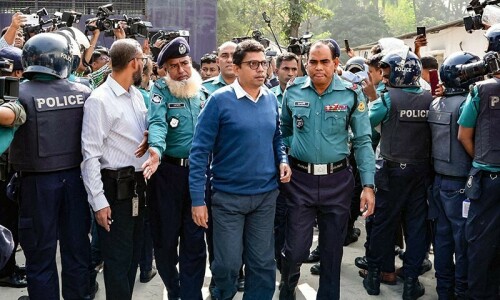
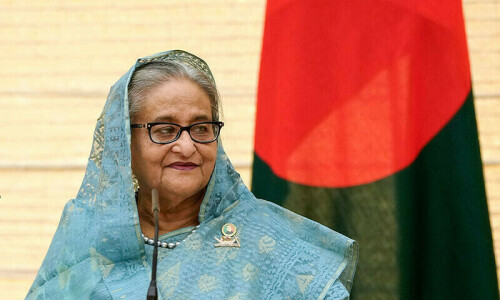
A Bangladeshi tribunal banned broadcasts of “hate speech” by autocratic ex-premier Sheikh Hasina on Thursday, weeks after indicting her over the killing of protesters during the August revolution that ousted her.
Bangladesh’s International Crimes Tribunal (ICT) is investigating Hasina for “mass murder”, among other charges, during the weeks of unrest that forced her to flee the country for neighbouring India.
“Sheikh Hasina is accused in several cases currently under investigation by the tribunal,” prosecutor Golam Monawar Hossain Tamim told reporters.
“We sought a ban on disseminating her hate speech as it could hinder legal proceedings or intimidate witnesses and victims,” he said, confirming the ICT had agreed to enact the ban.
“If her speeches continue to circulate, it will become difficult to bring witnesses to the tribunal.”
It was not immediately clear what authority would determine which speeches by Hasina qualified as hateful or how the order would be enforced.
The decision came days after Hasina addressed a gathering of supporters in New York by videolink, accusing Bangladesh’s interim leader Muhammad Yunus of “mass murder”.
Hundreds of people were killed in the weeks prior to Hasina’s ouster, most by police fire.
Scores more died in the hours after her toppling, largely in reprisal killings against prominent supporters of her Awami League party.
The ICT was set up by Hasina in 2010 to probe atrocities during the country’s 1971 war of independence against Pakistan.
Over the following years it sentenced numerous prominent political opponents to death.
The court was regularly criticised by rights groups for not meeting proper trial standards and became widely seen as a means for Hasina to eliminate her rivals.
The interim government led by Yunus, winner of the 2006 Nobel Peace Prize, has vowed to push for Hasina’s extradition from India to be tried by the tribunal.