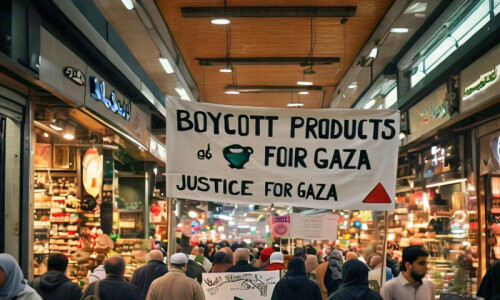
PAKISTAN has a long history of showing solidarity with the Palestinian people — at both the state and popular levels — for religious and cultural reasons.
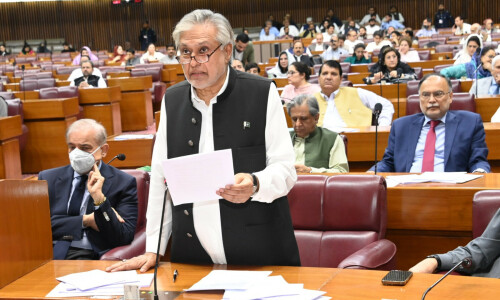
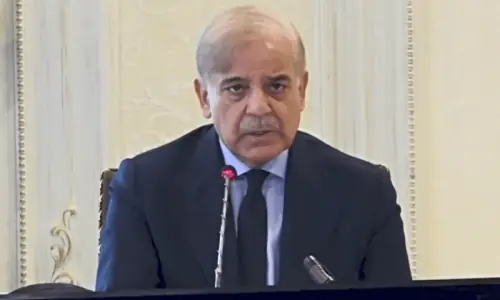
The support for the occupied Arab land ranges from Islamist parties to those on the left of the political spectrum. Therefore, it was not unusual to see nearly all main political forces, except the PTI, attend a multiparty conference on Monday, the one-year anniversary of the ‘Al Aqsa Flood’ operation, to highlight the ongoing Israeli atrocities in Gaza. The PTI was reportedly invited to attend the moot, organised by the president and the prime minister, but failed to send its representatives.
Among other suggestions, the MPC called for an immediate ceasefire and holding of an emergency OIC summit. Though largely symbolic, the moot at least sent the message that nearly all political forces in Pakistan stand by the oppressed people of Palestine. References to the Israeli aggression in Lebanon were also made, while the MPC upheld Kashmir’s right to self-determination.
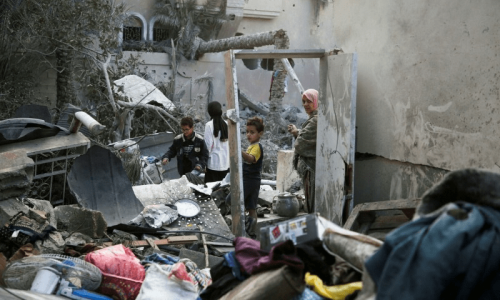
Of course, there are limits to what Pakistan can do, apart from expressing moral and diplomatic support for the Palestinian people. The state as well as private charities have also sent shipments of aid for the war-ravaged population of Gaza. Yet it must be observed that while the OIC has held several meetings after the Oct 7 events last year, to date the Muslim bloc has failed to adopt a comprehensive policy to help end Israel’s genocidal war on Gaza.
Simply put, if summitry and noble declarations were enough, Palestine would have been liberated a long time ago. But the Muslim world has failed the people of Gaza, and is now failing the people of Lebanon because there is no will amongst most Muslim ruling elites to take concrete actions to penalise Israel and those financing and supplying Tel Aviv’s war machine. The Arab ‘oil weapon’ deployed in the 1970s, for example, seems like an event from the distant past.
It is also a matter of concern that the PTI did not attend the Palestine MPC. When meetings are held to discuss vital national issues — security, the economy, or in this case, solidarity with an oppressed population — internal political differences should be put aside and a spirit of unity must be displayed.
Indeed, there is acute mistrust between the ruling party and the PTI, but the latter should have joined the other political forces in speaking up for Palestine with one voice. Moreover, such meetings present opportunities where the ice can be broken, and openings can be provided for dialogue. The only democratic way out of the current political impasse is through negotiations — not through nihilistic confrontations. While one opportunity to talk may have been missed, it is hoped both sides clinch the next one, whenever it arises.
Published in Dawn, October 9th, 2024