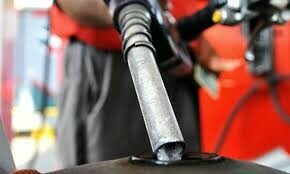
ISLAMABAD: The country’s oil import bill surged 23 per cent in the first two months (July and August) of the current fiscal year compared to the same period a year ago, according to data released by the Pakistan Bureau of Statistics (PBS) on Monday.
The data showed that imports across all major categories — including petroleum products, consumer durables and raw materials — grew during the two months.
The overall import bill grew by 7.2pc year-on-year, reaching $8.75 billion during July-August, driven by increased imports of petroleum crude, machinery and automobiles.
A breakdown of the petroleum sector shows that while overall petroleum group imports dropped by 22.7pc to $2.66bn, crude oil imports surged by 107pc in value. In terms of volume, petroleum crude imports increased by 118pc, with 1.66 million tonnes imported compared to 762,252 tonnes during the same period last year.
Overall bill jumps 7.2pc to $8.75bn during two months
On the contrary, the cost of petroleum product imports fell by 13.4pc, with a 10.2pc decline in quantity, bringing the total volume to 1.43m tonnes.
In the energy sector, liquefied natural gas (LNG) imports increased by 10.7pc, while liquefied petroleum gas (LPG) imports surged by 67pc.
Machinery imports also rose by 15pc to $1.30bn compared to $1.13bn last year, led by a 38.6pc increase in textile machinery imports, a 76.3pc surge in electrical machinery, and a 38pc jump in construction machinery.
However, the telecommunication group witnessed a 7.7pc decline, largely due to a 19.8pc drop in mobile phone imports, attributed to higher taxes on handsets.
The transport sector saw a 13.5pc increase in imports, driven by both completely knocked down (CKD)/semi knocked down (SKD) and completely built units (CBU) of vehicles.
In agriculture, fertiliser imports skyrocketed by 621pc year-on-year in the first two months, while medicinal product imports grew by 11pc. However, insecticide imports fell by 32pc and plastic material imports dropped by 10.9pc.
The metal sector recorded a modest growth of 3.1pc, primarily due to higher imports of iron and steel scrap.
Published in Dawn, September 17th, 2024