Iran conservatives secure bulk of seats in elections


 0
0
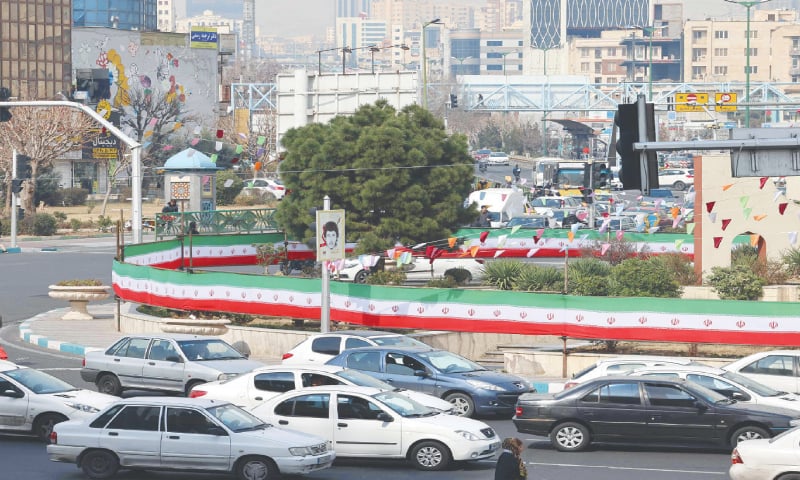
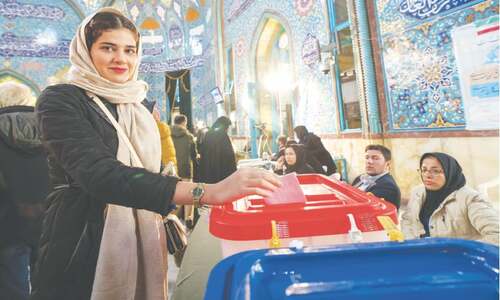
TEHRAN: Iranian conservatives secured the bulk of seats in elections for a key clerical body and the national legislature, local media reported on Sunday, estimating a record low turnout.
Authorities were still counting ballots two days after Friday’s vote for members of parliament and for the Assembly of Experts, which selects the Islamic republic’s supreme leader. The election, in which a vetting process barred many hopefuls from running, took place with Iran suffering a severe economic crisis deepened by international sanctions.
The official IRNA news agency put the turnout at around “41 per cent” among 61 million eligible voters. No official figure had yet been announced.
The reformist daily Shargh predicted the next parliament would be “in the hands of radical conservatives” who “took advantage of the opportunity created by the low participation”.
Two days after Friday’s vote for members of parliament, authorities still counting ballots
Etemad, another reformist newspaper, reported that turnout was lower in Iran’s bigger cities than its smaller ones, and that there was a significant number of “blank votes”.
Fears of a low turnout had swirled ahead of the elections after a state TV poll found more than half of respondents were indifferent about the elections.
‘Wake-up call’
Turnout in the capital Tehran was around 25pc, according to Iranian
media, which reported that ultra-conservative candidates secured 12 of the 30 parliament seats alloted to the capital.
Some seats have gone to a second round, which will take place in either April or May, IRNA reported.
The pro-government Iran Daily said authorities should see the low turnout as a “wake-up call and redouble their efforts to fortify their support base”.
Reformist daily Ham Mihan said that “the soul of the elections was lost” and that turnout was “far from victorious” which could have “political repercussions” for Iran’s system.
Political analyst Mohammad Mohajeri said conservatives and ultraconservatives will emerge as the main winner in the elections due to “sharp decline in the participation rate”.
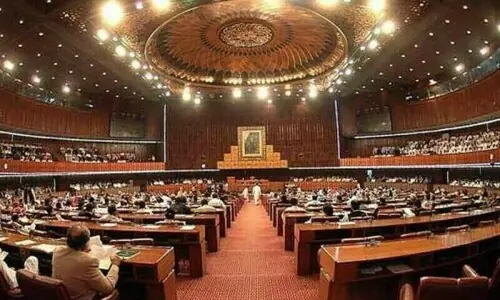
A record figure of 15,200 hopefuls were competing for seats in the 290-member parliament. Another 144 candidates sought a place in the 88-member Assembly of Experts, which is exclusively made up of male scholars.
By allowing a large pool of candidates, the government wanted “to create local competition and increase participation” to help attract voters, journalist Maziar Khosravi said.
Iran’s 2020 parliament was elected during the Covid pandemic with a turnout of 42.57 per cent — at the time the lowest since the 1979 Islamic Revolution.
Former moderate president Hassan Rouhani cast his ballot on Friday despite his disqualification from running for the Assembly of Experts after 24 years of membership.
Another former president, the reformist Mohammad Khatami, was among those who did not vote, according to a coalition of parties called the Reform Front.
In February, Khatami had said on his official website that Iran is “very far from free and competitive elections”.
Published in Dawn, March 4th, 2024