PAKISTAN is in a debt spiral that may push it over the cliff should the world decide to remove the drip-feed of bilateral and multilateral loans that is keeping its failing economy on life support.
Grappling with several economic problems — elevated inflation, large fiscal deficits, low industrial and agricultural productivity, a frail balance-of-payments position, a weak exchange rate, etc — Pakistan’s dependence on cash injections from its few foreign friends and global lenders is increasing by the day.
For the last few decades, we have been a most loyal customer of the IMF, the World Bank, and others to pay our bills, because we do not collect enough taxes to finance our budget, and the country’s capacity to earn enough dollars to pay for imports from its own pocket is severely hampered by low productivity.
Thus, it is no surprise that Islamabad was the top borrower of cheaper funds from the International Development Association among South Asian countries. The World Bank’s annual report for 2023 says Pakistan had secured $2.3bn in financing from the IDA during the last fiscal year.
With the government’s reliance on domestic and external loans growing rapidly to meet all its expenditures after making escalating debt payments, Pakistan’s debt hangover is worsening rapidly. State Bank data shows that the total public debt rose to 74.3pc of GDP at the end of FY23 from 73.9pc a year ago.
The mounting debt stock is not only making the government borrow more to pay back its creditors but also eroding its capacity to support inflation-stricken people and grow the economy to produce jobs.
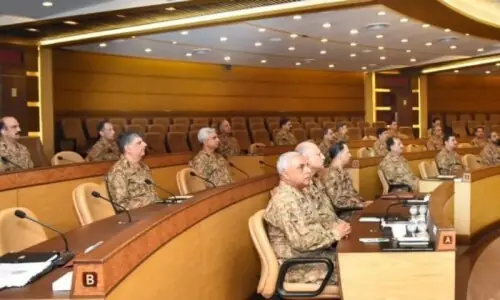
Sadly, the ruling military and civil elite haven’t grasped the seriousness of the situation, in spite of repeated warnings from multilateral agencies and ‘friendly’ countries. Instead of taking measures and making sound economic policies to solve the fundamental weaknesses in the economy, they continue to grope for a big bailout from the Gulf monarchies.
The materialisation of the promised multibillion-dollar investment bailout may provide temporary relief — just like the recent $3bn IMF loan delayed sovereign default has — but it will not change the inevitable.
No amount of bailout dollars can take the place of basic economic reforms. There are no quick-fix solutions to the multidimensional economic crisis.
Successive governments have delayed fundamental reforms for far too long, owing to political reasons, and have used borrowed cash to pump economic growth.
Once the short low-growth spurts end, the economy will find itself in a much deeper hole, with the man on the street left to bear the increased cost and pain of new adjustments while the elite classes keep enjoying their privileges.
As the nation tries to control grave internal political and faith-based conflicts, it is postponing economic reforms. This will prove disastrous for the country.
Published in Dawn, October 3rd, 2023