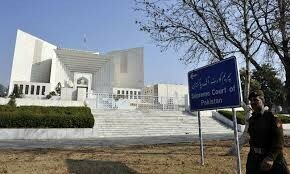
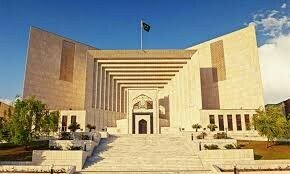
THERE is little wrong with the proposal in principle, even if the timing raises some concerns. During a Wednesday session, the Senate Standing Committee on Law and Justice agreed on the need to increase the number of Supreme Court judges, citing the growing pendency of cases before the apex court.
The law minister suggested that the backlog has grown because judges ignore timelines as they are not accountable for their performance; the committee chair, however, held that the Supreme Court is simply receiving more cases because the number of high court judges has increased, which has sped up the resolution of cases at the lower level, leading to more appeals landing before the apex court. A legislative bill on the matter has been deferred till the committee members can see ‘empirical evidence’ to support their decision, but the committee agrees that the number of judges could be increased at any time through simple legislation.
While the number of cases piling up at the Supreme Court does support the suggestion for inducting more judges, it would have been better if the proposal had come from the judiciary itself. The fact that it is being prescribed by the legislature will be questioned, given the political context. In too many instances, the current government has attempted to bypass challenges to its rule with tailored legislation.
Accountability laws, election laws, laws governing the armed forces and intelligence services, laws affecting the functioning of the judiciary and even laws directly affecting fundamental rights have been tinkered with and changed in the past two years to align with the ruling class’s priorities, often without taking opposition opinions into account. At the same time, key government leaders have taken highly confrontational positions against the judiciary every time a decision has gone against them. The reaction to the recent reserved seats case is a case in point.
This creates doubts regarding the government’s intent. Observers will ask why the authorities are suddenly worried about how many judges there are in the Supreme Court. Does it have something to do with how the bench ruled in the reserved seats case?
Some critics will see this as another attempt to pack the court, given how the appointment of ad hoc judges triggered a similar controversy. These are serious questions that the government will not be able to avoid.
Of course, the Judicial Commission of Pakistan will thoroughly vet all new entrants to the Supreme Court, but perhaps it would be best if new inductees are initially tasked with solely clearing the backlog, instead of being assigned to major cases. This would forestall most of the objections that could be raised. Lastly, the judiciary, too, must be invited to give its input on this proposal.
Published in Dawn, July 26th, 2024