Pakistan’s annual inflation rate rose to 31.4 per cent in September from 27.4pc in August, statistics bureau data showed on Monday, as the country reels from high fuel and energy prices.
The country is embarking on a tricky path to economic recovery under a caretaker government after a $3 billion loan programme approved by the International Monetary Fund (IMF) in July averted a sovereign debt default, but with conditions that complicated efforts to rein in inflation.
On a month-on-month basis, inflation climbed 2pc in September, compared to an increase of 1.7pc in August. Reforms required by the IMF bailout, including an easing of import restrictions and a demand that subsidies be removed, have already fuelled annual inflation, which rose to a record 38pc in May.
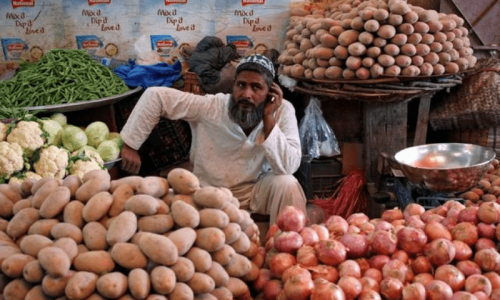
Food inflation remained elevated at 33.1pc with the year-on-year increase in non-perishable food items at 38.4pc and 4.37pc for perishable food items.
Annual consumer inflation in urban and rural areas increased to 29.7pc and 33.9pc year-on-year, respectively.
Meanwhile, the highest year-on-year increase was recorded in the categories of alcoholic beverages and tobacco (87.45pc), recreation and culture (58.77pc), furnishing and household equipment maintenance (39.32pc) and non-perishable food items.
Index-wise increase in inflation YoY (in descending order)
- Alcoholic beverages and tobacco: 87.45pc
- Recreation and culture: 58.77pc
- Furnishing and household equipment maintenance: 39.32pc
- Non-perishable food items: 38.41pc
- Miscellaneous goods and services: 36.42pc
- Restaurants and hotels: 34.3pc
- Transport: 31.26pc
- Housing and utilities: 29.7pc
- Health: 25.28pc
- Clothing and footwear: 20.55pc
- Education: 11.12pc
- Communication: 7.42pc
- Perishable food items: 4.37pc
Interest rates have also risen to their highest at 22pc, and the rupee hit all-time lows in August before recovering in September to become the best performing currency following a clampdown by authorities on unregulated FX trade.
On Friday, the ministry of finance said in its monthly report that it anticipated inflation remaining high in the coming month, hovering around 29-31pc due to an upward adjustment in energy tariffs and a major increase in fuel prices.
The report added that inflation was, however, expected to ease, especially from the second half of the current fiscal year that starts on Jan 1.
On Saturday, the government cut petrol and diesel prices from a record high, after two consecutive hikes. The finance ministry cited international prices of petroleum products and the improvement in the exchange rate, following the clampdown on unregulated FX trade.
Inflation has been elevated, hovering in double digits, since November 2021. The country targeted inflation at 21pc for the current fiscal year, but it averaged 29pc during the first quarter.
Worsening economic conditions, along with rising political tensions in the run-up to a national election scheduled for November, triggered sporadic protests in September, with many Pakistanis saying they are struggling to make ends meet.
Analysts said the inflation reading was in line with market expectations.
Tahir Abbas, head of research at Arif Habib Limited, a Karachi-based investment company, said inflation appeared to have peaked for the current fiscal year and would subsequently recede.
“The higher reading is mainly due to the low base effect which was also mentioned in the last monetary policy statement. Going forward, in the next few months, we expect inflation to ease to around 26-27pc,” said Fahad Rauf, head of research at Ismail Iqbal Securities, a Karachi-based brokerage firm.
Rauf said higher inflation statistics should not impact monetary policy.