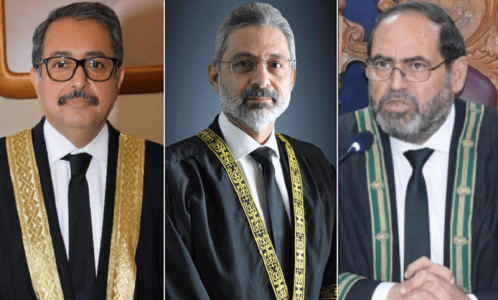
THE future chief justice of Pakistan is being put to the test. Justice Qazi Faez Isa has been tasked by the PDM government to head a three-member judicial commission that will probe the veracity of various audio clippings ‘leaked’ in recent months, and determine whether they have had any bearing on the ‘independence’ of the judiciary.
Though the ‘audio leaks’ saga has caused or sought to cause reputational damage to a variety of powerful individuals, including key politicians and bureaucrats, the government only wants the commission to focus on the leaks involving judges and their families.
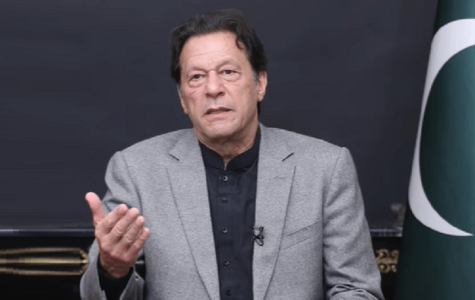
This limitation on the scope of the inquiry has been slammed as a ‘deliberate omission’ by former prime minister Imran Khan, who wants that the judges also determine who it is who has been illegally snooping on even the conversations of sitting prime ministers without their knowledge, and why.
It is a very valid question, and an inquiry into the practice of illegal surveillance — which, it seems, is being conducted on an alarmingly broad scale these days — should have been included in this commission’s terms of reference.
The government has the power to broaden the scope of the inquiry; in the interests of transparency and to show it is acting in good faith, it should do so now.
If not, then perhaps the judges conducting the audio leaks probe may find a way through the existing ToRs to have the matter included in their purview. It would seem unfair to begin deliberating on these recordings without first determining who made them, for what purpose, and under what legal sanction.
The country is witness to how Justice Isa and his family were previously made to suffer over the spurious findings of what was finally declared an illegal probe into their personal financial affairs.
That ‘inquiry’, too, was sanctioned by elements within the state who felt they enjoyed complete impunity, even when they are trampling on the constitutional rights of a sitting Supreme Court judge. The commission should at least attempt to unmask such elements in the public interest.
Lastly, it is encouraging that the commission has decided that its proceedings will be made public. However, it would be well-advised to tread with caution.
Given the fraught political atmosphere and creeping control of unelected quarters over matters of law and administration, it will be a challenge to ensure that the judiciary remains above the chaos consuming the other branches of state.
With the public watching the commission’s activities and conduct, it is uniquely placed to set an example for others to follow. Many have rather high expectations from the senior puisne judge. It will be interesting to see a glimpse of the direction the judiciary may soon take under his stewardship of the institution.
Published in Dawn, May 23rd, 2023