THE UAE’s exit from Opec is another sign of the major geopolitical shifts that are reshaping the global order. One of the organisation’s top producers, the UAE’s decision seems largely influenced by the politics of oil. Yet geopolitical calculations, and intra-Gulf rivalries, specifically with Saudi Arabia, are also at play here.
As per reports, the Emiratis were unhappy with the quotas placed by Opec on members, and wanted to pump as much crude as they desired. This was reflected in an Emirati government statement, after the announcement of Abu Dhabi’s exit, that the UAE had made “greater sacrifices for the benefit of all”.
Seemingly, the UAE feels the time for ‘sacrifice’ is over and it is willing to jettison Arab and Gulf consensus, preferring to act independently in the global arena. Aside from the politics of oil, the decision also speaks of the UAE’s desire to present itself as an equal of Saudi Arabia, which — given Riyadh’s economic heft and oil wealth — plays a distinct role in the Arab and Muslim worlds.
Opec has often been described as a ‘cartel’ by the Western press. Perhaps this unkind categorisation stems from the fact that the states that founded Opec in 1960 championed the nationalisation of oil, which was anathema to the Western oil giants. Many in the West have not forgotten the ‘oil weapon’ deployed by Opec during the 1973 Arab-Israeli war, which punished friends of the Zionist state.
Furthermore, for better or for worse, Opec is an organisation of energy producers of the Global South. How long the Saudis are able to keep the grouping afloat is uncertain, as geopolitical allegiances shift, and the Arab, Islamic and Third World ‘solidarity’ of yore is tested. As the UAE has shown, now it is every man for himself.
Beyond oil, differences between the UAE and Saudi Arabia have been growing over the years. Even during the Iran war, Abu Dhabi took a more confrontational stance towards Tehran, whereas Riyadh’s messaging has been mixed, denouncing Iran’s attacks on itself and its GCC allies, while keeping the door open for diplomatic outreach with Iran. Moreover, the Saudis and Emiratis have openly clashed over Yemen, supporting rival local groups, as well as in Sudan. Meanwhile, both powerful Arab states are similarly vying for influence in Libya.
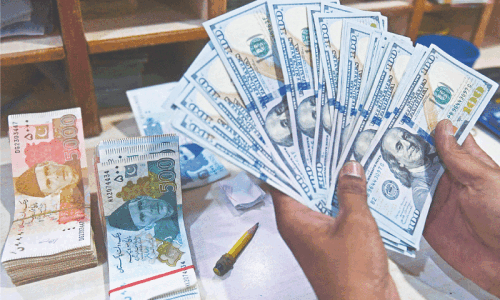
Whether the UAE’s departure from Opec leads to further ruptures within the GCC or not remains to be seen. But one thing is certain: states such as Pakistan, which maintain deep ties with both countries, will have to calibrate their foreign policies accordingly. Islamabad already has had a taste of things to come, when the UAE demanded its deposit back, and Pakistan obliged.
Published in Dawn, April 30th, 2026