Cure or curse?


ACCORDING to the World Health Organisation and UNAIDS, Pakistan has one of the fastest-growing HIV epidemics in Asia. Meanwhile, WHO’s Global Hepatitis Report 2026 identifies Pakistan as the single largest contributor to the global burden of hepatitis C. Are these two facts coincidental? Sadly, no. They are tragically intertwined. Both HIV and hepatitis C are blood-borne infections, transmitted when infected blood enters the human body. Both can also spread through sexual contact. And both, if untreated, are potentially fatal. The pathways through which these diseases spread are ubiquitous in Pakistan’s healthcare and social practices. But we also suffer from a dangerous form of collective myopia.
When there is a media report of an outbreak of HIV — Taunsa being the latest — we have a hysterical fit, we hyperventilate, we deny, we defend, we look for a conspiracy, we blame, we want to kill the messenger who brings the bad message and we also quietly desire in our hearts, and even pray, that it passes quickly so that we can go back to our comfortable slumber. If you are finding it difficult to understand this description, then please see the press conference of a provincial health minister held after the BBC’s documentary on Taunsa. Before we can control these diseases, we must treat this myopia.
Should we not feel a sense of national shame that Pakistan is home to one of the world’s largest populations of hepatitis C patients — an estimated 10 million — many of whom continue to suffer and die unnecessarily? At the same time, HIV has been knocking at our doors, yet our response is fragmented and inadequate. Domestic investment in HIV/AIDS is minimal and we continue to rely heavily on the Global Fund. Our attention shifts from one outbreak to another, without building sustained, systemic responses.
The persistence of blood-borne infections in Pakistan reflects a broader failure of governance.
Globally, the trajectory is different. In most countries, new HIV infections and AIDS-related deaths are declining. The world has learned hard lessons, particularly from sub-Saharan Africa, where the epidemic once devastated societies and economies. Through a combination of political commitment, widespread testing, effective antiretroviral therapy, stigma reduction and strong infection prevention measures, countries have reversed the trend. Critical interventions have also included reducing unnecessary injections, eliminating the reuse of disposable syringes, introducing auto-disable syringes and ensuring rigorous screening of all transfused blood. Pakistan, regrettably, has lagged on most of these fronts, and the consequences are visible in the rising number of new infections.
Can this trajectory be reversed? Yes — and Egypt offers a compelling example. In 2008, Egypt had one of the highest hepatitis C prevalence rates in the world, with nearly 10 per cent of its adult population infected. Much of this was attributed to past medical practices involving the reuse of contaminated syringes. Recognising the scale of the crisis, Egypt established a National Committee for the Control of Viral Hepatitis. In 2014, it launched an ambitious nationwide campaign — ‘100 Million Healthy Lives’. More than 60m people were screened. Over 80pc of infected individuals were diagnosed, and more than 4m received free treatment. Within just seven years, prevalence dropped dramatically — from 10pc to 0.5pc. In October 2023, WHO declared Egypt the first country to achieve ‘gold tier’ status for hepatitis C elimination.
I had the opportunity to live and work in Egypt for some years with WHO. In many ways, Egypt is as complex and challenging as Pakistan. The difference lies in one decisive factor: political will. Egypt mobilised its institutions, aligned its policies and executed a clear national strategy. Today, it is not only hepatitis C-free but also supports other countries to replicate its success. Some Egyptian experts have visited Pakistan, yet we remain entangled in bureaucratic rigmarole, unable to launch a comparable national programme for years now. HIV in Pakistan presents an additional, deeply troubling dimension.
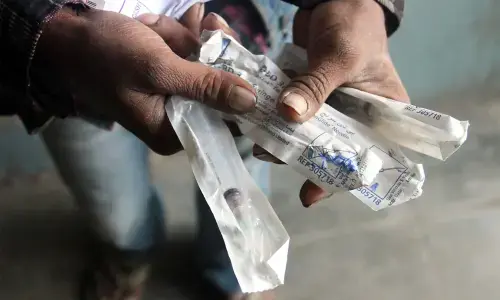
Globally, HIV is concentrated among high-risk groups such as people who inject drugs and sex workers. This is also true for Pakistan. However, we face a unique and alarming phenomenon: large numbers of young children are becoming infected. In over 90pc of these cases, the infection is not transmitted from mother to child — the mothers are HIV-negative. Instead, these children are infected through unsafe medical practices: the reuse of disposable syringes, contamination of multi-dose vials and unsafe intravenous infusions.
This pattern was evident in the 2019 outbreak in Ratodero and has resurfaced in Taunsa. In fact, Taunsa represents at least the ninth recorded HIV outbreak in the country. These outbreaks are only the visible tip of a much larger, hidden epidemic. In 2019, when the Ratodero outbreak occurred, I visited the area alongside Sindh’s health minister, Dr Azra Pechuho. What we witnessed was heartbreaking: mothers carrying infected children and running from pillar to post in search of care. Nearly 1,000 children were ultimately diagnosed with HIV — most infected through unsafe injections.
I immediately established a national Task Force on Injection Safety, which developed a comprehensive National Action Plan. A key recommendation was to ban the manufacture, import and use of reusable disposable syringes. This policy was implemented, despite resistance from manufacturers, who were required to transition to auto-disable syringe technology. Eventually, the industry complied.
It is therefore deeply troubling to learn that some manufacturers are reportedly still producing reusable syringes and mislabelling them as auto-disable. This is not merely a regulatory lapse; it is a criminal act. Law-enforcement agencies must act decisively to shut down such operations, and the Drug Regulatory Authority of Pakistan must strengthen post-market surveillance which is currently very weak.
The persistence of blood-borne infections in Pakistan reflects a broader, long-standing failure of governance. Successive governments have not prioritised health, particularly primary healthcare, as evidenced by chronically low public spending. Many of our public health challenges are not technical but failures of governance, accountability and behaviour. The unchecked spread of HIV represents a gathering storm — one that threatens social stability, economic productivity and national development. It must be recognised and addressed as a matter of national security, demanding the same level of political urgency and financial commitment. More on this, later.
The writer is a former SAPM on health with ministerial status, adjunct professor of health systems and president of the Pakistan Association of Lifestyle Medicine.
Published in Dawn, May 1st, 2026