
SWAT/SHANGLA: Heavy rainfall, coupled with a hailstorm, damaged public property in Matta tehsil of Swat district, leaving residents, especially farmers, grapple with significant losses.
The hailstorm in Kharerai and adjoining areas destroyed orchards of peach, plum, apricot and other seasonal fruits, dealing a major blow to farmers.
Residents termed the event unprecedented, saying they haven’t seen such a hailstorm during this time of the year.
Many declared the situation as shocking and deeply distressing.
Residents complain houses, businesses affected, crops damaged
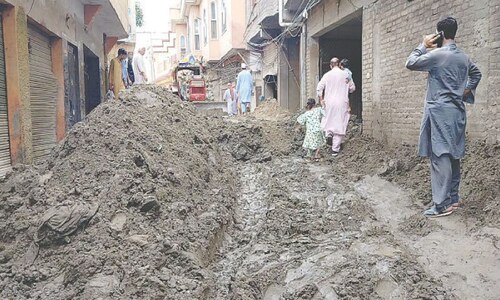
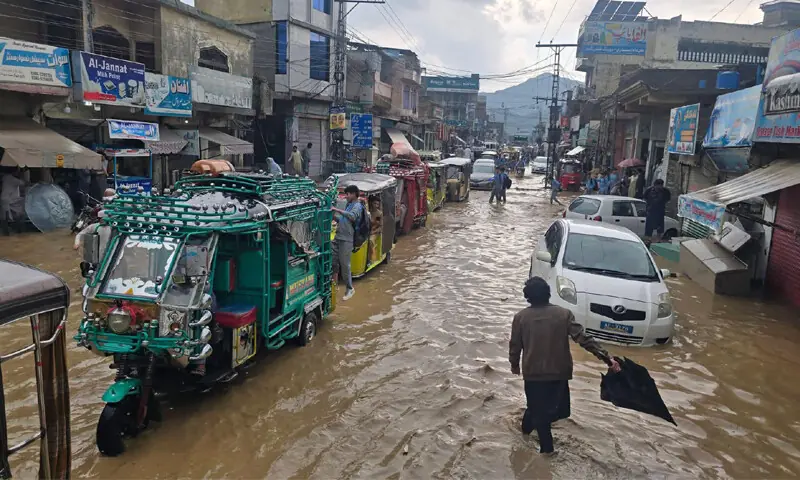
Torrential rains triggered flooding in local streams across Matta tehsil, inundating roads, markets and residential areas. Rainwater entered shops and houses in several localities, causing further financial losses to traders and residents.
“We are facing losses from both sides. Our crops are gone and our homes and businesses are affected,” said resident Ibrahim.
The shopkeepers criticised the district administration and the provincial government for failing to maintain roads and drainage systems.
They said that due to continuous neglect, rainwater channels and roadside drains have become clogged, causing even light rainfall to result in heavy losses for shops as water got accumulated and didn’t drain properly.
The affected people urged the government to take immediate steps to address the issue.
They demanded that the drainage and sewerage system in Matta be made fully functional to prevent rainwater from accumulating and causing floods in markets and on roads.
Experts linked such extreme and unpredictable weather events to climate change, noting that altered weather patterns are increasing the frequency and intensity of such events in the region.
Residents called for urgent relief measures and long-term infrastructure improvements to mitigate future risks.
The Mansehra city and adjoining areas also reported heavy downpour, which exposed choked nullahs, with garbage surfacing on Abbottabad Road. The traffic remained suspended on Zafar Road and the Karakoram Highway after the rainwater flooded arteries.
Torrential rains lashed Shangla and Bisham regions on Thursday, triggering flash floods in local nullahs and causing surge in water levels that blocked the Karakoram Highway (KKH) at several key points.
According to officials, the downpour, which began in the afternoon, resulted in widespread flooding. It caused massive accumulation of rubbles on KKH, completely paralysing the region’s main transit artery. The blockade left hundreds of commuters, including tourists and residents, stranded for hours.
“The situation was critical as the main artery was blocked by heavy debris at multiple locations,” sub-divisional police officer, Bisham, Usman Munir said.
“We immediately mobilised resources, engaging private excavators to clear the road and deploying additional personnel to assist those stuck in the cold and rain.”
While the police successfully restored traffic after several hours, the incident highlights human error. The devastation sparked intense public outrage, with residents and environmental experts attributing the severity of the landslides to ongoing illegal and massive mining activities in the Bisham mountains.
Public representatives and residents voiced frustration and demanded immediate and stern action against the mining operations near populated areas.
They argued that those unregulated excavations had stripped the mountains of their natural stability, making the KKH vulnerable to even moderate rainfall.
The residents said the flooding was not just a natural occurrence but it was also a man-made catastrophe triggered by the destabilised terrain.
“This wasn’t just a natural disaster; the relentless excavation of our mountains fueled it,” complained a local commuter who was stuck in the mudflow.
He said until the illegal mining was halted, the Karakoram Highway would remain a hazard for all who travelled through Shangla.
Authorities in Shangla advised travellers and tourists to exercise extreme caution and avoid unnecessary travel until the weather stabilises.
Police contingents remained stationed at vulnerable points along the highway to monitor the situation and provide immediate relief.
The residents called for a permanent solution to the environmental degradation threatening their lives and the safety of the national highway.
Published in Dawn, May 1st, 2026