Pakistan's weekly oil bill reached $800m amid Middle East war: PM Shehbaz

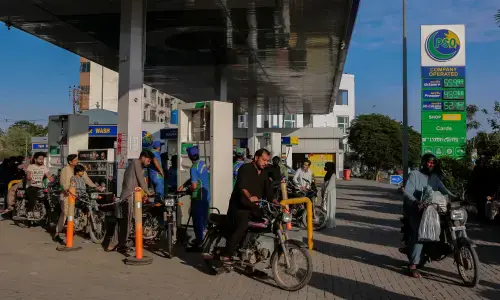
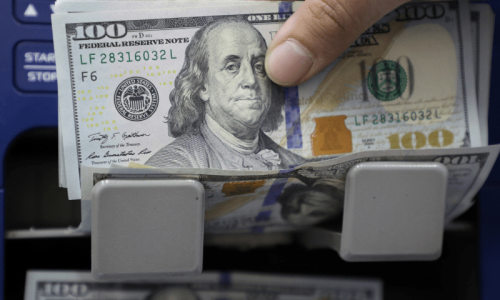
Prime Minister Shehbaz Sharif on Wednesday said that the country’s weekly oil bill has reached $800 million due to the ongoing oil crisis arising from the Middle East conflict.
Global fuel prices have skyrocketed over the past two months as shipping through the Strait of Hormuz remains paralysed since the US and Israel launched joint strikes on Iran on February 28.
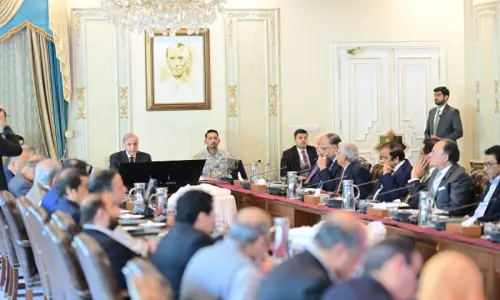
Addressing a meeting of the federal cabinet today, PM Shehbaz commended the efforts of Petroleum Minister Ali Pervaiz Malik for tackling the fuel crisis resulting from the Iran war, stating that the situation now appeared “satisfactory”.
On that note, the prime minister remarked that fuel prices in the global markets had risen sharply, noting that “our weekly pre-war oil bill was around $300m, and today it is up to $800m”.
He further shared that the country’s fuel consumption “had lessened compared to previous weeks”, stressing that the situation was being monitored regularly.
“Consultations are also being held with provinces to extend fuel subsidies,” the premier told the cabinet.
PM Shehbaz further stated that Pakistan was doing well on the macroeconomic front before the war broke out. However, “with the war, our efforts of two years have witnessed a setback”.
Nevertheless, the premier highlighted that Pakistan’s federal reserves “retain their levels” despite paying back debts, which included a $3.45 billion deposit to the United Arab Emirates (UAE).
He also expressed gratitude to the leadership of Saudi Arabia, which transferred a $3bn deposit recently and also agreed to extend its existing $5bn facility for a further three years.
In his address, the prime minister also apprised the cabinet of Pakistan’s diplomatic outreach in the US-Iran war and recalled the first round of Islamabad Talks held on April 11-12.
“Many diplomatic efforts were made,” he recalled, lauding Chief of Defence Forces and Chief of the Army Staff Field Marshal Asim Munir and Deputy Prime Minister and Foreign Minister Ishaq Dar for trying “their best to restore peace in the region”.
“Following this, a ceasefire extension was announced,” the premier said, recalling the April 21 announcement by US President Donald Trump.
The prime minister also mentioned Iranian Foreign Minister Abbas Araghchi’s recent trips to Pakistan. He recalled that before returning to Iran, Araghchi had assured him: “I would give you an answer after holding consultations with the Iranian leadership.”
The Iranian top diplomat made two brief visits to Pakistan within two days, meeting with CDF Munir and PM Shehbaz to discuss the regional situation.
The premier also appreciated Interior Minister Mohsin Naqvi for his participation in the meetings.