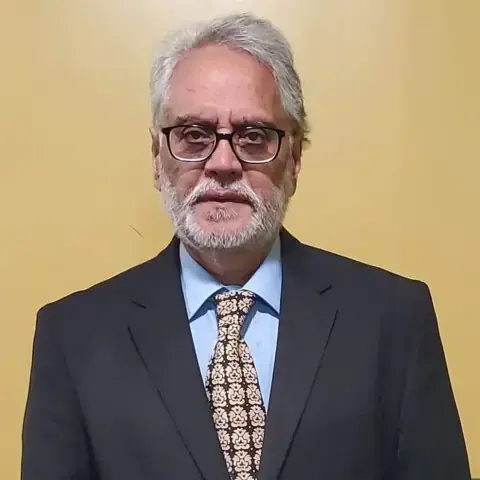
WASHINGTON: Pakistan will recognise the Taliban regime in Kabul when there’s a consensus, particularly of regional countries, on the issue, says Islamabad’s UN envoy Munir Akram.
The question of recognition resurfaced on Thursday when the UN Security Council voted to establish formal ties with the Taliban-run Afghanistan without extending diplomatic recognition to the regime. Fourteen of the council’s 15 members voted for the resolution while Russia abstained.
Russian Ambassador Vassily A. Nebenzia said he was compelled to abstain because attempts to secure consent from the host country for a UN presence were ignored. Chinese Ambassador Zhang Jun said that since August 2021, when the Taliban captured Kabul, Afghanistan had entered a new phase and more flexibility was needed to deal with the situation.
Although Pakistan was the first nation to call for more flexibility in dealing with Kabul’s new rulers, Islamabad too has not recognised the Taliban regime.
Ambassador Akram says UN resolution has one shortcoming: there’s no reference to the de facto government in Afghanistan
Asked if the UN vote would influence Pakistan’s position on this issue, Ambassador Akram said: “We will do it (recognition) when there’s a consensus, especially among regional countries.”
Six of Afghanistan’s immediate neighbours are meeting in China next month and this would be one of the top issues on their agenda. China, Iran, Pakistan, Tajikistan, Turkmenistan and Uzbekistan will attend the meeting. A Taliban delegation will also participate.
Russia, although not an immediate neighbour, was invited to the previous meeting and may attend this meeting as well. India, however, has not been invited.
Ambassador Akram said the UN resolution, adopted on Thursday, had one shortcoming: “There’s no reference to the de facto government in Afghanistan,” although it does mention the need to work with relevant authorities.
Apparently, France and India opposed any reference to the de facto authorities and managed to keep it out of the mandate.
The UN mission in Afghanistan, Ambassador Akram said, “should be acting with the consent and cooperation of the local authorities and its absence, in our view, is a shortcoming of the mandate”.
The Pakistani envoy, however, acknowledged that the resolution has reaffirmed donors’ commitment to Afghanistan and underlined the need for providing unconditional humanitarian assistance to the country.
Since August 2021, the UN Secretary General has launched a $4.4 billion appeal for helping Afghanistan while a separate appeal for $3.4bn was also launched to meet the country’s basic needs. The second fund covers reconstruction, education, health, and Afghan businesses. But this additional fund is conditional on the Afghans responding to the wishes of the international community.
Ambassador Akram pointed out that the UN resolution also emphasises the need to unfreeze Afghanistan’s assets held in the United States.
Apparently, China’s UN mission negotiated the issue with American officials and persuaded them to unfreeze the entire $7bn, instead of the half suggested by US President Joe Biden in February this year.
The Pakistani envoy noted that the resolution gave an extensive mandate to the UN mission in Afghanistan — from human rights and humanitarian assistance to promoting political inclusivity.
“It remains to be seen whether the mission will be able to implement this extensive mandate,” he said.
Published in Dawn, March 19th, 2022