UN praises Pakistan for carrying out registration of 1.4m Afghan refugees



UNITED NATIONS: Pakistan has successfully completed its first ever smartcard registration of Afghan refugees, a UN agency reported on Tuesday.
In another report, the UN refugee agency (UNHCR) urged the international community to scale up its support to Iran, which received about half a million Afghan refugees in 2021.
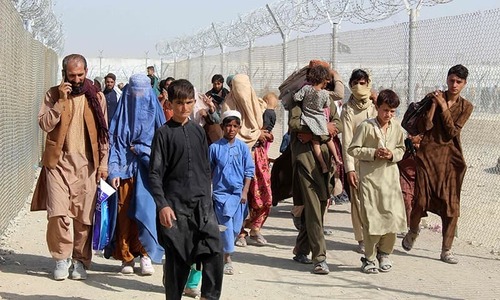
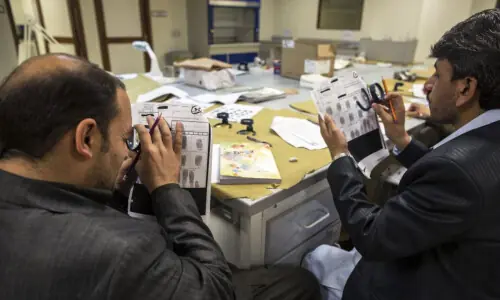
The UNHCR report noted that this week Pakistan completed its first ever drive to verify data of around 1.4 million on-the-move refugees. Those registered include more than 200,000 children under five.
“UNHCR commends Pakistan for its country-wide campaign to verify and update the data and to issue smart identity cards” to the refugees, the UN report added.
Also, this week the UN High Commissioner for Refugees Filippo Grandi completed a three-day visit to Iran, noting that like Pakistan, Iran was also sheltering hundreds of thousands of Afghan refugees.
“Iran has been a generous host of refugees for decades, despite their precarious economic situation made worse by the pandemic,” he said in a statement issued after the visit. “As the situation in Afghanistan remains fragile, we need to ensure those fleeing to Iran can get the protection and assistance they need,” he added.
The UN report noted that Pakistan completed its first large-scale verification of Afghan refugees on Dec 31. The data of 1.25 million Afghan refugees were also updated during the campaign, officially known as the documentation renewal and information verification exercise (DRIVE).
More than 700,000 new smart identity cards have also been issued to date. The remaining cards will be printed and distributed in early 2022.
The cards will be valid until 30 June 2023 and contain biometric data that are technologically compatible with systems used in Pakistan for authentication. The new smart identity cards would give the refugees faster and safer access to health and education facilities and to banking services.
DRIVE would also enable Afghan refugees to flag any specific protection needs or vulnerabilities. UNHCR hopes the data would also be useful to support those who decide to go home.
The UNHCR report pointed out that the DRIVE program was part of a wider effort to assist and protect Afghan refugees, including through the support platform for the Solutions Strategy for Afghan Refugees (SSAR).
In the second report, the UNHCR chief urged Iran to recognise the protection needs and risks faced on return to Afghanistan.
Mr Grandi traveled to Zahedan, the capital of Sistan and Baluchistan province, where he met Afghan families, including infants and elderly people, who fled to Iran from Nimrooz some four months ago.
“Afghan refugees spoke of their pain and desperation at having to leave their homes behind,” he said. University-aged women conveyed to the High Commissioner their anguish at having had to abandon their studies and not knowing what their future will hold.
Iran is one of the world’s largest refugee-hosting countries, having hosted Afghans for over four decades. In Iran, refugees have access to health, education and livelihood opportunities, with the majority living in villages, towns and cities side by side with the Iranian host community.
While comprehensive and robust efforts were needed to stabilise Iran, assistance for the refugees “must simultaneously be prioritized, enhanced, and made more sustainable,” Mr Grandi said.
Published in Dawn, January 5th, 2022