US dismisses Julian Assange suicide risk in extradition appeal


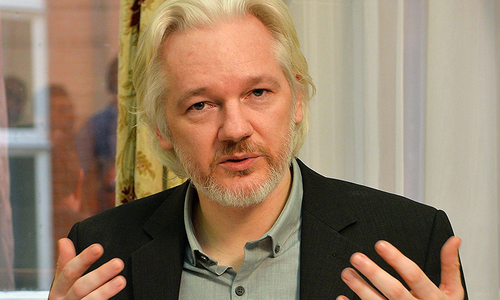
LONDON: The United States urged two senior British judges on Wednesday to clear the extradition of WikiLeaks founder Julian Assange and reject a lower court’s ruling that he is a suicide risk.
Washington also assured the High Court in London that it would not hold the Australian in isolation in a US “supermax” prison, as it sought to sideline several factors cited in the previous decision blocking his extradition.
The US government wants to place Assange on trial for espionage on charges that could jail him for up to 175 years — though its legal team claims his sentence is difficult to estimate and could be far less.
A UK district court judge in January blocked its extradition request on the grounds that Assange was at serious risk of suicide, and that his mental health would probably deteriorate in the US penal system.
That judge rejected US experts’ testimony that Assange would be protected from self-harm, noting that others such as disgraced US financier Jeffrey Epstein had killed themselves in custody.
Assange followed some of Wednesday’s proceedings via video-link from the high-security Belmarsh jail in southeast London where he has been held since 2019.
Wearing a pale shirt, burgundy tie and dark face-mask, he appeared tired, resting his head on his hand for periods.
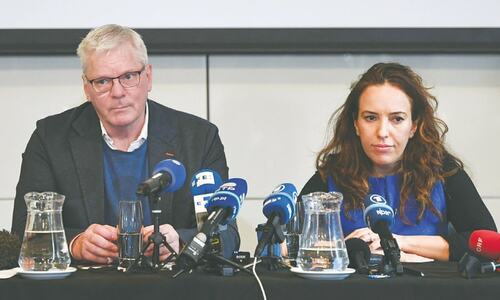
Outside the court in central London, his partner Stella Moris — with whom he has two children — joined protesters demanding his immediate release.
“I’m very concerned for Julian’s health,” she told reporters, after visiting Assange in prison on Saturday.
“He is very thin. And I hope that the courts will end this nightmare,” Moris added.
But on the first of two days of hearings, James Lewis, lawyer for the US government, said Assange “had every reason to exaggerate his symptoms” and that its own experts had found he was only “moderately depressed”.
He noted Assange had “no history of serious and enduring mental illness” and cautioned against a “crystal ball” approach to what could happen if he was extradited.
Lewis argued district judge Vanessa Baraitser had failed to recognise that the bar for extradition must be an individual having “no ability to resist suicide”.
He also insisted Michael Kopelman, a key psychiatric expert provided by Assange’s team, had offered a “misleading” initial report which deliberately omitted that the WikiLeaks founder had fathered two children with Moris in recent years.
“As a whole she should’ve weighed crucial factors in psychiatric evidence significantly differently,” Lewis said.
Assange was arrested in Britain in 2019 for jumping bail after spending seven years inside the Ecuadorian embassy in London to avoid extradition to Sweden where he faced allegations of sexual assault. These were later dropped.
The US government has indicted him on 18 charges relating to WikiLeaks’ 2010 release of 500,000 secret files detailing aspects of military campaigns in Afghanistan and Iraq.
He is accused of violating the US espionage act and hacking, based on the alleged aid he gave former military intelligence officer Chelsea Manning in obtaining the documents from secure computer systems.
Lewis said the US government had given written assurances that Assange would not be detained at the ADX Florence jail in Colorado, which houses criminals including Al-Qaeda extremists in near-total isolation.
Published in Dawn, October 28th, 2021