Creative teaching


AS a nation, we are obsessed with chasing grades and distinctions at every level of schooling and, in fact, schools have built their reputation based on the board results they produce. A necessary professional hazard for teachers, in this grand pursuit, has been the need to cover extensive content in limited periods of time. Often, teachers who start out with the best of intentions, run into this roadblock. There seems to be a tug of war between how much to teach and how to teach it. If teachers opt for the student-centred approach and allow time and space for collaboration and creativity in the classroom, let the students dig deep into learning in their own unique styles, they seem to run out of time to reinforce content that is expected of students in traditional exams.
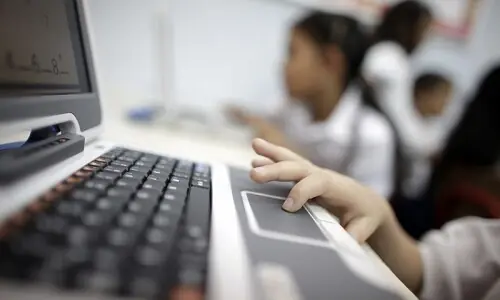
This begs the obvious question: are the two aspects of teaching — covering content and student-centred approaches — mutually exclusive? Or do we simply need to devise more creative ways to cover content, perhaps with a bit of experimentation and exploration of alternative ways of conducting classes? How we attempt to create a post-pandemic learning environment, incorporating the new digital literacy skills acquired by our students, accommodate their need for peer interaction, spur their creativity through new dimensions of hybrid student-led approaches may well determine how many doors of opportunity we can open for our next generation.
There are different ways of being an effective teacher.
In a recent conversation with colleagues about ‘what makes an effective teacher’, the punchline that emerged is that there are different ways of being an effective teacher. The content and accompanying activities must be contextualised with the aim of engaging and motivating students who are, in the current climate, mostly left on their own to accomplish the learning outcomes set out for them. Can we even imagine our students who have learnt alternative ways of learning content during the pandemic to go back to the traditional classroom where they sit passively to listen to a teacher talking at the front of the class?
Transformative teaching is not about letting the reins loose for students to carve out a path for themselves, struggling to make sense of what is being taught, and figuring out how to achieve the aims set out for them. In fact, it is more of a strategic process of determining what and how much each student may be capable of learning without losing motivation. Education is more about engagement and intellectual stimulation giving way to motivation and achievement, rather than exam-taking skills where everyone is tested according to the same yardstick.
A recent study hinted at setting curriculum requirements to what a student is ready for, rather than what they should know at a certain age, and then shaming them if they can’t reach those benchmarks. How many of us remember the awful feeling of struggling with a formula, a definition or a piece of factual information that we could not recall while others around us were fast and efficient at reproducing the material? Almost all students go through the consciousness of ‘not being good enough’ at various stages of schooling.
Not only does this call for a necessary shift in models and styles of facilitating students, it also implies that our techniques need to be geared towards developing a variety of skills, while accepting and celebrating differences between students. After all, when our students become professionals, they will be working as part of diverse teams where not everyone will share the same level and skill — teams are created to bring together pieces of a puzzle that look nothing like each other, but they join beautifully to complete a vision.
Coupled with a realisation that not everyone can be great at everything, a systematic approach towards helping students collaborate with each other, using visuals, writing, speaking or drawing can get so much out of content that does not need to be passively listened to. Departing from the traditional homework approach may also help bring out motivation and creativity. Input from students doesn’t necessarily have to be textual — in today’s technology-driven system of education, students can create videos, podcasts, interviews, songs and so forth — there is a world of possibilities to assess learning. Recently, for example, online tests and exams have not been working for some schools, particularly those that have a large number of students to manage. However, restructuring the assessments to include shorter ‘vivas’ — one to one — with the teacher has been very useful.
We may also like to make way for a shift towards open-ended questions which have no right or wrong answers but are testing analytical and critical thinking skills. Students will welcome the change, and adapt to it quickly, if led by capable, motivated and effective teachers.
The writer is senior manager, professional development, at Oxford University Press, Pakistan.
Published in Dawn, May 24th, 2021