In PTI govt's success, opposition sees its political death: PM Imran


 31
31
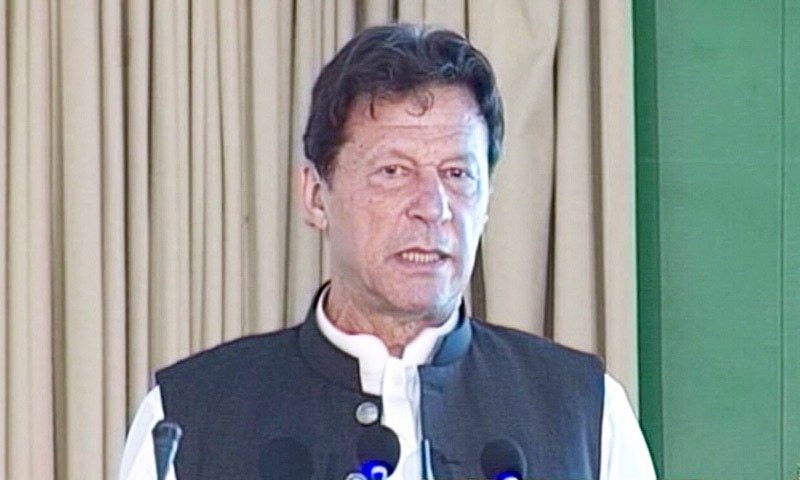
Prime Minister Imran Khan said on Thursday that the opposition feared the PTI-led government's success and thus started claiming from day one that the government had failed because it could foresee its "political death".
Addressing the virtual groundbreaking ceremony of Balochistan's Naukundi-Mashkhel road in Islamabad, the premier said his government's opponents and the "mafias" did not worry about the government's failure but feared its success.
He added that the first time the PTI had formed government in Khyber Pakhtunkhwa, it had been a coalition government and the province did not usually give a second chance to political parties. Yet when the next election came the PTI returned with a two-thirds majority and its opponents were in a very "bad state". "All of you can see what their conditions are today," he said of the opposition.
"They have the same fear here in all of Pakistan since our government came at the federal level.
"They're all afraid now of us becoming successful hence they start making noise from the first day that the government has failed because it is their wish for failure [of the government] because they see their political death," said the premier.
Prime Minister Imran said he wanted to see "all these big mafias being brought under the ambit of the law" by the end of his government's five years and for rule of law to be established in the country.
He termed this struggle for the law as his "first objective", saying his second goal was to lift Pakistan's weak segments as never done before in the country. The premier said that a great nation was made on the basis of two things: rule of law and a "system of humanity" or a welfare state as established in the State of Madina.
He compared China and India, saying the former had pursued accountability and brought the powerful under the law while also raising its poor segment up which explained the present gap between the two countries.
Speaking of his government's efforts for the welfare of the poor, the prime minister cited the initiatives such as medical insurance through health cards, reducing the disparity between English- and Urdu-medium education through the Single National Curriculum, constructing 'Panahgahs' (shelter homes) for labourers and mobile food trucks for distribution of meals in poor areas.
He said the incentives the government had given for industries and large-scale manufacturing had contributed to growth, development and employment opportunities.
"[With] the agricultural reforms we are doing ... you will see we will change the lives of farmers," he told the ceremony. "The biggest way to reduce poverty is helping small-scale farmers."
Prime Minister Imran said data would soon be collected of poor households in all of Pakistan and direct subsidies would be provided to them through the Ehsaas programme due to increase in the prices of wheat, sugar, electricity, etc.
Highlighting the importance of the Naukundi-Mashkhel road, the premier said: "This is a road which will have a great impact on Pakistan in the long term."
He said Balochistan had been left behind in development and thus bringing connectivity was not only important for Pakistan's future but also to "strengthen our federation".