Outbreak of animal diseases hits Khyber Pakhtunkhwa


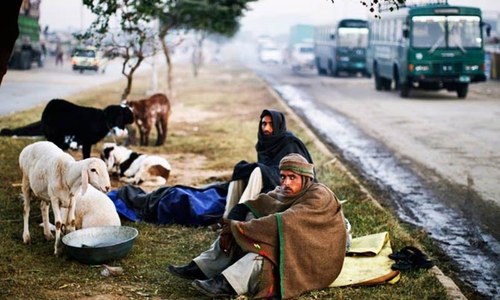
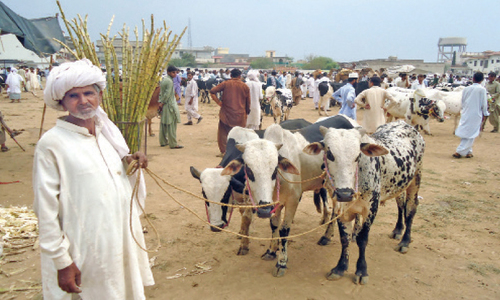
PESHAWAR: The livestock and dairy development department has pronounced an outbreak of foot-and-mouth disease (FMD) in cattle and peste des petits ruminants (PPR) in goats and sheep across Khyber Pakhtunkhwa.
According to officials, the department’s extension wing will begin a vaccination drive in the most affected districts next week to stem the spread of the two viral diseases.
The government has sanctioned Rs550 million for the purchase of the Russian-made vaccines imported through an authorised dealer.
Director general (extension) of the department Dr Alam Zeb told Dawn that the FMD had severely affected cattle in 13 districts, while the outbreak of PPR was reported in seven districts.
Livestock dept plans vaccination of cattle in affected districts
He said the vaccination campaign would focus on the most-affected areas.
Dr Alam said the situation in merged tribal districts was under control due to the ‘timely’ vaccination of animals by the UN’s Food and Agriculture Organisation (FAO).
He said the department had asked the vaccine supplier to ensure supplies from Monday.
The department collected samples from various districts of Malakand, Peshawar, Hazara, Kohat and Bannu divisions that confirmed the large-scale FMD incidence. Samples have been tested at the FMD lab in Peshawar, which also serves as a reference lab of the FAO.
The FMD, which is the most common contagious livestock disease in the country, affects the country in two ways. Firstly, it causes milk and meat production losses and animal mortality and secondly, the outbreak of this trans-boundary disease brings about restrictions on the export of livestock and its value-added products.
Similarly, the PPR, which is also known as sheep and goat plague, is a highly contagious disease, which affects domestic and wild small ruminants.
Officials dealing with the livestock said animal deaths by PPR were reported in different districts.
They said FMD and PPR broke out in the province when the mass animal vaccination against them was under way.
The provincial government allocated Rs400 million in the Annual Development Programme 2018-19 for the control of livestock diseases.
The directorate has approved Russian and Turkish vaccines.
The officials said imported vaccines, including Russian-made Arriah, were very expensive compared to domestic ones produced at the FMD Research Centre of Veterinary Research Institute, Peshawar.
An official told Dawn that a single bottle of the Russian-made vaccine cost Rs8,000 (each bottle contains 25 doses), while the price of the locally produced FMD vaccine having the same doses was Rs2,550. The Peshawar lab produces around 1.8 million FMD vaccine doses against the demand of 30 million doses.
“The locally-produced vaccines are more effective than imported ones as the latter requires very tight cold chain,” he said, adding that imported vaccines also face the issue of compatibility.
“Vested interests do not want to encourage domestic production of vaccines,” he said, adding that the directorate did not purchase a single dose of FMD vaccine from the lab.
The lab in Peshawar supplies FMD and other vaccines to other institutions, including the Pakistan Army, while the directorate, instead of recommending the domestically-manufactured vaccines, imported vaccines through private firms.
Dr Alam said livestock farmers preferred imported vaccines, especially Russia’s Arriah.
He said the directorate would provide FMD and PPR vaccines to farmers free of charge, while owners of dairy farms would pay for them.
Officials said though vaccination against FMD and PPR was mandatory, less than 10 per cent of the total livestock in KP were vaccinated annually. They said small farmers had to purchase expensive imported vaccines to protect their cattle from FMD and other diseases.
Published in Dawn, March 29th, 2021