Pakistan was re-elected by a United Nation’s body to its Commission on Narcotic Drugs (CND) on Friday for a four-year term starting in 2026.
The CND reviews and analyses the global drug situation, considering the interrelated issues of prevention of drug abuse, rehabilitation of drug users and supply and trafficking in illicit drugs, its website says.
As of January 2024, the CND had 53 member states that are elected by the United Nations Economic and Social Council (Ecosoc) in New York. However, the Associated Press of Pakistan (APP) puts the number of member countries at 54.
Pakistan secured the highest number of votes among member states contesting for the seats available to various regional groups, a press release by the Pakistan Mission in New York stated.

According to APP, Pakistan received 50 votes while Kazakhstan was the runner-up (46 votes), followed by United Arab Emirates (43), Krygyzstan (41) and Iran (25).
“Pakistan is gratified by the resounding support received from Ecosoc,” the press release stated.
It added: “It reflects confidence and trust reposed in Pakistan to play its active role in the CND as part of global counter narcotics efforts and multilateral policy discourse on drug related issues.
“Pakistan has been at the forefront of global counter-narcotics efforts, playing a crucial role in combating illicit drug trafficking, production, and abuse,” the Mission asserted.
It highlighted that Pakistan has been an “active and constructive participant in global drug policy discussions” at the UN, particularly within the CND.
“Pakistan looks forward to working closely with the other members of Ecosoc and with the broader UN Membership to strengthen the CND’s role as the primary global drug policy-making body,” it reaffirmed.
It pledged to work towards ensuring that “international drug control efforts remain comprehensive, effective, and in line with the obligations of the three UN drug control conventions” — referring to the Single Convention on Narcotic Drugs of 1961, Convention on Psychotropic Substances of 1971, and United Nations Convention against Illicit Traffic in Narcotic Drugs and Psychotropic Substances of 1988.
Pakistan was also re-elected to the CND in May 2019 for a four-year term starting in 2020. According to a foreign ministry statement at the time, the country has “served on the commission for four decades since its establishment”.
The 53 member states comprising the UN body consist of 11 members from Africa, 11 from Asia, 10 from Latin American and the Caribbean, six from Easter Europe, 14 members from Western Europe and other regions, along with one seat rotating between Asia and the Latin America.
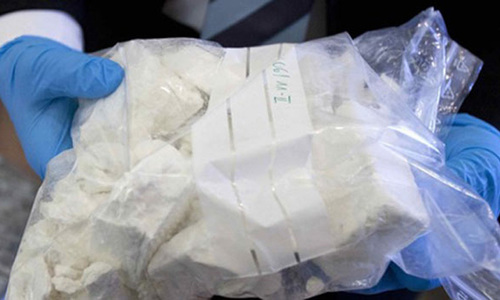
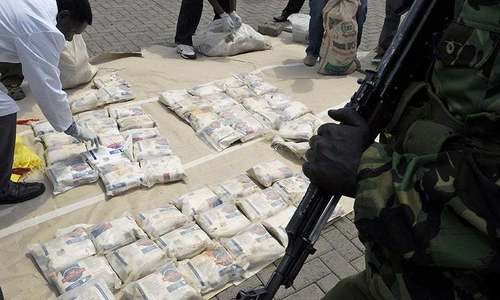
Courts in Pakistan hand years-long jail terms, including life imprisonment, for drug trafficking.
Law enforcement agencies — such as the Crime Investigation Agency (CIA) and the Organised Crime Unit (OCU) of Lahore police routinely bust networks of international drug traffickers.
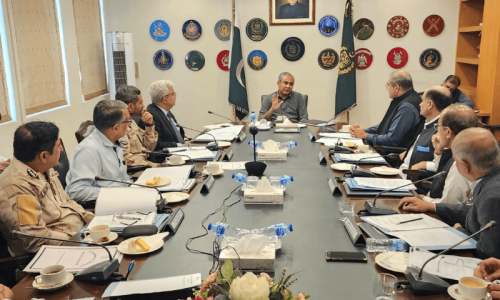
In July 2024, Narcotics Minister Mohsin Naqvi approved an already underway National Drug Survey to collect data on drug users across the country.
Naqvi, who also serves as the interior minister, had asserted that drug prevention was a national issue and no compromise will be made on it.