6
6


AS a number of nations moved towards relaxing their Covid-19 restrictions this week, the old question reared its head once more: Quo vadis? Where are we headed? Is it back to the future, reverting to a distressing and mostly stagnant status quo ante?
The coronavirus pandemic is being compared to the Second World War in terms of its earth-shaking potential. The analogy isn’t entirely absurd. State intervention in the processes of capitalism became the norm in several countries during the conflict, and in parts of war-ravaged Europe voters warmed to the idea of the concept being pursued in peacetime.
What are the chances, though, that anything comparable could occur in the early 2020s? Sure, there are plenty of intelligent arguments being made about the hazards of stepping back into an extremely unsatisfactory ‘normal’. At the same time, there are numerous voices, raised from platforms of relative privilege and power, demanding that the screws of neoliberalism be tightened to re-empower capitalism in the aftermath of a crisis it was demonstrably ill equipped to cope with.
Exactly when or how the pandemic will end is just one of numerous known unknowns. A wide range of timescales are being cited for the emergence of an effective vaccine. Like so much else, they are based mainly on conjecture. Broadly speaking, Covid-19 has wreaked considerably more devastation among the richer nations of the global north than in the geographical south.
Covid-19 has wreaked more devastation among richer nations.
That’s an intriguing deviation from historical patterns — the so-called Spanish flu pandemic of a century ago, for instance, took its worst toll in the subcontinent. This is a very different virus, of course. But it is yet to be conclusively determined why, in countries such as Britain and the US, certain minorities are falling prey to the virus and its unevenly fatal consequences at alarmingly higher rates than the rest of the population — beyond a level that could be explained by differences in socioeconomic circumstances.
There seems to be plenty of circumstantial evidence that the elderly and those with pre-existing ailments are more prone to faring the worst once infected, yet there have also been instances of younger people without a problematic medical history succumbing to the disease, and there are indications of an alarming infantile affliction possibly linked to the novel coronavirus.
Among the numerous conjectures is the proposition that the virus fails to thrive in warmer climes. One can only hope that is indeed the case, although it could be a long time before anyone knows for sure.
By and large, countries that were quick to clamp down have fared better than others. It has also been observed that governments led by women — from Finland to Taiwan and New Zealand to Germany — have generally proved more effective in coping with the crisis than many others. It may seem a trifle unfair to compare the relative competence of the governments led by Jacinda Ardern, Angela Merkel and Sanna Marin with the demonstrable dysfunction of the Trump, Johnson and Bolsonaro administrations in this or any other context. But perhaps it would be equally unwise to dismiss it as a coincidence.
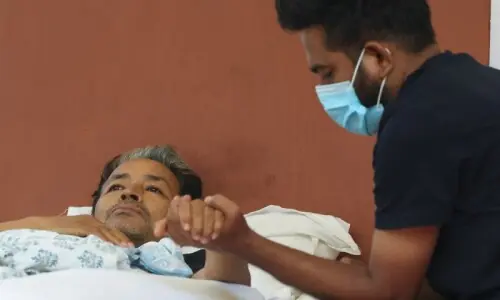
Our vocabulary, meanwhile, has been enhanced, with terms such as ‘social-distancing’, ‘flattening the curve’, ‘lockdown’, ‘sheltering in place’, ‘working from home’ and ‘self-isolation’ entering popular parlance alongside ‘PPE’ — which once stood in some circles for a university degree in politics, philosophy and economics, but today signifies personal protective equipment, whose dearth in some of the world’s richest nations has cost the lives of all too many nurses, doctors and other health workers.
In whatever way, and whenever, the pandemic might end, will we carry beyond it anything more than a few popular expressions? In an eloquent essay in the Financial Times last month, Arundhati Roy described the pandemic as “a portal, a gateway between one world and the next”, which we can walk through “dragging the carcasses of our prejudice and hatred, our avarice, our data banks and dead ideas, or dead rivers and smoky skies behind us. Or we can walk through lightly, with little luggage, ready to imagine another world. And to fight for it.”
I suspect she would be willing to concede that the former scenario is, sadly, far more likely. It is occasionally noted that the pandemic has laid bare the unconscionable disparities of wealth and privilege both within nations and globally. They were always there for those who cared to look, alongside the horrendous statistics spelling out the toll taken, not least on children under five, by avoidable causes ranging from cholera and typhoid to malnutrition.
It’s not enough to hope otherwise. In the absence of a concerted struggle for a different world, too many of us will simply wash our hands for 20 seconds and avert our gaze from the hundreds of millions of fellow human beings for whom clean running water remains a distant dream.
Published in Dawn, May 13th, 2020