Heart woes spur partial stop of malaria drug study for virus
Published April 13, 2020
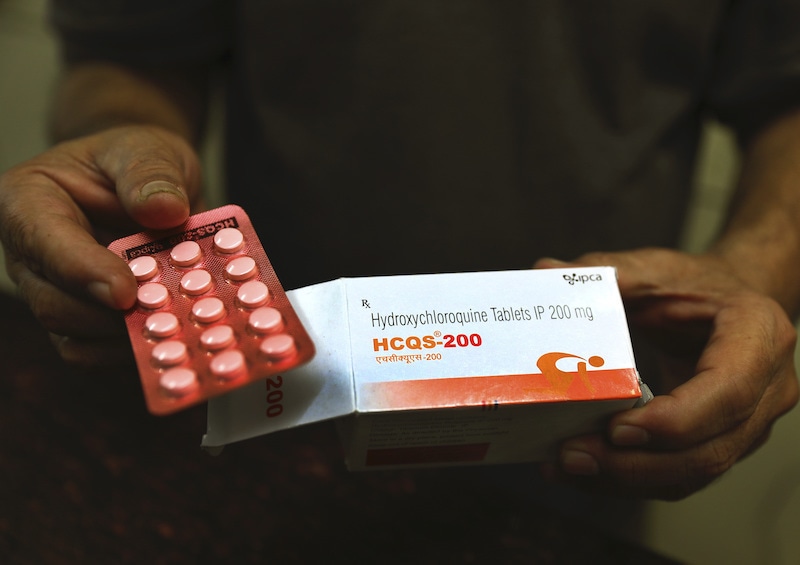
FILE - In this Thursday, April 9, 2020 file photo, a chemist displays hydroxychloroquine tablets in New Delhi, India. Scientists in Brazil have stopped part of a study of the malaria drug touted as a possible coronavirus treatment after heart rhythm problems developed in one-quarter of people given the higher of two doses being tested. Chloroquine and a similar drug, hydroxychloroquine, have been pushed by President Donald Trump after some early tests suggested the drugs might curb coronavirus entering cells.  (AP Photo/Manish Swarup, File) — Copyright 2020 The Associated Press. All rights res
FILE - In this Thursday, April 9, 2020 file photo, a chemist displays hydroxychloroquine tablets in New Delhi, India. Scientists in Brazil have stopped part of a study of the malaria drug touted as a possible coronavirus treatment after heart rhythm problems developed in one-quarter of people given the higher of two doses being tested. Chloroquine and a similar drug, hydroxychloroquine, have been pushed by President Donald Trump after some early tests suggested the drugs might curb coronavirus entering cells. (AP Photo/Manish Swarup, File) — Copyright 2020 The Associated Press. All rights res

Scientists in Brazil have stopped part of a study of a malaria drug touted as a possible coronavirus treatment after heart rhythm problems developed in one-quarter of people given the higher of two doses being tested.

Chloroquine and a newer, similar drug called hydroxychloroquine, have been pushed by President Donald Trump after some very small, early tests suggested the drugs might curb the virus from entering cells. But the drugs have long been known to have potentially serious side effects, including altering the heartbeat in a way that could lead to sudden death.


In this Thursday, April 9, 2020 file photo, a chemist displays hydroxychloroquine tablets in New Delhi, India. Scientists in Brazil have stopped part of a study of the malaria drug touted as a possible coronavirus treatment after heart rhythm problems developed in one-quarter of people given the higher of two doses being tested. — AP

Opinion

Editorial

Holding the line
16 Mar, 2026

Holding the line

PAKISTAN’S long battle against polio has recently produced encouraging signs. Data from the national eradication...
Power self-reliance
Updated 16 Mar, 2026

Power self-reliance

PAKISTAN’S transition to domestic sources of electricity is a welcome development for a country that has long been...
Looking for safety
16 Mar, 2026

Looking for safety

AS the Middle East conflict enters its third week, the war’s most enduring victims are not those who wage it....
Battling hate
Updated 15 Mar, 2026

Battling hate

In the current scenario, geopolitical conflict, racial prejudice and religious bigotry all contribute to the threats Muslims face.
TB drugs shortage
15 Mar, 2026

TB drugs shortage

‘CRIMINAL negligence’ is the phrase that jumps to mind when one considers the disturbing consequences of the...
Chinese diplomacy
Updated 14 Mar, 2026

Chinese diplomacy

THERE are signs that China is taking a more active role in trying to resolve the issue of cross-border terrorism...