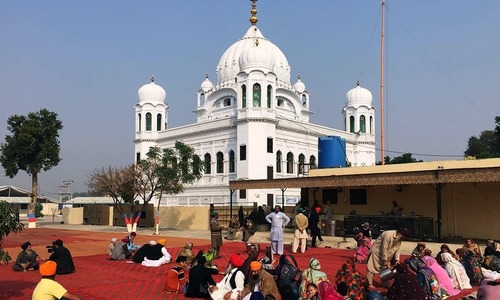
THE Pakistani offer to open a corridor to enable Indian Sikhs to pay their respects at the Gurdwara Kartarpur Sahib in Narowal was seen by proponents of peace in South Asia as a positive step towards fostering an atmosphere of harmony in the region. However, the usual politicking — particularly from the Indian side — is creating obstacles in realising a plan that would allow Sikh devotees to visit one of their most revered shrines on this side of the border without a visa.
While Pakistan had on Monday shared a draft agreement on the Kartarpur corridor and invited the Indian side to begin negotiations, New Delhi apparently parried the offer by issuing a counter-invitation to Pakistani officials on Tuesday. The Pakistani side was invited to visit India in February or March “to discuss and finalise the modalities” of the corridor. Instead of responding to the Pakistani offer in good faith, India’s approach reflects an evasive, non-serious approach. Since the gurdwara is in Pakistan and this country had extended the invitation, India should have responded positively to the offer.
Indeed, throughout Narendra Modi’s time in power, Pakistan-India relations have been in a deep freeze, with bilateral dialogue suspended as India continues to harp on about ‘terrorism’ yet refuses to talk to Pakistan. With general elections in India only a few months away, the BJP-led government is likely shoring up its anti-Pakistan, anti-Muslim credentials by avoiding any positive contact with Pakistan.
However, the Kartarpur corridor is a golden opportunity to restart talks on a ‘soft’, people-to-people subject: religious tourism.
Suffice it to say, both sides should avoid playing politics over religious places; India should respond positively to Pakistan’s invitation and begin the process for building the corridor. If this experiment succeeds, the process can be taken further; hopefully, similar arrangements can be made for Pakistani pilgrims wishing to visit the revered Sufi dargahs in India, such as Khawaja Moinuddin Chishty’s tomb in Ajmer and Nizamuddin Auliya’s dargah in Delhi, among others.
At present, the visa process is arduous and deters potential visitors from applying. This needs to change because when people from the ‘other side’ interact with their neighbours, hatred and propaganda will give way to understanding and harmony. Powerful, hateful lobbies on both sides must be ignored and the path to peace must not be forsaken.
India needs to respond to Pakistan’s offer so that work on the corridor can begin in earnest.
Published in Dawn, January 24th, 2019