3
3
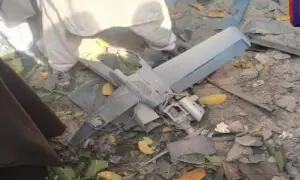
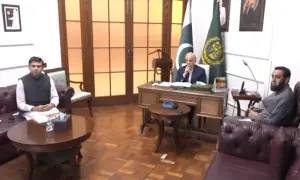
THE attacks keep mounting, the state keeps dithering, the politicians keep squabbling and the public remains as confused as ever. Yesterday’s attack on PML-N leader Amir Muqam in Shangla is just the latest in a seemingly endless stream of attacks across the length and breadth of the country — and destined to become yet another attack that did not cause an inflection point in the national response to militancy and terrorism. Witness the pusillanimous response of the political class to the bravery of 15-year-old Aitezaz Hussain — so much so that Imran Khan himself has voiced his disappointment at his own party’s government in Khyber Pakhtunkhwa. And while the prime minister and the army chief have shown some moral courage in recognising the ultimate sacrifice and unimaginable bravery of young Aitezaz Hussain, a more fitting response would be if the state finally developed some clarity on what the Taliban represent and why coexistence with their ideology ought to be unacceptable.
Yet, real change — of the good kind — is nowhere to be seen. So the questions have necessarily become grimmer too. What, exactly, will it take for the state to accept that the dialogue-first option is not a real strategy against militancy? A return to the devastating violence that wracked the country in the late 2000s and early 2010s? While the Taliban have proven they still have the ability to launch physically and psychologically devastating attacks, it is also almost certainly true that the sustained pressure put on them in various pockets across Fata and parts of KP by the military has affected their ability to achieve the level of violence of four or five years ago. Paradoxically, then, does a possible depletion of the Taliban’s capabilities — or at least a disruption of their network — mean that the state is willing to settle for a long-term bloody stalemate now? A stalemate in which neither side is poised to inflict the final blow on the other and one in which society, the economy and national psyche are left in a continually perilous state?
To denounce that possibility as craven surrender or supine leadership would be to miss the point. While those characterisations may well be true, the point at this stage really is to try and understand how a different course can be encouraged. Imran Khan and the religious right have staked out their positions. The PPP, the ANP and the MQM — essentially the secular left — showed their lack of ideas over five years. Now, the PML-N appears sympathetic to the idea of dialogue without necessarily being enthusiastic about it. The army appears itching to take on the TTP, but continues to be ambivalent about the idea of jihad and proxies. Somehow, from those variables, a more effective policy against militancy has to be crafted. But from where exactly is the existential question of today.