Above criticism?
COMING from any government functionary, it would sound odd, indeed ridiculous — more so when such a statement, which makes nonsense of the concept of freedom and democracy, comes from the federal information minister. Is it simply a case of breathing down the neck of the press or a warning of the possible shape of things to come? Speaking to journalists at an iftar-dinner in Karachi on Sunday, Mr Mohammad Ali Durrani said that the government would not allow — some versions say “not tolerate” — any criticism of the armed forces or the “solidarity of Pakistan”, though in his magnanimity he did concede that the government could be criticised. How can one avoid criticising the army when it runs the country’s government? Does not the criticism of the government automatically translate into a criticism of the army, because it is the corps commanders, headed by the Chief of Army Staff, who run this country? Unfortunately, the army does not merely run “the government”, if by government is meant the federal cabinet; it also runs a host of civilian institutions and departments and over the years has become an integral part of the state’s civilian machinery. In fact, as statistics placed before the National Assembly in March pointed out, the number of armed forces personnel had crossed the 10 per cent quota reserved for them in civilian departments under the cabinet division. Those heading such departments include both retired and serving officers.
The minister should have known that things cannot go back to the Ziaist times when any criticism of the government and the armed forces was a cardinal offence, for anyone who dared point to the dangers inherent in government policies was quickly labelled an enemy of “the ideology of Pakistan”. Some of the generals associated with that era of whipping and lashing of journalists are still with us and now stand for unadulterated democracy. As our history shows, press censorship in “national interests” not only proved counterproductive, it boomeranged on those who practised muzzling the press. The effects of the incalculable harm done to Pakistan by the military rulers (1977-1988) during the Afghan war are still with us. Those policies not only created a Frankenstein monster in the form of religious militancy, leading later to social anarchy, the very fabric of society was rent asunder through what has come to be called the heroin and Kalashnikov culture — all because the criticism of the armed forces was taboo. One can go further back in time to see the result of press control during Ayub’s and Yahya’s times to realise what price the nation had to pay because of the immunity from criticism which the military enjoyed.
The very idea of an individual or an institution being above criticism is absurd. As minister of information, Mr Durrani’s task should be to make the working of the government more transparent and the media’s access to information easy and quick. That he should set out to give us guidelines that suggest a form of press control deserves to be condemned in the strongest possible terms. Anyone elected or appointed to a government job for which he draws his salary, perks and privileges out of the taxpayers’ money must be prepared to face criticism from the public and the media. Those laying down guidelines seeking to control the press and circumscribe the right to criticism should know that they not only violate the Constitution, which guarantees fundamental rights to the people, in the ultimate analysis it is they who will stand condemned before the bar of history.
Numbers alone won’t do
IT is unrealistic of the prime minister to expect the police to curb crime in Karachi by the end of this month. Even though he has approved an additional force of 5,000 security personnel to crack down on crime in the city, it is unlikely that his instructions to the law enforcers will yield the desired results within the prescribed period. Moreover, there is little comfort in being told that lawlessness in the metropolis declined in the first fortnight of the month, when the last few months have witnessed an upswing in street crime. About 514 cellphones were snatched last week, while there were more than 100 incidents of car theft. The current strength of the Karachi police is 25,000 men, involved in investigative and operational assignments in equal numbers. With about 7,000 men posted on guard and VIP duty, only 5,500 are left to police a city of 12 million-plus citizens. That number is clearly not enough to curb lawlessness arising from growing economic and social frustrations. Under these circumstances, it is important to expand the force.
On the other hand, increasing the number of men on duty is not going to solve the problem. The quality of policing has also to improve — a task rendered difficult given the shortage of resources required to tackle crime. What has added to the police’s inability to curb lawlessness is the easy availability of illegal firearms which are proliferating in the city. Much has to be done to block weapons’ supply routes and to keep an eye on licensed arms dealers engaged in clandestine sales of illegal firearms. But perhaps the main concern remains the lack of motivation among police personnel. Poorly paid and with few amenities considering the risky nature of their job, it is hardly surprising that they often prove of little help to victims of crime. This makes the force more of a liability in the eyes of many citizens, especially when policemen themselves are involved in abetting crime. A complete overhaul of the force, including motivational steps and an end to politicisation, is needed to effectively curb crime in Karachi.
Fighting hunger
STATISTICS released on World Food Day on Sunday by international agencies point to the critical state of hunger worldwide. Given that one of the Millennium Development Goals is to eradicate poverty and hunger by 2015, developing nations need to strive hard to improve the lives of their citizens and invest more to ensure food security for them. The UN’s Food and Agriculture Organisation said that 35 per cent of the world’s malnourished people live in South Asia. While the numbers have fallen in the last decade and there is some improvement in people’s diet, the problem remains a source of serious concern, especially since poverty alleviation has not been adequately tackled. The International Food Policy Research Institute says that the low status of women in South Asia and their lack of knowledge on nutrition are the main reasons behind children being underweight. This is certainly true for Pakistan where girls do not complete their education and then as young mothers do not have the necessary nutritional knowledge required to raise healthy children. Nor do they have a say in their reproductive health or rights. The government must popularise family planning so that people are made aware of the economic and health benefits of having fewer children.
Both the president and prime minister promised to increase investment in the agriculture sector as this would not only boost export earnings but also create employment opportunities. But that is just one step towards ensuring food security for all. The government must strive hard to create employment opportunities at all levels if it is to make progress in alleviating poverty, especially as 30 per cent of the population lives below the poverty line. It must particularly teach rural women about nutrition so that they can ensure that their children grow up to be productive healthy, persons.
A probe commission is what is needed: The truth about the Kargil episode- II
OUR people have a right to know the truth, nothing but the truth. Anywhere else in the world, the people would have demanded it as a matter of their constitutional right.
If India can follow the universally acknowledged fact-finding process and take the nation into confidence, why should our people be denied to know their side of the real story?
By now, our people generally understand the situation but would still like the truth to be determined through an independent judicial commission.
As part of its democratic system and institutional governance, India has always kept its armed forces and their operational command and structure under strict governmental writ and fully subservient to the constitution. In keeping with this tradition, the Indian government lost no time after the Kargil conflict in establishing on July 29, 1999, a four-member committee headed by K. Subrahmaniam, a renowned defence studies expert, to determine what went wrong at Kargil.
India’s Kargil review committee was given two specific terms of reference: “i) to review the events leading up to the “Pakistani aggression” in the Kargil District of Ladakh in Jammu and Kashmir; and ii) to recommend such measures as are considered necessary to safeguard national security against such armed intrusions.” The committee completed its work in six months and presented its report to the Indian parliament in February 2000 with its findings and a long list of remedial and corrective recommendations.
As a result of an institutional approach in reviewing their failures and shortcomings during that crisis, the Indians have drawn up a list of “lessons learnt” and identified remedial measures to prevent any recurrence of their lapses. In doing so, they had a reality count in front of them. No controversy; no distortion. Who on our side will separate fact from fiction and distinguish reality from myth?
There is a total national consensus in India on the main conclusion drawn by the review committee that the outcome of the Kargil operation was a military as well as diplomatic triumph for India. Unfortunately, there is no such consensus in Pakistan. If it was not a “debacle,” can we also, like India, claim it to be our “military as well as diplomatic” triumph? Regrettably, we cannot.
In India, the need for an independent review of the Kargil episode arose because there, too, questions were raised over intelligence failures and the circumstances that led the country to be caught by surprise at Kargil. In Pakistan, the situation is worse. We don’t agree among ourselves even on the basics of the military operation.
There is no ambiguity or controversy in the Indian version. They acknowledge being caught by surprise when scores of their high-altitude Kargil posts which they had held since after 1972 were clandestinely occupied during their annual winter recess. Once they discovered the ingress, they fought back with all their might, perhaps contrary to the expectations on this side of the Line of Control, and were also able to convince the world of the source of “intrusion” and the prospect of a wider conflict
Unfortunately, we in Pakistan have never taken history seriously and have allowed it to be reduced to an amalgam of fabricated tales and myths. Our younger generations have been growing up on these fabricated facts and myths with our national tragedies and debacles being depicted to them as moments of glory, historic landmarks and “watershed” victories.
What is surprising is the claim in Musharraf’s book that “whatever movement has taken place so far in the direction of finding a solution to Kashmir issue is owed considerably to Kargil conflict.” Which movement? The only movement on Kashmir that we see since October, 1999 is in the reverse direction.
In fact, during the last two years after the resumption of the “composite” dialogue on the basis of the January 6, 2004, Islamabad “joint statement,” we did not see any meaningful direction or genuine sustainability in the “composite” dialogue, which is now inextricably linked to our ability to free India of terrorism — a task we have not been able to accomplish within our own country and we are still struggling with our role in the war on terror.
We have abandoned the high moral ground, a constant of our Kashmir policy, rooted in our commitment to the cardinal principle of self-determination enshrined in the UN Charter. We no longer speak of the UN Security Council resolutions and are instead rambling on half-baked and ad hoc approaches in the name of “pragmatism” and “flexible options.”
Indeed, the biggest casualty of the Kargil War, apart from more than a thousand lives lost on both sides of the LoC, was trust and confidence in Indo-Pak relations and the prospect of a Kashmir settlement. India resumed dialogue with us in 2004 not to resolve the dispute but only to seek an end to “cross-border terrorism.” It will be a miracle if India ever concluded any peace agreement with Pakistan as long as it is under a military government, especially headed by someone whom it sees as the main architect of the Kargil conflict. In his book now, Musharraf has only refreshed India’s “bitter” memories and bared its wounds. The Indians have been given a shrill reminder of what has always been in their subconscious.
According to an Indian analyst, Amulya Ganguli, “the fact that the three major confrontations between the two countries, in 1965, 1971 and 1999, took place when Pakistan was under a military or military controlled regime is not forgotten in India, and apparently, the Indian psyche has not been able to overcome its “contempt and intense dislike” of Pakistani “military-dominated establishment.”
Many in the Indian defence establishment have expressed surprise over the contents of Musharraf’s book. In a statement on September 25, an army spokesman in Delhi noted that the president had all along been maintaining that Kashmiri “freedom fighters” had taken on the Indian army in Kargil. He now admits that five units of the Pakistani army had supported the intruders. The statement also gave figures of casualties on both sides at the end of the conflict to support their contention.
Apart from what the Indian government or its army had to say in response to Musharraf’s “revelations” on Kargil, a more civilized reaction came from India’s respected veteran journalist, Kuldip Nayar, who, writing about Musharraf’s “new image,” could not resist describing the new Musharraf as more “articulate” but “more indiscreet, even at the expense of tailoring facts.” He reminded Musharraf that his version of Kargil was “different from what foreign experts say.”
No doubt, in its essence, the Kargil conflict, as known to the world through its extensive media coverage and published accounts in the form of books and articles, represents yet another chapter of the unresolved Kashmir dispute. Like the earlier Kashmir-related military conflicts, the Kargil operation also ended as a costly debacle both for India and for Pakistan which almost brought the two nuclear-capable states to the brink of another war with the risk of a disastrous strategic miscalculation on either side.
But the overt nuclearisation of India and Pakistan in May, 1998 had already brought the focus of the world attention on Kashmir as reflected in the UN Security Council resolution 1172 of 6 June 1998. While reacting to the nuclear tests conducted first by India and then by Pakistan (which at that time was under a civilian elected government), the Security Council had urged India and Pakistan to resume their dialogue and “encouraged them to find mutually acceptable solutions to address the root causes of their problems, including Kashmir.”
The western acceptance of the Indian claim during Kargil that Pakistan-supported forces had crossed to the Indian side of the LoC gave India an opportunity to persist with its demand that Pakistan should cease “cross-border terrorism,” which we did subsequently concede under the January 6 2004 Islamabad Agreement. In that sense, the current composite dialogue is now linked by India with our fulfilment of the undertaking not to allow our territory for any infiltration across the border.
India’s National Security Adviser M.K. Narayanan, in a TV interview the other day publicly claimed that President Musharraf had pledged to cooperate with New Delhi along the lines of the help he provided to the British government to foil what has come to be known as the London hijack plan. According to him, India’s understanding was that the joint anti-terror mechanism agreed in Havana would lead to the kind of cooperation that Islamabad had shown with London earlier this year.
He said the Indian government intended to make use of the joint terror mechanism in the wake of the Mumbai blasts to test Pakistan’s commitment, not just to the dialogue process, but also on restricting cross-border terror. This is where we stand now with our “composite” dialogue process. It seems the next foreign secretary-level talks will focus entirely on accusations and denials on Pakistan’s supposed role in the Mumbai blasts.
No doubt, terrorism is one of the eight items on the agenda of the “composite” dialogue and both India and Pakistan should cooperate in meeting this common threat, but linking this issue alone to the future of the dialogue is not the right thing. This process should not be subjected to conditionalities and disrupted again and again. Instead, a serious effort needs to be made to address the root causes of violence and conflict in this region.
(Concluded)
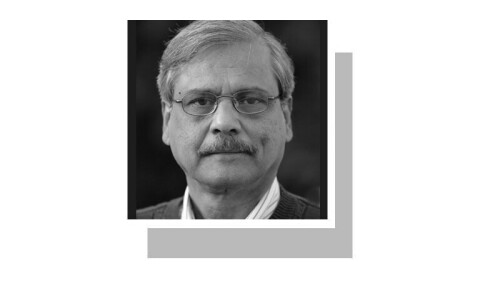
The writer is a former foreign secretary.