0
0


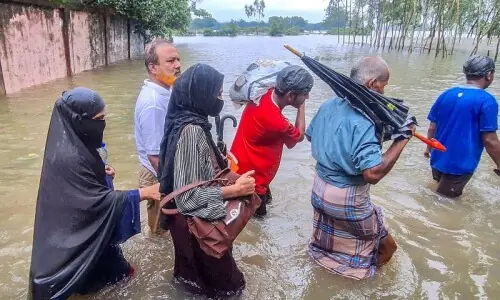
Cyclone Aila slammed into the coast of Bangladesh and the Indian state of West Bengal on Monday, leaving hundreds of thousands of people homeless after a tidal surge washed away villages, roads and livestock.
Military and civil relief workers struggled to deliver food, fresh water and shelters to regions worst affected by the surge of sea water and destructive high winds, authorities in Dhaka said.
About 110 people were killed in Bangladesh and 70 more died in India, officials told AFP.
Bangladeshs disaster management minister Abdur Razzak said conditions on the ground were desperate but that a major relief and rescue operation was in full swing.
'We have adequate resources to ensure food, relief and rehabilitation, and well work for as long as it takes to reach those affected,' Razzak said.
In Indias West Bengal, the cyclone hit the state capital of Kolkata, bringing down trees and electricity pylons and smashing cars.
About 20 of those killed died a day after the storm in mudslides caused by rainfall in the hill resort Darjeeling, the states chief secretary Asoke Mohon Chakraborty said.
'The cyclone traveled through northern districts of the state and heavy downpours triggered over 40 landslides on Tuesday,' he said.
Chakraborty said he expected further fatalities to be reported as relief workers reached outlying villages.
The storm caused havoc in the Sundarbans, the worlds largest mangrove forest and home to several protected species of tigers.
Conservationists have been unable to confirm if the animals had been affected in the forest, which straddles India and Bangladesh.
'Many islands and a large swath of the mangrove forest in the Sundarbans are still under water,' Chakraborty said. 'We have been dropping food to marooned people by helicopter.'
In Bangladesh, at least 250,000 people were stranded in the hard-hit districts of Koyra and Dakope.
'People are half-fed or not fed at all. There is a huge crisis with no drinking water as all the wells and ponds are submerged by salty seawater,' Koyra chief Arif Pasha told AFP by telephone.
'In some places there is no dry land for a proper air drop.' In Dakope, in the heart of the Sundarbans, 100,000 people remained in the cyclone shelters where they took refuge as the storm hit.
Many of the casualties in Bangladesh were children. In one village in Satkhira district, a dam burst and 23 people were swept out to sea and drowned, officials said.
The low-lying region frequently experiences tropical storms and cyclones during the monsoon season. In 2007, more than 3,500 people were killed, most of them in Bangladesh, when Cyclone Sidr hit the same districts.