0
0


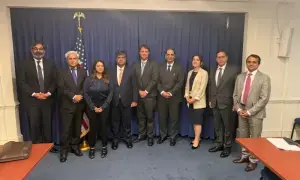
WASHINGTON No conditions were attached to the $2 billion military aid package the United States announced for Pakistan this weekend but there are expectations that require Islamabad to expedite its effort to dislodge militants from North Waziristan.
Diplomatic sources told Dawn that during the strategic dialogue, which concluded on Friday, the Americans accepted Pakistan's position that it did not have enough troops or resources to launch a major offensive in North Waziristan, as Washington demands.
Pakistan, in return, agreed to increase pressure on the militants hiding in the tribal belt by carrying out more targeted operations at various militant hideouts inside the area, the sources said.
US-trained special operations units of the Pakistani army will conduct those operations but there will be no US participation.
But during the talks, the United States made it obvious that even though it had attached no conditions to the package, it retained various options to halt or reduce aid if its expectations were not met.
As a small demonstration of various legal options available to the US administration, Washington barred half a dozens units in the Pakistani army from receiving any US assistance for allegedly carrying out extrajudicial killings during the Swat operation.
And on Saturday, Senator Patrick Leahy, who heads the powerful Appropriations Committee of the US Senate, clearly indicated what Washington expected from the Pakistani military. “If there is going to be progress against Al Qaeda we need the support of the Pakistani army,” he said. “But there is a lot of concern with extrajudicial killings by the army that remain unpunished, and this will be a factor when we consider a request for more aid. Respect for our law and the laws of war are fundamental.”
The committee Senator Leahy heads is responsible for State Department funding, which will provide bulk of the money Pakistan will receive from the new package.
US Secretary of State Hillary Clinton also endorsed Senator Leahy's views. “We will continue to ensure that all assistance (will) comply with US laws and regulations,” she said.
At a joint news conference with Foreign Minister Shah Mehmood Qureshi, she also acknowledged that Pakistan and the US still had differences with each other. “We are two different countries. We have two different traditions. We have two different histories. That does not mean we're going to agree on everything, but it means, as you do with friends, that you don't jump to conclusions,” she said,
Mr Qureshi, however, sounded a little more frustrated with the lack of trust he experienced during this visit to Washington.
“We do not know what greater evidence to offer than the blood of our people,” said Mr Qureshi while referring to US media reports that Pakistan was not doing enough to fight the militants.
And the unresolved issues that both Mr Qureshi and Secretary Clinton referred to include Pakistan's desire to acquire civilian nuclear technology from the United States as it is offering to India.
Secretary Clinton acknowledged that the issue was discussed but the Americans apparently refused to accommodate Pakistan's request.
The United States also refused to get involved in resolving the Kashmir dispute and advised Pakistan to discuss the issue directly with India. President Barack Obama had earlier promised to resolve the Kashmir dispute but he changed his position apparently under Indian pressure. Political observers in Washington warn that the Nov 2 mid-term polls can also jeopardise the Obama administration's aid package for Pakistan.
Mr Obama's Democratic Party is expected to lose the election, enabling the Republicans to control Congress.
The Republicans have already pledged to cut government's spending amid the weakening US economy. If they fulfil their promise, it may affect the $2 billion military aid package announced during the strategic dialogue.
But the Kerry-Lugar Bill package would remain unaffected as it has already been passed.