KABUL: The UN urged Afghanistan’s Taliban leadership Saturday to enforce their ban on improvised explosive devices, a day after 19 wedding guests were killed by a roadside bomb in the north of the country.
“Although the Taliban... leader Mullah Omar banned the use of anti-personnel landmines in 1998, denouncing such weapons as un-Islamic and anti-human, anti-government elements continue to use” them, a UN statement said.
The United Nations mission in Afghanistan “calls on the Taliban leadership to publicly reiterate a ban on these weapons and to stop their use”, it said, adding that IEDs caused “devastating harm to civilians”.
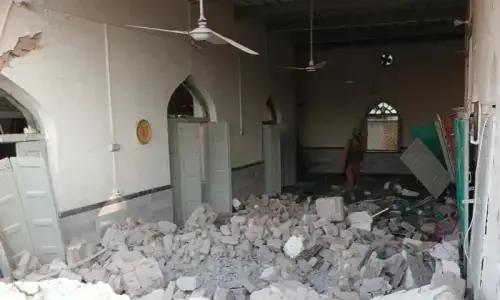
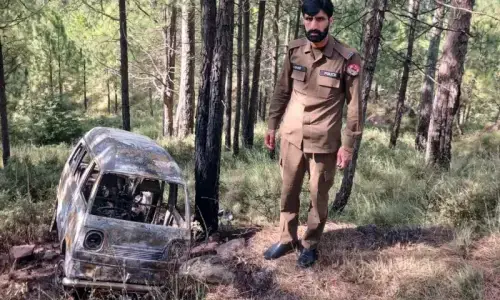
The call comes a day after a roadside explosion killed 19 civilians, most of them women and children who were on their way to a wedding party in Dawlat Abad district of the northern Balkh province.
A Taliban spokesman on Saturday denied their involvement in the incident, saying their fighters were not present in the area, a claim that was contested by the UN.
“Taliban operatives active in Dawlat Abad... are suspected of planting the landmine-like pressure plate IED, which is consistent with documented patterns and tactics of choice by the Taliban”, the statement said.
According to an earlier UN statement, 1,145 civilians were killed in the war in the first six months of this year, with 80 per cent of the deaths blamed on insurgents. More than half were caused by roadside bombs.
Last year as a whole, a record 3,021 civilians died in the war, the UN has said.
It blames insurgents for 80 per cent of the civilian casualties in 2012, saying pro-government forces, which include US-led Nato, were responsible for 10 per cent.
Women and children accounted for about 30 per cent of this year’s casualties, again mostly victims of roadside bombs.
IEDs are also responsible for a large percentage of the deaths among the Nato force helping fight the Taliban.
The foreign combat troops are due to withdraw by the end of 2014 and there are fears that the Taliban will extend their activities across wider swathes of the country against ill-prepared Afghan forces.