0
0

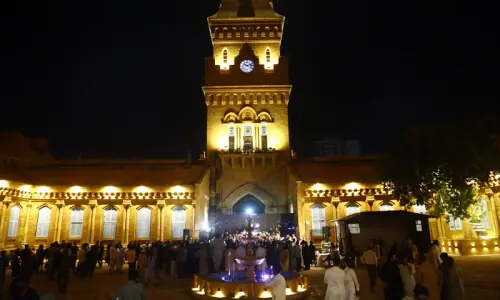
KARACHI, May 7: An emotional performance by an Iraqi ensemble, along with the spell-binding pirouettes of a Turkish dervish troupe, featured prominently on the penultimate night of the International Mystic Music Sufi Festival on Sunday, held at Karachi’s Baradari.
The evening started off with Naqi Ali Khan’s performance. The artiste, now residing in Canada, is grandson of Ustad Bade Ghulam Ali Khan, one of the most respected names in the recent history of subcontinental classical music. Babar and Javed Niazi, sons of another well-known name in local folk music, Tufail Niazi, delivered their version of Tera Ishq Nachaya next.
The Iraqi Maqam Ensemble’s performance was definitely one of the highlights of the evening. The group, formed in Baghdad in 1989, is now based in Holland. Led by founder Mohammad H. Gomar, the present line-up included two Syrian musicians, borrowed from the troupe also performing at the festival, along with lead singer Farida Mohammad Ali, who is also Gomar’s wife.
Though the rest of the ensemble’s regular musicians couldn’t make it to the festival, the show of pan-Arab solidarity was indeed welcome, and one wishes this type of solidarity could also be seen on the political stage.
Attired in an elaborately embroidered outfit, Farida delivered what seemed to be an ode to Baghdad, a city much in the news for all the wrong reasons. Maqam al-Iraqi is a centuries old genre of Arab music, and this particular rendition was very melodic, with the subtlest of rhythmic accompaniment.
The singer ended the performance with a moving plea to the audience to pray for Iraq.
Musemma, a group from Turkey that seeks to spread the message of Mowlana Jalaleddin Rumi, whom the Turks reverentially refer to as Mevlana, followed next.
To many outside the Muslim world, particularly in the West, Mevlana, particularly the dervishes of his Mevlavi Sufi order, have come to symbolise Sufism itself.
The group started with a spiralling vortex of vocals and music, repeatedly chanting the Shahada.
On the second tune, as the vocalists chanted Salawat, the much-awaited dervishes entered, attired in their highly symbolic, traditional garb.
As the group chanted the praises of the Holy Prophet (Peace be upon him), the dervishes — all but one — shed their cloaks and in flowing, pure white caftans began their journey, whirling towards ecstasy.
The chief vocalist concluded the performance with a beautiful recitation of verses from the Holy Quran and al-Fateha.—QAM