The apparent transformation of rural society sits uneasily with the landed elite’s strong presence in Pakistan’s legislatures, pointing to a disconnect between landownership patterns and political representation.
Does this reflect limitations in the sample-based Agriculture Census, ambiguities in legislators’ self-declared professions, or the disproportionate political influence of a relatively small landed class? How does this group continue to outnumber — and potentially outmanoeuvre — other professional categories in assemblies?
Across national and provincial legislatures, landowners and those with agri-business interests emerged as the largest professional group, based on members’ self-declarations to the Election Commission of Pakistan. This contrasts sharply with the changing rural landscape: official data show increasingly fragmented landholdings, with barely three per cent of farmers owning more than 12.5 acres.
Understanding legislators’ composition, backgrounds, and interests is essential to assess political and economic policy choices objectively. In Pakistan’s complex, multi-ethnic society, however, a vast informal sector, weak data collection, public mistrust and misreporting make this difficult. Limited access to official records has further constrained systemic research.
Many political leaders belong to the 3pc of farmers holding more than 12.5 acres
The Free and Fair Election Network (Fafen) Parliament Monitor on the 15th National Assembly 2018-2023, based on Election Commission of Pakistan (ECP) data, is perhaps the most comprehensive study of legislators’ professional backgrounds. According to Fafen, a similar analysis of the current legislatures is under preparation but has been delayed by the ECP’s slow provision of legislators’ declarations. Repeated attempts to seek the ECP’s input for this article were unsuccessful.
Of the total 1,058 legislators in the 2018 National Assembly and four provincial assemblies, 432 declared agriculture as their profession, far exceeding 223 businessmen, 81 full-time politicians, 49 lawyers, 25 doctors and 19 educationists, among others. Agriculturists accounted for 172 of 330 members of the National Assembly, 131 of 371 in Punjab, 76 of 168 in Sindh, 32 of 124 in Khyber Pakhtunkhwa and 21 of 65 in Balochistan.
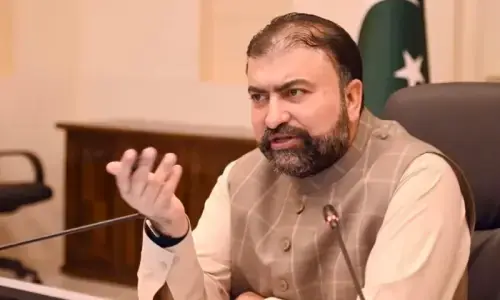
Shahid Khaqan Abbasi, former prime minister, businessman and senior leader of Awaam Pakistan, attributed the apparent disconnect to elite capture. “Members of the national and provincial assemblies, senators and political leaders largely belong to the 3pc of farmers holding more than 12.5 acres. They use their influence to control additional ‘benami’ land registered in the names of relatives, employees, servants or haris, secure government land on lease and obtain private land on concessional terms for cultivation by tenants.
“More importantly, many elite farmers derive substantial income from corruption and undeclared or illegal businesses, using agriculture income to launder earnings and evade taxes,” he alleged. “Besides, actually a large part of our elite uses ‘farming income’ to avoid taxes. The government does not ask how X acres of land can generate RsY of income. Everybody you meet will tell you, I have a ‘farm’. These are basically expensive, palatial homes built on farmland, and used to justify ‘farm’ income.”
Mr Abbasi argued that agricultural income also provides a convenient tax shelter for the wider elite. “Nobody questions how a given acreage can generate a declared level of income. Almost everyone claims to own a farm, often a palatial residence built on agricultural land, which is then used to justify supposedly agricultural earnings.”
Ziad Bashir, CEO of Ideas and a prominent business leader, argues that the apparent contradiction between 97pc of farmers operating less than 12.5 acres and agriculture dominating legislators’ declared professions may reflect different realities. Genuine fragmentation occurs through inheritance, while the census captures operational holdings, including tenancies, rather than simply ownership. But formal records may also understate effective control when family members or associates divide land while managing it as a single farm.
“Technology could help test this. Satellite imagery can identify adjoining parcels that show common cropping, irrigation, and harvesting patterns. Overlaying these with digitised land records and, under appropriate legal safeguards, ownership, family, utility, credit and crop-payment data could reveal who actually controls an agricultural operation. The constraint is therefore less technological than institutional: improving land records, data integration, transparency and political commitment.”
Dr Usama Ehsan Khan, an IBA researcher, stated that the apparent contradiction reflects two different measures. The Agriculture Census captures farm structure, overwhelmingly dominated by small holdings, while Fafen records legislators’ self-declared professions, revealing nothing about acreage owned. The real divide, therefore, is between the numerical dominance of small farmers and the disproportionate political influence associated with landed wealth.
Tax policy reinforces this dynamic. Agricultural income, taxed provincially, has historically enjoyed lighter taxation than comparable non-agricultural income, although recent reforms seek greater parity. Weak enforcement, combined with unequal landownership, patronage and access to state institutions, helps sustain landed influence despite continuing fragmentation of farms through inheritance.
Mehmood Nawaz Shah, president of the Sindh Abadgar Board, said the apparent disconnect raises two issues: the reliability of the census data and the fact that even if only 3pc of farmers own larger holdings, that pool is still sizeable enough to account for the strong presence of agriculturists in the assemblies.
A Lahore-based expert argued that agriculture has historically provided a convenient avenue for income-tax avoidance in Pakistan. Despite provincial legislation to tax agricultural income, enforcement remains weak, compounded by poor documentation of farm output and productivity.
Citing some 17,000 farms of 100 acres or more, he pointed to absentee landlords who lease land in smaller parcels to tenants or contractors. He argued that such earnings should be taxed like other rental income but often escape scrutiny. Shared ownership further complicates matters when one family member manages the entire holding without declaring the proceeds as personal taxable income.
Independent analyst Rashid Chaudhry argued that legislators often declare agriculture as their profession for tax advantages, although declining profitability makes it unlikely to be their principal income source. He said cotton’s collapse, repeated crop losses, and market crashes have undermined farming’s commercial viability.
Calling the sample-based Agriculture Census merely indicative, Mr Chaudhry questioned how much land the largest 3pc actually control, noting that land reforms remain stalled and individual holdings face no effective ceiling.
The writer is a former Dawn staffer
Published in Dawn, The Business and Finance Weekly, October 12th, 2026