Houthi strike on Riyadh airport kills 12; Saudi-led coalition vows 'decisive' response to worst attack on kingdom in a decade
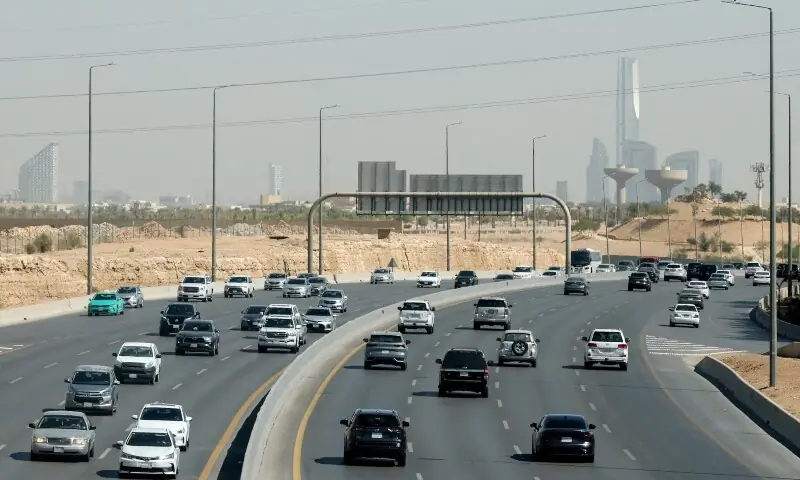
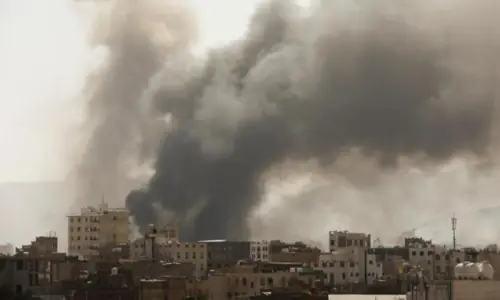
At least 12 people were killed and more than 300 wounded in an attack on Riyadh’s international airport on Saturday, the deadliest in the kingdom in more than a decade, as the Houthis escalate a campaign they launched this summer.
The dead from the third attack this week on the airport included four Saudis, two people from Bangladesh and one person each from the US, Jordan, Palestine, Syria, Sudan and Egypt, the Saudi civil aviation authority said. At the latest count, 309 were wounded, officials said.
President Donald Trump said Washington was considering joining Saudi strikes on the Houthis in the conflict, a spillover from the war on Iran that the US and Israel launched in February.
Hospitals were flooded with wounded brought by ambulance and helicopter, some in critical condition after the attack, which occurred without warning.
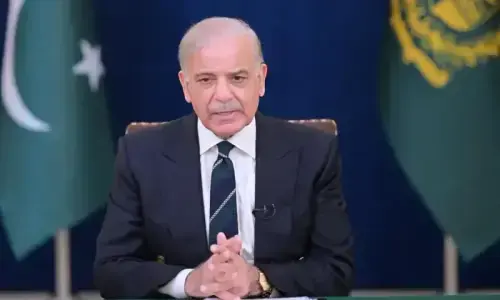
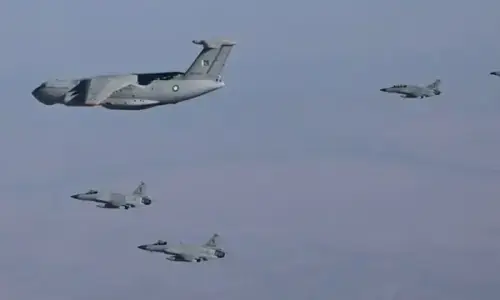
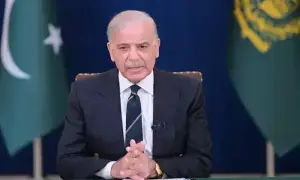
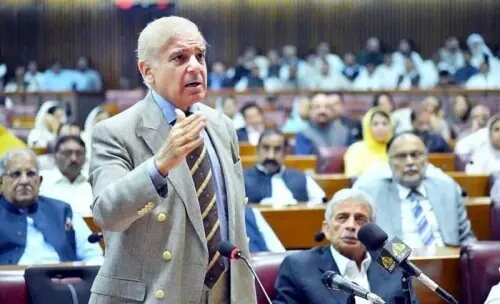
Prime Minister Shehbaz Sharif condemned the Houthi attack on Sunday, reiterating Pakistan’s commitment to Saudi Arabia’s security under the Makkah Joint Defence Agreement.
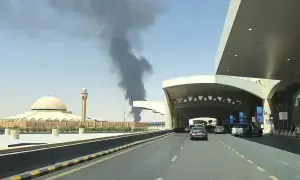
The coalition blamed the group for the strike on King Khalid International Airport, describing it as a “full-fledged war crime” that a diplomatic source attributed to a missile.
Earlier in the day, authorities had suspended operations at Riyadh’s international airport. The Saudi civil aviation authority had initially confirmed an attack had injured several people at the sprawling King Khalid International Airport, with a diplomatic source attributing it to a missile fired by Yemen’s Houthi rebels.
The situation prompted health officials to activate a rare mass call-up of doctors to deal with the “serious emergency”, a medical source said, while foreign embassies warned their citizens to avoid the facility.
Houthis have repeatedly targeted the facility, claiming a series of strikes on Thursday that killed three people and damaged a plane, though they did not announce any new attacks on Saturday.
Air traffic monitor Flightradar24 said 155 arriving and 161 departing flights had been cancelled, while a total of 222 flights were delayed.
At around 6pm local time, Flightradar24 noted that flights bound for the airport were “diverting elsewhere, mainly to Jeddah at the moment”. It later shared a notice to airmen (Notam) for operations suspended till 12am.
A witness at the airport reported hearing an explosion while waiting to board a flight, and another said they saw a strike that left people wounded and fleeing in panic.
“I was on gate 403” at the domestic terminal, the witness told AFP. “I saw 401 hit, I saw injured [people] in front of my eyes. Everyone was running.”
A medical source told AFP that the health ministry had ordered ER doctors to report to hospitals around the capital to treat the wounded on Saturday.
“We were told we are dealing with a ‘serious emergency situation’. Injured are being moved to hospitals across Riyadh”, with many in critical condition, the source said.
The aviation authority said the number of injured from the attack was still being assessed, adding that airport “operations had been temporarily suspended pending the completion of an assessment of the damage and verification of the safety of the facilities”.
The Houthis have repeatedly attacked Saudi airports, oil facilities and tankers after a truce in their long-running war with Yemen’s coalition government unravelled in July.
A source at a local hospital said five people were in intensive care there after being wounded at the airport, with “dozens of people injured” in all.
A relative of one wounded person said they had been hit in the shoulders and arms by shattered glass. Three witnesses confirmed people being evacuated from the airport.
Two doctors told AFP that several pilgrims headed to Makkah had been injured while waiting to board their flight.
A diplomatic source briefed on the matter told AFP the airport was hit by “a missile around 3:00pm” (5pm PKT).
“Houthis are attacking civilian targets. Riyadh airport is a civilian target,” the source said.
‘War crime’
Coalition spokesman Major General Turki al-Malki described the strike as a “cowardly terrorist attack” against a civilian facility.
“The cowardly terrorist attack by the terrorist Houthi militia… which resulted in deaths and injuries among civilian passengers and airport staff, constitutes a full-fledged war crime,” he said in a statement on X.
US ‘may’ join Saudi strikes
Asked on Saturday whether he had changed his mind about joining Saudi strikes on the group, US President Donald Trump said: “We may.”
He said he would be speaking with Saudi Crown Prince Mohammed bin Salman, calling what happened in Saudi Arabia “not acceptable”.
US media outlets have reported that previous Saudi requests for US military assistance in dealing with the Houthis have been rebuffed.
Embassy warnings
The Yemen conflict flared back to life after a four-year, UN-brokered truce collapsed, months into a wider Middle Eastern war that has rocked the region and roiled energy supplies and markets.
The scale and frequency of the recent strikes targeting Riyadh are unprecedented in the eight months of war in the region.
Saudi Arabia leads an international coalition that supports Yemen’s government militarily, and has found itself drawn deeper into its impoverished neighbour’s civil war.
Both Riyadh and the Houthis have signalled a willingness to keep fighting rather than pursue diplomacy.
The US embassy in Saudi Arabia said it was “aware of attacks” on Riyadh airport on Saturday and called on American citizens to avoid the area.
The Canadian, German and Spanish embassies also warned their citizens to avoid the facility. Spain’s embassy, in a message on X, alerted nationals to a “new attack… by the Houthis”.
A senior Western diplomat told AFP that several embassies “indicated that they had decided to prohibit their staff’s travel to/from Riyadh Airport over the next week as a prudential step”.
Near the airport, passengers carrying luggage could be seen standing on the pavement at a metro station.
Yemen fighting
Meanwhile, in Yemen, Saudi-led government forces were advancing against the Houthis in areas they captured last month around the Bab al-Mandab strait, military sources told AFP.
The Yemeni government last week announced a counter-offensive aimed at retaking all areas held by the Houthis, after the group seized the country’s entire western coastline in a lightning offensive.
The Houthis confirmed that government forces had attacked in the Bab al-Mandab area — a key chokepoint for Red Sea oil and cargo shipping — but they claimed to have repelled the assault.
Claims by the warring parties have been impossible to independently verify, with the situation moving fast on the ground and access for journalists difficult.