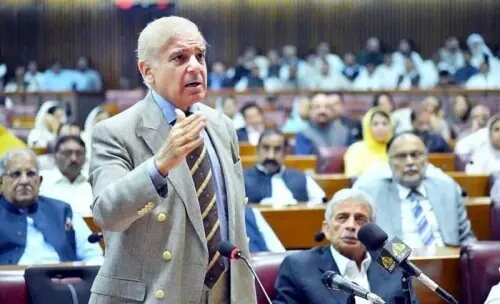
MUCH has changed in just a little over a decade. In 2015, when the question of Pakistan’s involvement in the conflict between Saudi Arabia and Yemeni rebels last arose, the then defence minister, Khawaja Asif, opened the issue for debate before a joint sitting of parliament. Days later, after a marathon session, it was the then finance minister, Ishaq Dar, who presented the parliamentary resolution affirming Pakistan’s support for Saudi Arabia’s territorial integrity, while conveying a desire to “maintain neutrality in the Yemen conflict so as to be able to play a proactive diplomatic role to end the crisis”. In 2026, the Foreign Office tells us that the recent signing of the Makkah Joint Defence Agreement and the commitment of military capabilities under it are executive functions that do not necessarily require parliamentary approval. That is a rather large departure.
Ironically, in his Friday briefing, the FO spokesperson, while rejecting criticism of the apparent lack of political consultation on the matter, pointed to the participation of Defence Minister Khawaja Asif and Deputy Prime Minister and Foreign Minister Ishaq Dar in the Strategic Political and Defence Committee. He mentioned it in support of his assertion that members of parliament and the federal cabinet had not been completely cut off from the decision-making process. But the two ministers ought to be asked: is the risk calculus of the conflict any different from before? And if the policy is the same as in 2015, why not say so in parliament, as they did then? One hopes they have satisfactory answers to these questions. The secrecy surrounding the matter gives the impression that, in 2026, parliament is being deliberately sidelined in a matter in which it was deliberately involved in 2015.
Meanwhile, the third party in the trilateral Makkah defence agreement, Turkiye, is taking the agreement to its parliament. Regardless of what the law allows, it would be better if Pakistan took the same route. The fact that our troops are already on Saudi soil, and have been so for decades, is no answer, especially since the terms of the new joint defence agreement have not been made public, and, therefore, their consequences cannot be judged. A handful of ministers in a committee deliberating behind closed doors cannot be claimed as a substitute for a parliamentary debate. Where Pakistan’s involvement in a foreign conflict is concerned, the public’s representatives should have been taken into confidence. Pakistan has always been unequivocal about its commitment to protect Saudi Arabia’s territorial integrity and the holy sites — that is not in question here. The concern is about process, and respect for parliament as the people’s representative.
Published in Dawn, October 11th, 2026