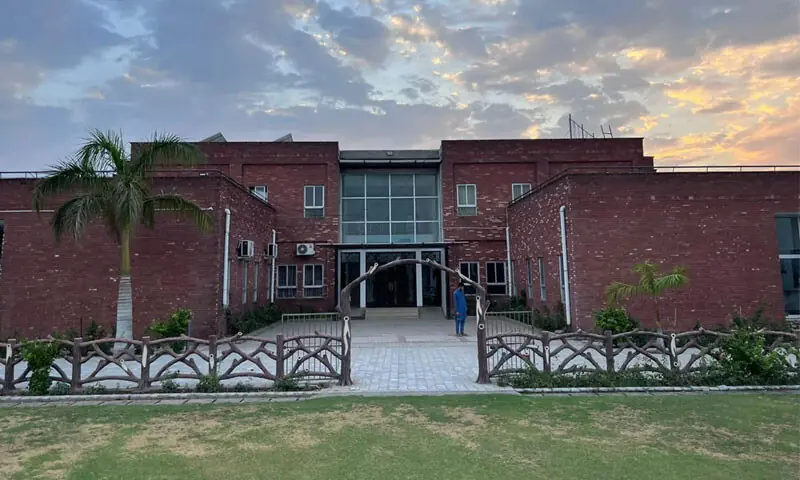
On a sprawling 100-kanal campus on the outskirts of Mirpur, the southern lakeside city of Azad Jammu and Kashmir (AJK), stands an institution where loss of sight does not mean a loss of vision for the future.
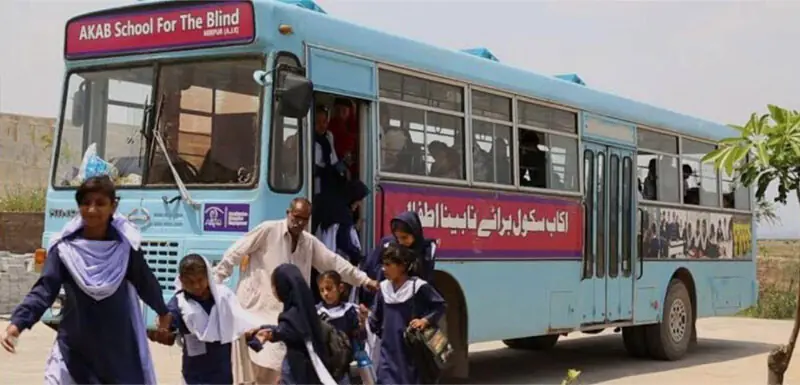
This is AKAB School for the Blind, which began two and a half decades ago with one teacher and one student in a rented room and has since grown into a specialised institution providing free education, hostel accommodation, food, transport, technology and training to hundreds of visually impaired children.
Much of its expenditure is met through donations from philanthropists, including members of the Pakistani and Kashmiri diaspora.
The school has educated more than 300 children so far, many of whom have gone on to pursue higher education and careers in teaching and other fields. It currently has 150 boys and girls on its rolls, including 50 day scholars, while another 50 former students pursuing higher education continue to live in its hostel.
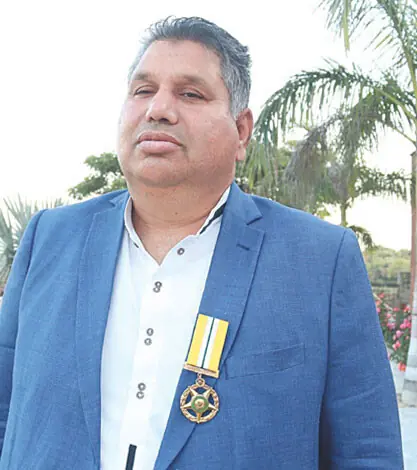
The driving force behind the project is Prof Mohammad Ilyas Ayub, who was born blind into an educated Mirpur family 56 years ago and currently teaches English literature at the town’s Government College.
In 1994, Ayub and another visually impaired educationist, Tariq Awan of Muzaffarabad, co-founded the Azad Kashmir Association of the Blind (AKAB), intending to secure education and employment and a dignified place in society for visually impaired people.
Ayub himself received early education at a school for visually impaired children in Lahore and graduated from Government College Lahore. Later, he went on to earn master’s degrees in English and special education from Punjab University and in Islamic Studies from the University of AJK.
In 1997, he joined the AJK education department as a lecturer and, after another three years, established the region’s first school for visually impaired children in a single room in a commercial plaza in Mirpur, with one teacher and one student.
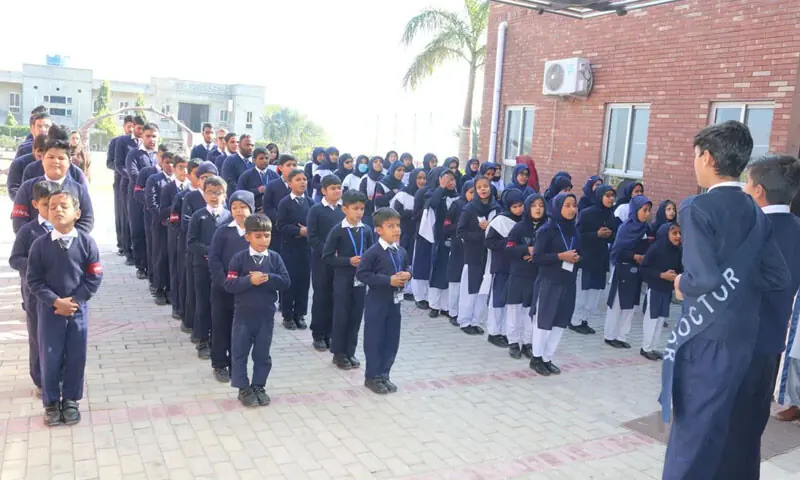
The project gained permanent footing when initial government land grants in 2004 and 2008 allowed philanthropists and the Kashmiri diaspora to fund purpose-built hostels, classrooms, a library and a computer lab.
The institution now offers Braille and computer education, modern educational technology and assistive devices, a Braille printing press, a library, sports facilities and other co-curricular activities. It also has a standard-sized cricket ground.
Prof Ayub’s philosophy for the school is grounded in dignity over charity.
“We want our students to move beyond dependence and become confident, self-reliant and active members of society,” says Ayub, a recipient of Tamgha-i-Imtiaz in recognition of his services to the visually impaired community.
“We seek to provide equal opportunities rather than sympathy, enabling students to pursue education and careers with confidence and dignity.”
The academic record of its pupils speaks volumes: alumnus Junaid Ahmed made history by securing the top position in the intermediate board examination, subsequently earning a scholarship to a US university before returning to pursue postgraduate studies at the University of Gujrat.
In recent intermediate examinations, two female students crossed the 1,000-mark threshold, and the 9th-grade result announced by AJK BISE last month was 100pc, to the pride of the institution. Seven alumni have so far cleared the Public Service Commission examinations to secure positions as university and college lecturers.
Life at the campus extends far beyond academic textbooks.
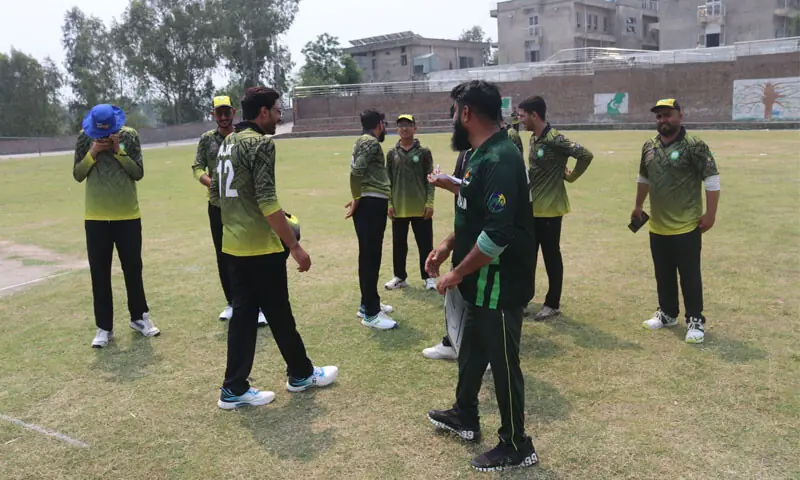
The standard-sized cricket ground forms the heart of co-curricular life. Prof Ayub, who serves as vice chairman of the Pakistan Blind Cricket Council, has fostered a sports culture that has fed directly into national triumphs; the reigning world champion Pakistan national blind men’s cricket team currently features an AKAB connection through its captain, head coach and three core players.
The Pakistan national blind women’s cricket team also has two players from the school.
The AKAB cricket ground has also become a training venue for the national blind cricket team, with its camp being held there. The school also continues to support former students in higher education through financial assistance and guidance, so that their educational journey does not end after school.
“Visually impaired children have enormous potential. What they need are appropriate education, training and opportunities,” stresses Prof Ayub.
Yet, despite these triumphs, systemic barriers remain a persistent obstacle once students leave the campus gates.
UK-based Kashmiri journalist Sajid Yousaf, a key campaigner for AKAB, highlights a recurring gap between public policy and its implementation on the ground.
“While a one-per-cent employment quota is officially reserved for persons with disabilities, it rarely translates into actual jobs,” Yousaf observes.
He points out that vacancies are frequently under-advertised or filled by candidates with less severe physical disabilities, bypassing visually impaired graduates who have proven their capabilities against sighted peers.
“The determination and effort required for them to compete on equal terms is difficult for those without visual impairment to fully comprehend.”
AKAB’s journey shows what can be achieved when education, technology and opportunity are made accessible to visually impaired children.
But the challenge goes beyond educating them. For Ayub, it also means ensuring that the opportunities available to visually impaired people do not end with their schooling.
“I urge the authorities to move beyond declarations and ensure that the opportunities and rights available to them are implemented in practice.”
Published in Dawn, October 12th, 2026