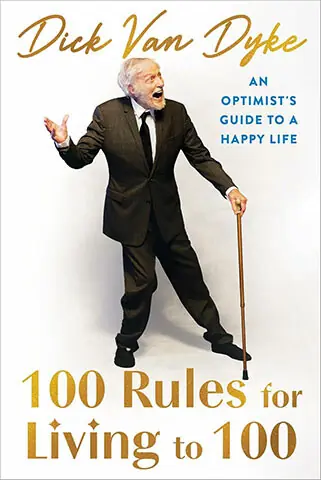
100 Rules For Living To 100: An Optimist’s Guide To A Happy Life
By Dick Van Dyke
Grand Central Publishing
ISBN: 978-1538777909
320pp.
It’s true that there is no recipe for eternal life and no single medical procedure can add years to your life. However, film and TV actor and entertainer — with eight decades of experience — Dick Van Dyke, has his ‘100 cents’ on the issue, which he has accumulated over the 100 years of his life.
Not only does he reveal his secrets in 100 Rules For Living To 100: An Optimist’s Guide To A Happy Life, but his collection of advice, stories and reflections on how he has maintained a zest for life can serve as your dos and don’ts. Trust me, he is living proof of their success.
Reading this book is like talking to an elderly relative who has lived a long life. Knowing that this relative might be Dick Van Dyke makes it even better, because generations have grown up watching him on both the big and small screens. He was there when the word ‘Supercalifragilisticexpialidocious’ was coined in Mary Poppins (1964), drove a car that flew in Chitty Chitty Bang Bang (1968), had a show named after him that revolutionised TV (1961-66) and solved murders in Diagnosis: Murder (1993-2001) and Murder 101 (2006-08), all between the 1960s and the 2000s.
After that, we went on to see him reinvent himself, playing the antagonist in the Night at the Museum (2006 and 2014) films as well as the old man who danced on the table at a crucial moment in the Mary Poppins sequel Mary Poppins Returns (2018). But there is more to him than can be covered here. What’s important is that he has remained one of Hollywood’s most beloved personalities across generations, and he finally reveals his secrets to making the most of the life we’ve all been given.
At 100, actor and entertainer Dick Van Dyke reflects on eight decades in show business, personal loss and the lessons that have kept his famously sunny outlook intact
Using humour, honesty and the infectious optimism that has defined his career, the legendary entertainer looks back on a remarkable life and recounts stories from his past and present to help readers improve their future. Not only does he recall many stories from his blockbuster flicks and TV shows, but he also gives readers a glimpse into his personal life, one that even his ardent fans didn’t know.
The best thing about this book is that, rather than a conventional autobiography, it is structured as short, easy-to-read chapters, each centring on a life lesson. Some of the ‘rules’ are practical, others philosophical, but all are illustrated with anecdotes from a career spanning more than eight decades. If you are a fan who has followed Dick Van Dyke for years, you will read it in his baritone voice and realise it is not advice from a celebrity but a conversation with an elderly friend over coffee.
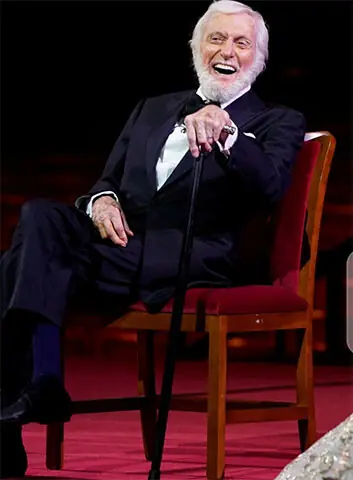
Don’t be surprised if he tells you that he was considered for the role of James Bond after Sean Connery left for the first time, that the directors behind both of his children’s classics were not child-friendly folks, or that his fans were stunned when he decided to play the bad guy in an episode of Columbo (1974). Each of the stories mentioned in these pages is true, and the way they are told makes them even more memorable.
From missing an important TV appearance because President Harry Truman’s daughter, Margaret Truman, was given the spotlight instead, to amusing encounters with Hollywood legends such as Cary Grant, this book is filled with anecdotes that can only happen to someone who has been around since the 1950s.
He is proud of the actors and crew he has worked with over the years, especially the ones who created an unusual Oscar using scrap metal for him for Mary Poppins, as he didn’t receive an Oscar for the film. The book would be incomplete without the mention of music, and he devotes several chapters to it, especially his lifelong love of barbershop singing. Whether performing on stage or harmonising with friends, he repeatedly returns to the idea that staying creatively engaged is a key to a fulfilling life.
Why do I find this book one of the better reads in recent years? Just like his fast-paced, no-nonsense TV shows, Dick Van Dyke comes up with chapter titles that are apt and perfect. For instance, there is a chapter where he discusses his deteriorating eyesight, titled ‘Read While You Can.’ Another one about his brother Jerry is ‘Tolerate and Cherish Your Little Brother’, whereas in ‘Save All That Artwork’, he implores readers to keep all the artwork they have created over the years safe because he couldn’t.
It might seem strange, but whatever the older man says in this book is relatable to folks of all ages. His youth might connect with younger readers and his later-life details might resonate with those growing older, while the midlife crisis he describes isn’t much different from what many experience. The way he keeps thanking his current wife Arlene, his ex-wife Margerie, and his kids (and their kids) makes you realise that everyone is important in some way and that thanking them is the best way to acknowledge their good work.
The final chapters take a more reflective turn as Dick Van Dyke confronts mortality. He writes movingly about the deaths of his teenage granddaughter and his eldest daughter, as well as the loss of friends and colleagues, especially Gene Hackman, whose family had a personal connection to his own childhood. He also speaks openly about ageing and accepting life’s inevitable endings without surrendering hope.
Readers seeking scandalous revelations may find little to satisfy them. Dick Van Dyke has always preferred to celebrate life’s brighter moments and this book remains true to that philosophy. Yet, he does not shy away from the incidents that shaped his life, both positive and negative — he frames them as experiences that make happiness more meaningful.
It’s not a feel-good book all the way, though. Dick Van Dyke reveals that he had to seek help to recover from alcoholism during his prime and that his agent rejected some roles because of payment issues, even though he would have done them for free. He also hasn’t forgotten the producer’s docked payment for Chitty Chitty Bang Bang, nor can he forget his close brushes with death, both times involving his own cars and both times with him behind the wheel.
For those who grew up watching Dick Van Dyke, this memoir carries an extra layer of nostalgia. For younger readers, it offers an engaging portrait of an entertainer whose career helped shape modern television and family cinema. No, there aren’t any pictures here, but it’s a trip down memory lane that keeps getting better with every page.
Ultimately, 100 Rules For Living To 100 is less about reaching 100 than about making those years count. Warm, witty and deeply human, Dick Van Dyke’s story leaves readers with the comforting sense that growing older need not mean growing old.
The reviewer is a broadcast journalist who also writes on sports, film, television and popular culture. X: @omair78
Published in Dawn, Books & Authors, September 27th, 2026