Pakistan aiming to become competitive destination for long-term investment, CDF Munir tells minerals moot
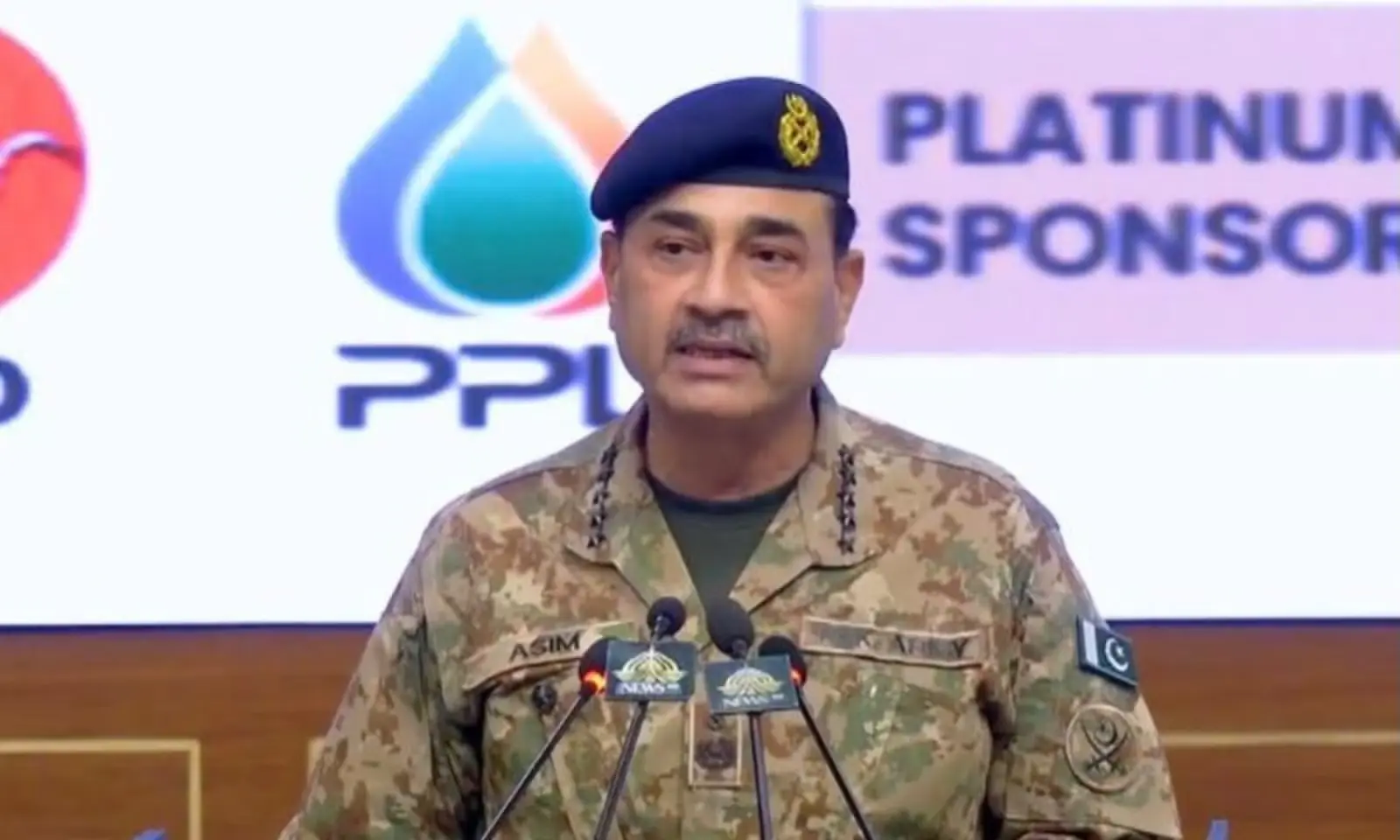
Chief of Defence Forces and Chief of Army Staff Field Marshal Asim Munir said on Friday that Pakistan was aiming to become a competitive destination for long-term mineral investment.
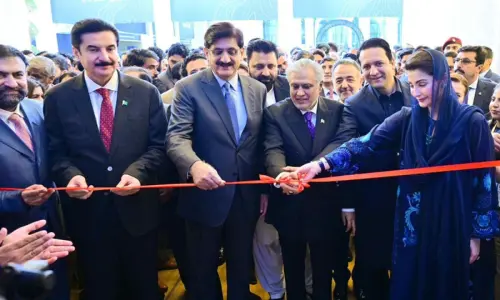
He made the remarks while addressing the participants of the Pakistan Minerals Investment Forum 2026 in Islamabad, according to state-run Radio Pakistan. Delegations, exhibitors and attendees have arrived from across the world to attend the event.
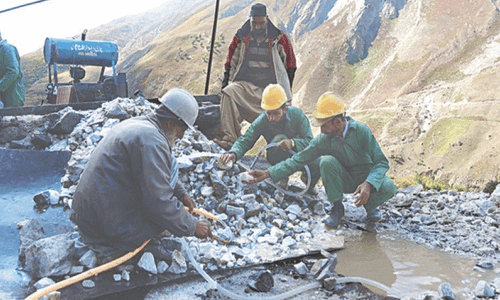
As the two-day event opened on Thursday, Pakistan showcased its vast mineral resources, ranging from coal and salt to gold and critical minerals, to attract international investment, promising predictable, investor-friendly policies, institutional support and security.
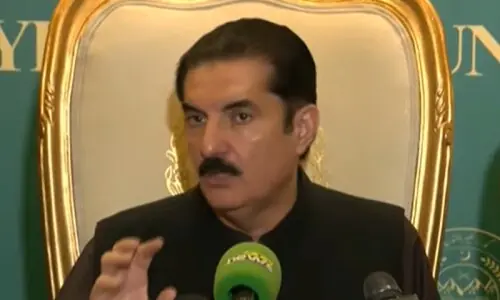
On Friday, CDF Munir said all possible measures were being taken to ensure the security of the entire mining ecosystem. He said mines and miners, investments, industries, projects and all associated people would be provided adequate protection, the Radio Pakistan report said.
He added that harnessing Pakistan’s mineral wealth was a collective national objective. He also emphasised that the country’s goal was not merely to export raw materials but to develop the entire value chain, including refining and manufacturing, it added.
CDF Munir also said that Pakistan sought to foster long-term partnerships that created sustainable economic value for the country and its partners.
“He stressed that mineral development must benefit local communities, adding that people living in mineral-rich areas should witness tangible improvements in their lives,” the report said. He also emphasised that Pakistan must move from potential to productivity, from promises to action and from raw exports to value-added growth.
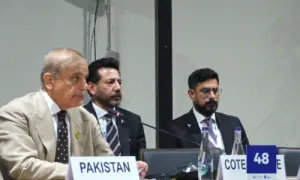
Addressing the same event, Prime Minister Shehbaz Sharif expressed hope that Pakistan could become the world’s sixth-largest economy “earlier than 2050”.
In his remarks, he recalled a Goldman Sachs assessment, which had projected Pakistan to become the sixth-largest economy in the world by 2075 and said: “I would like to make a small amendment here — instead of 2075, it will be earlier than 2050.”
‘Mineral exploration increasingly focused on strategic resources’
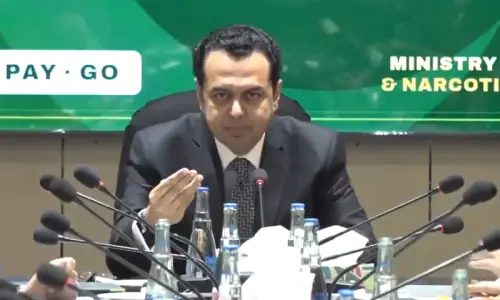
Earlier in the day, Petroleum Minister Ali Pervaiz Malik addressed the forum and stated that Pakistan’s exploration efforts were increasingly focused on minerals that were of strategic importance to global investors.
In continuation of the pitch, Malik told the investors that Pakistan’s exploration efforts were being complemented with “modern geochemical and geophysical surveys, exploratory drilling, and upgrading of our geoscience advanced research laboratories with sophisticated analytical technologies”.
Here, he particularly mentioned the exploration of copper and gold in Chagai and western Balochistan to lithium, tin and tungsten in Gilgit-Baltistan and antimony and base metals in Khyber Pakhtunkhwa.
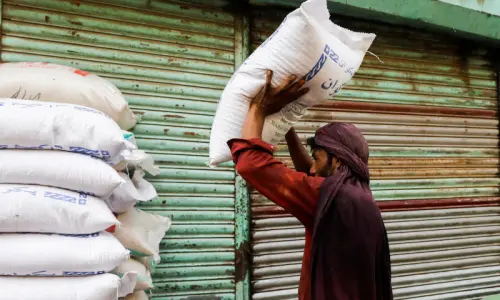
He said Pakistan had been exporting raw ore and importing the finished products to meet its requirements for a long time.
“We are now advancing copper smelting to capture more of the value chain from the mine to the finished metal,” he added.
The minister said Pakistan was also strengthening the scientific foundation of its mineral sector through the Geological Survey of Pakistan.
“The government’s accelerated geological mapping programme, including detailed surveys at a scale of 1:50,000, is helping identify mineral prospects across the country.”
The minister further said that through international technical cooperation, including the UK Pakistan Geoscience Capacity Building Programme, “we are strengthening expertise in digital mapping, airborne surveys and mineral assessment”.
“We are also digitising decades of geological information to give investors greater access to reliable data, reduce exploration uncertainty, and enable informed investment decisions,” he continued.
The petroleum minister highlighted that discovering a mineral deposit was only the initial stage and a commercially viable mine required electricity, water, roads, railways and access to international markets.
“That is why infrastructure development is aligned with our mineral ambitions,” he explained. In this context, he described the planned upgrade of the Rohri-Nokundi railway corridor, connectivity to Port Qasim and the development of supporting infrastructure around Reko Diq as “important steps” towards connecting Pakistan’s mineral-rich regions with the global markets.
He said, “Our objective is very clear: to build not just individual mines, but an integrated, competitive and sustainable mineral industry.
“Where it is commercially and technically viable, we want investment to support processing, refining, downstream industry, technology transfer and integration into the global value chains.
“We want this industry to build Pakistani capability as it grows through technical skills, vocational training, engineering services, a stronger base for Pakistani suppliers and real career opportunities for young people, including women entering the sector for the first time.”
But, he contended, none of this would hold together without the communities in our producing regions. “Projects that earn the trust of the communities around them are, in our experience, the projects that actually get built and sustained.”