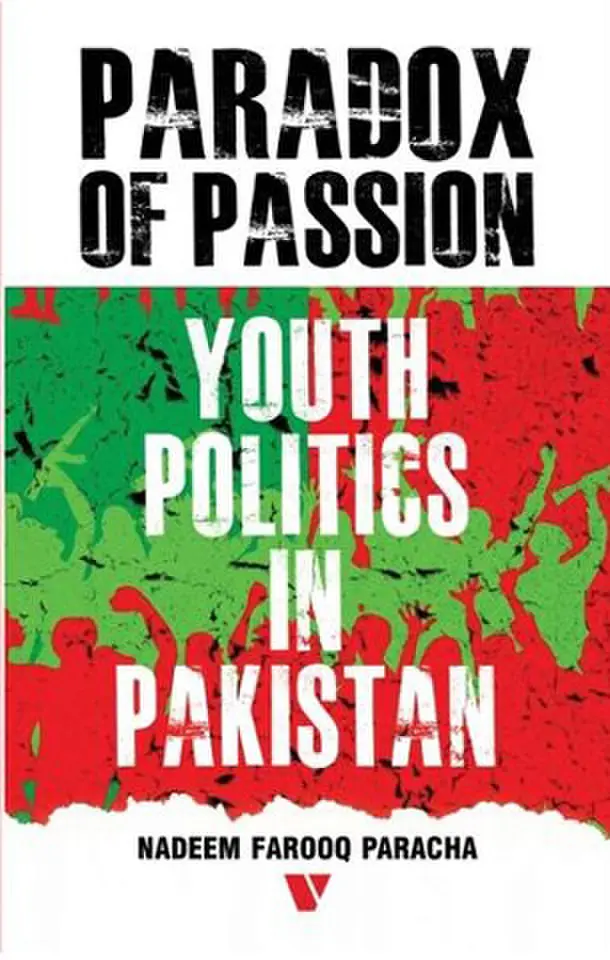
Paradox of Passion: Youth Politics in Pakistan
By Nadeem Farooq Paracha
Vanguard Books
ISBN: 9789694027456
194pp.
In November 1968, police opened fire on a demonstration in Rawalpindi, killing a young student named Abdul Hamid. What began as a local confrontation soon morphed into a nationwide uprising. Student organisations mobilised workers, trade unions and opposition parties, helping unleash the political forces that brought down Gen Ayub Khan’s dictatorship in March 1969.
Nine years later, student activists were again at the forefront of an anti-government movement. In 1977, their target was the increasingly authoritarian regime of Zulfikar Ali Bhutto, whose own political ascent was driven by student protests against Ayub. Whereas left-wing groups had led the earlier uprising, Islamist activists provided much of the street-muscle propelling the mobilisation against Bhutto.
These episodes illustrate the historical influence and ideological volatility of student politics in Pakistan. They also provide a compelling foundation for Nadeem Farooq Paracha’s ambitious and engaging Paradox of Passion: Youth Politics in Pakistan.
Paracha, a prolific journalist and author, and — in my view — the foremost chronicler of Pakistan’s political, social and cultural life, offers a lively, wide-ranging account of the country’s youth politics. Beginning with the student groups who fought in the struggle for Pakistan before Partition, he traces their successors through the sprawling protests, pitched battles and political upheavals of independent Pakistan up to the early 2020s. Throughout, he embeds Pakistan’s experience in a global context.
Nadeem Farooq Paracha’s engaging new book takes a look at various youth-led political movements in Pakistan and attempts to situate them within a global context as well as explain how they morphed over time
The book’s title invites an important question: what, precisely, is the paradox of passion? Paracha never provides an explicit answer, but one emerges from the stimulating narrative. The ideological fervour that makes student movements powerful forces for change can also produce their fragmentation and destruction, as idealism is eclipsed by intolerance, factionalism and vicious fighting. Meanwhile, established politicians exploit student enthusiasm, only to marginalise or suppress their youthful allies once in power.
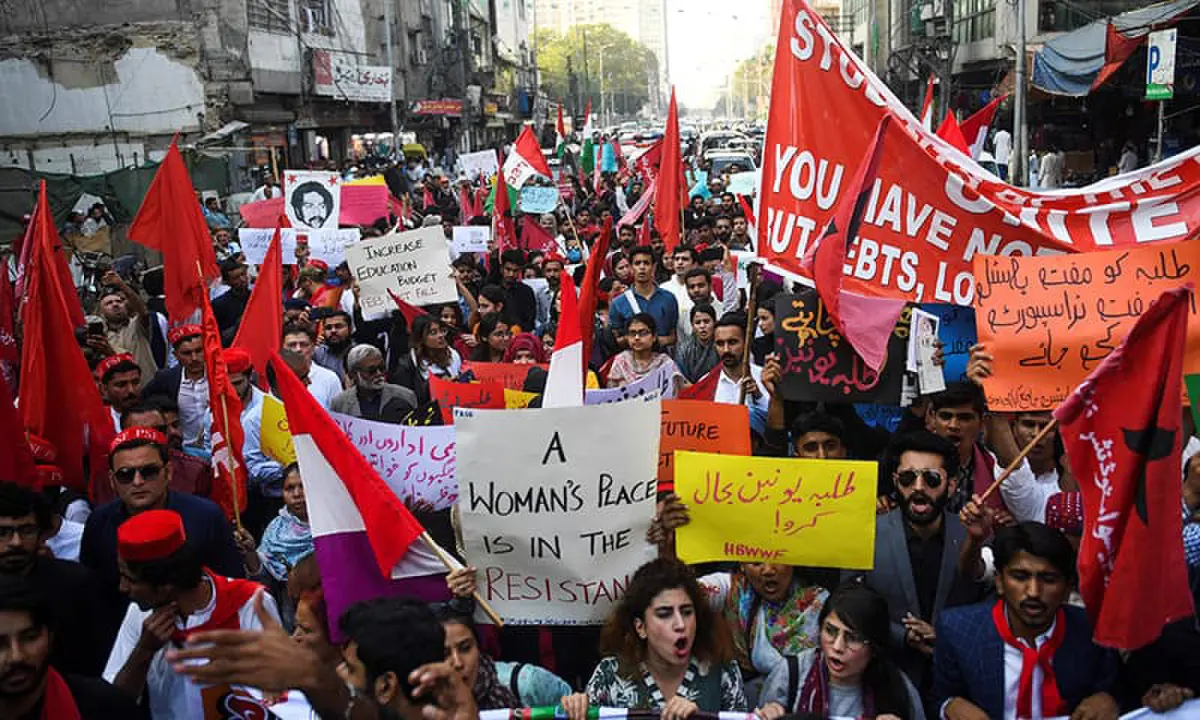
Nowhere are these contradictions more apparent than in Paracha’s treatment of the 1960s, 1970s and early 1980s, arguably the strongest sections of a very strong book. He shows how factions of the left-wing National Students Federation (NSF) helped transform campus grievances into a broader-based challenge to Ayub’s rule. Students forged alliances with industrial and railway workers, transport unions and peasants.
In East Pakistan, student activism meshed with Bengali nationalism and increasingly vocal demands for provincial autonomy. Paracha situates these events alongside the international wave of student unrest in 1968, including the Paris riots and the anti-war and civil rights demonstrations in the United States.
By the mid-1970s, the ideological balance on Pakistani campuses had shifted. Bhutto, once a left-wing populist, had alienated progressive supporters, sidelined prominent leftists, and begun to curb campus radicalism. The Islami Jamiat-i-Talaba (IJT), affiliated with the Jamaat-i-Islami, expanded its influence, often outmanoeuvring fragmented left-wing rivals.
Paracha notes that, by 1977, Bhutto had a “deep-seated suspicion of campus politics, viewing student factions as inherently volatile and highly mutable political actors.” The author is at his sociological best when discussing the “mercurial” nature of student politics, “which operates within a paradigm that seeks ideological purism over pragmatic compromise… attempts at cross-factional negotiation or administrative compromise are frequently vilified as capitulation by the more dogmatic factions.”
Following Pakistan’s bitterly disputed 1977 elections in March, IJT activists fanned out to mobilise the widespread agitation that ultimately led to Gen Ziaul Haq’s coup in July. The contrast with the anti-Ayub protests of 1969 is striking: within a decade, the leadership and ideological composition of a second mass uprising had shifted dramatically from the progressive left toward the religious right. Paracha deftly narrates that trend, including Bhutto’s fateful contribution to the weakening of his former allies.
The account becomes still more compelling during the early Zia years, when campuses turned into literal battlegrounds between Islamist, leftist and ethno-nationalist organisations. The Cold War was front and centre in this development. Following the Soviet invasion of Afghanistan in December 1979, Zia embraced with alacrity the Afghan mujahideen cause, a policy eagerly endorsed by the United States, Saudi Arabia and other countries.
In turn, the Afghan insurgency gave rise to the “Kalashnikov culture” that would plague Pakistani society for decades. As automatic weaponry proliferated, campus clashes escalated and combatants were killed. While student radicalism was ebbing in much of the West, Pakistan’s universities remained intensely politicised. Zia’s 1984 ban on student unions only reduced participatory options without ending violent activism.
Here Paracha contributes something especially valuable: his own experience. As a student activist at St Patrick’s Government College in Karachi, he organised against the IJT, contested student elections, and fought against Zia’s security apparatus. In one memorable episode, he recounts being badly beaten and detained by police during protests against the restrictions on student unions. His recollections, rendered without sentimentality, capture the camaraderie, convictions, bravado and bitter rivalries of campus politics.
These passages give the book its red blood. Paracha came of age in the political culture he describes, and his testimony conveys the brutal realities of student activism that can otherwise disappear in an alphabet soup of groups, names and acronyms. Importantly, he does not always portray himself in a flattering light.
As political rivalries turned increasingly lethal toward the end of the 1980s, Paracha found himself carrying a handgun for protection. His father warned that he risked becoming a “man of the gun. Such men do not survive long.” Paracha eventually abandoned student politics and took up journalism. It is a moving illustration of the book’s central paradox: youthful idealism can become entangled in the violence and intolerance it once opposed. The author’s personal testament gives this part of the narrative pronounced immediacy and credibility.
The book loses some of its bite in the later chapters, which offer a higher-altitude survey of youth politics from the 1990s through the early 2020s. Paracha traces the retreat of traditional campus organisations amid the end of the Cold War, the rise of market-oriented individualism, and new forms of mobilisation, from anti-globalisation protests to the digitally networked single-issue activism of the 21st century.
Somewhat less convincing is his effort to explain these developments through the familiar generational lenses of Baby Boomers, Gen X, Millennials and Gen Z. Here, I confess a bias against such labels. After 35 years teaching university students across these “generations”, I have come to regard our pop-sociology classifications as stereotypes that consign disparate populations to bundles of fashionable, often pejorative, clichés.
Paracha is more persuasive when casting his sharp, incisive and critical eye over social institutions, ideological commitments, state power, and political behaviour. Indeed, his earlier chapters demonstrate the remarkable diversity — and ferocious disagreements — among young people within the same age cohorts. The international comparisons in later chapters are sometimes too sweeping, their generalisations outrunning the evidence.
That said, the ambition behind these chapters deserves credit. Paracha explains not only what happened to Pakistani student politics, but why its organisational structures and methods changed, and how those changes relate to wider transformations in Pakistan’s troubled political life.
Paradox of Passion is a serious, substantial and engrossing contribution to Pakistan’s political, social and cultural history. It restores student activists to their rightful place in the story of governments, parties and ideologies, while demonstrating that the heated struggles on Pakistan’s campuses have always been shaped by forces extending well beyond its borders.
Pakistan’s universities and colleges were never mere educational institutions. They were also arenas in which the country’s most momentous political battles were fought. Understanding those struggles is vital to understanding Pakistan itself.
Paracha’s Paradox of Passion combines the historian’s keen eye with the vivid memories of a participant “in the arena”, one who has gained critical distance from his youthful convictions without entirely losing sympathy for them.
The reviewer is Professor of Political Science at the University of Maryland, Baltimore County in the US
Published in Dawn, Books & Authors, November 8th, 2026