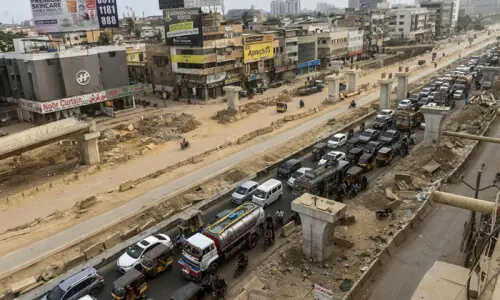
THE federal cabinet’s zoning directive has the potential to be the most consequential decision in the redefinition of urban housing in Pakistan, provided the provinces also implement it. For decades, our haphazard urban expansion has followed a costly pattern. Housing societies have spread across farmland on the edges of cities more as investment opportunities than to meet actual housing demand. The result: an uncontrolled sprawl without a corresponding reduction in the housing deficit. This model has diverted capital into land banking while consuming farmland around cities and pushing food inflation. For a country facing food insecurity, water stress and climate vulnerability, treating fertile land as an inexhaustible urban reserve makes no economic sense. If enforced, the decision to link the national housing policy with zoning compliance and vertical construction could prove a departure from the existing land-intensive model that has so far shaped our cities.
The logic is simple. Horizontal expansion consumes new land for every additional tranche of housing. Vertical development can accommodate several times as many families on the same footprint while preserving farmland. But vertical construction needs enforceable zoning, density standards, building and energy-efficiency codes, and adequate infrastructure. Unless the provinces enforce these rules and provide proper services, the federal housing policy will remain largely advisory. The deficit is estimated at more than 10m units, while population growth and urbanisation need close to another million annually. We cannot meet that requirement by pushing housing societies into the countryside. We need to build more homes on less land. However, supply is only half the problem. The other is affordability. The government should connect zoning, vertical construction and mortgage affordability into a single housing strategy. The aim should not be to build more housing societies, but more homes in the right places and at affordable prices, while protecting the land on which our food security depends.
Published in Dawn, August 12th, 2026