KARACHI: Reviewing wheat stocks across the province, Chief Secretary (CS) Asif Hyder Shah on Saturday directed commissioners and deputy commissioners to continue an indiscriminate crackdown against wheat hoarders, stating that no one would be allowed to exploit the prevailing situation by creating an artificial shortage of wheat.
Chairing a high-level meeting to review wheat stocks and monsoon preparedness, he specifically instructed district administrations to intensify action against major wheat hoarders and directed commissioners to maintain continuous pressure until all illegally stored wheat was recovered.
The chief secretary further ordered the authorities to prepare lists of officials from the district administration, food department, police and revenue department found colluding with hoarders, warning that no official involved would be spared.
He directed the food department to immediately devise a comprehensive mechanism for the prompt lifting and movement of confiscated wheat stocks to ensure their timely disposal.
The department was instructed to submit a summary to the Sindh cabinet for approval of the proposed mechanism and complete all procedural requirements on a priority basis.
CS says no one will be allowed to create artificial shortage of wheat; reviews monsoon preparedness
Monsoon preparedness
The chief secretary issued strict directives to all commissioners and DCs across the province to ensure complete preparedness ahead of the monsoon spell, directing that there should be no lapse in administrative response and that the public must witness an active government presence in every district.
He directed all DCs to immediately convene meetings of District Coordination Committees and prepare comprehensive district-specific contingency plans in consultation with all relevant departments.
He directed that Provincial Disaster Management Authority (PDMA) and District Control Rooms be activated immediately, while 24-hour situation reports must be submitted every morning throughout the monsoon season for continuous monitoring.
He emphasised that contingency plans must include identification of relief camp sites, availability of rescue boats, dewatering pumps, bowsers, generators and other emergency machinery, resource mapping, arrangements for food and drinking water and adequate stocks of medicines for both health and livestock departments.
Special instructions were issued to engage vulnerable communities living inside protective bunds and to ensure uninterrupted medical and veterinary services by establishing health and livestock camps equipped with medicines, vaccines and emergency response teams.
The chief secretary instructed all municipal authorities to remove bottlenecks, complete cleaning of storm water drains and ensure uninterrupted drainage arrangements before the onset of heavy rains.
He stressed that all officers and field staff must remain present in their respective areas so that citizens could visibly see the administration responding on the ground. He also directed that station leave for officers and staff of all essential services should be discouraged during the emergency period.
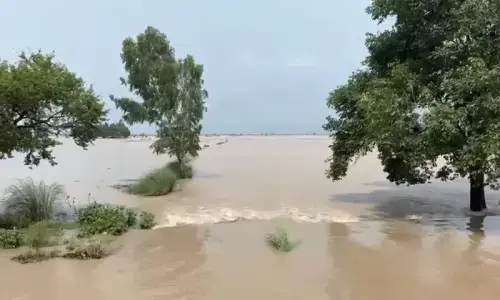
The irrigation secretary informed the meeting that river conditions are being monitored round the clock, rainfall in Punjab and Balochistan is under constant observation, and approximately 350,000 cusecs of water is expected at Guddu Barrage. All vulnerable points along the Indus River are being inspected and strengthened before peak flows, he said.
Published in Dawn, July 26th, 2026