PM says US, Iran have signed deal electronically; Iran to 'instantly' reopen Hormuz, US to 'immediately' lift blockade
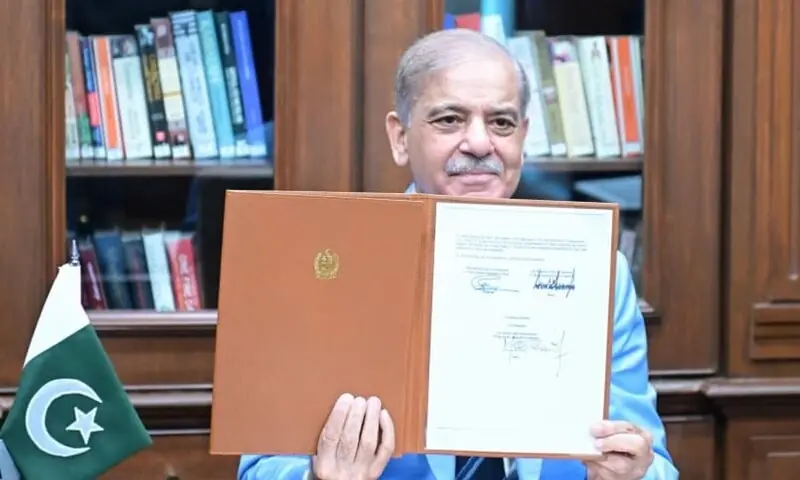


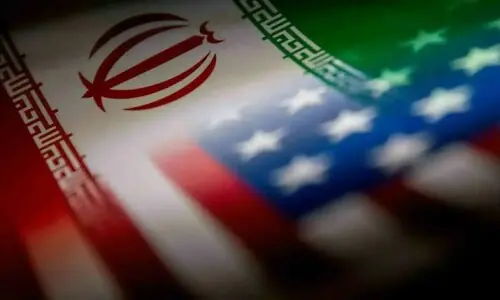
Prime Minister Shehbaz Sharif said early on Thursday that the ‘Islamabad Memorandum of Understanding’ (MoU) between the United States and Iran had been signed electronically by both sides.
“The memorandum has been signed by honourable presidents of both the countries and also endorsed by me as the mediator. The signing of this agreement at the highest level of the respective governments demonstrates the commitment of both sides to a diplomatic resolution of the conflict,” he said in a post on the social media platform X.
He added that the MoU shall “enter into force with immediate effect and as a first step, Islamic Republic of Iran will instantly reopen the Strait of Hormuz and the United States of America will immediately lift the naval blockade”.
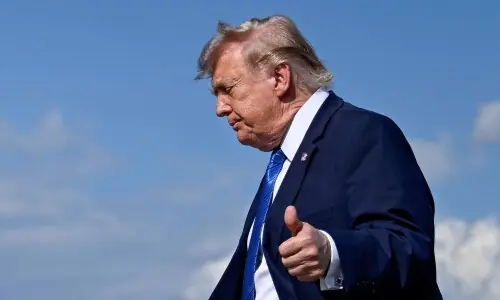
US President Donald Trump put his signature to the memorandum of understanding during a candlelit dinner at the Palace of Versailles following a G7 summit, as host French President Emmanuel Macron and other guests applauded, a video posted by a Trump aide showed.
“Just signed it,” Trump told reporters as he emerged from the palace.
Meanwhile, Iranian Foreign Ministry spokesman Esmaeil Baqaei, quoted by the state news agency IRNA, said the document “was finalised with the signatures of the presidents”.
Later, the Prime Minister’s Office posted on X a video of PM Shehbaz also signing the MoU as a “mediator”.
PM Shehbaz’s post on X initially stated that Pakistan, with the support of Qatar, would host the official ceremony as scheduled on June 19 in Switzerland, to “commemorate this landmark event and commence with the technical level talks”.
However, this was later removed while Iranian foreign ministry spokesperson Esmaeil Baghaei told IRIB’s ‘News Network’ that, because the two presidents had already digitally signed the agreement, “No signing ceremony will be held in Switzerland”.
The Swiss government said on Thursday that initial talks between the US and Iran were planned at the Buergenstock mountaintop resort.
‘Peace only path to progress’
In his post on X, PM Shehbaz offered his congratulations to Trump, saying his “steadfast commitment to diplomacy and preference for peaceful resolution have once again helped end a conflict that could have led to devastating consequences for the region and beyond”.
He also commended the dedication and efforts of the US team, including Vice President JD Vance, special envoys Steve Witkoff and Jared Kushner for their “invaluable contributions to this achievement”.
PM Shehbaz also expressed his respect and appreciation for Iran’s Supreme Leader Ayatollah Mojtaba Khamenei and Iranian President Masoud Pezeshkian for their “wisdom, foresight and statesmanship in embracing the cause of peace”.
“I also wish to recognise the efforts of the Iranian negotiating team, including Mohammad Bagher Ghalibaf, Abbas Araghchi and Eskandar Momeni, whose patience, perseverance and commitment to constructive engagement were instrumental in bringing this agreement to fruition,” he added.
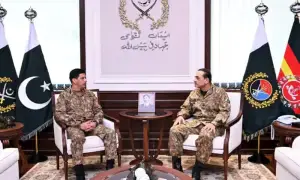
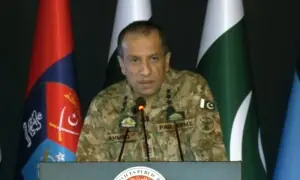
PM Shehbaz also acknowledged the efforts and engagement of Qatar, Saudi Arabia, Turkiye and Egypt. He also made special mention of Chief of Defence Forces (CDF) and Chief of Army Staff Field Marshal Asim Munir, saying his “tireless efforts, selfless dedication and instrumental role were critical in facilitating this breakthrough and advancing the cause of peace and regional stability”.
“May this MoU serve as an enduring foundation for greater understanding, mutual respect and shared prosperity for the complete region,” he said.
Separately, President Asif Ali Zardari warmly welcomed the signing of the MoU, describing it as an historic moment for the region and the world, according to a statement issued by the President’s Secretariat.
“In his message, the president said that the conflict which began in February 2026 inflicted immense suffering upon the peoples of the region and caused severe disruption to global energy supplies, trade and economic stability.
“He expressed hope that such a tragedy would never be repeated and that the nations of the region would now devote their energies to development, prosperity and the well-being of their peoples,” the statement said.
Zardari paid tribute to PM Shehbaz, Deputy Prime Minister and Foreign Minister Ishaq Dar, CDF Munir and Minister for Interior Mohsin Naqvi for their “tireless diplomatic efforts that contributed significantly to bringing the parties to an agreement”.
“He noted that Pakistan had played a principled, balanced and constructive role throughout the crisis, consistently calling for dialogue, restraint and a peaceful resolution of disputes while maintaining engagement with all parties concerned,” the statement said.
Zardari also appreciated the leadership of Trump, the Iranian supreme leader, the Iranian president and Iranian Foreign Minister Abbas Araghchi for “ensuring a diplomatic resolution of the conflict and advancing the cause of peace”.
He also acknowledged the support of brotherly nations, including Qatar, Saudi Arabia, Türkiye and Egypt, as well as Russia and China, whose “efforts and encouragement of dialogue contributed to the pursuit of peace”.
He called upon all parties to implement the MoU fully and expedite efforts to reach the final agreement within the stipulated timeframe to ensure lasting peace and progress. He expressed the hope that this MoU would serve as the foundation for a durable and comprehensive peace in the region, enabling nations to focus on economic development, energy cooperation and the advancement of their peoples.
“War brings nothing but destruction and misery. Peace is the only path to progress,” the president was quoted as saying.
“Pakistan will continue to stand in solidarity with all brotherly nations of the region in their collective journey towards peace and prosperity,” he said.
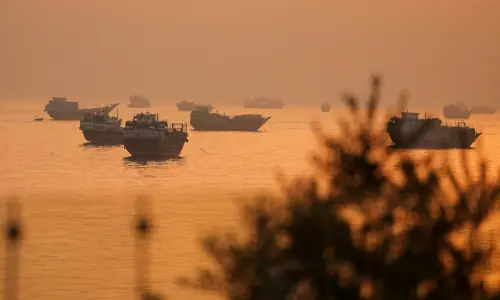
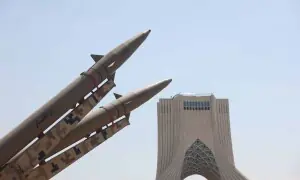
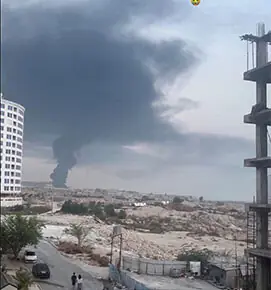
The deal aims to draw a line under the war launched February 28 by the United States and Israel, prompting Iran to counterattack with missile and drone salvos across the region — and effectively shutting down the Strait of Hormuz, a crucial waterway for the world economy. The US responded by blocking shipping to and from Iranian ports.
Under the text of the deal, Washington also commits to immediately waive oil sanctions crippling Iran’s economy.
And once a final agreement is reached on the Islamic republic’s nuclear programme, the US will also facilitate the release of a $300 billion reconstruction fund supported by regional nations, the deal says.
Under the deal released by US officials, Iran will dilute its enriched uranium stocks, possibly by “down-blending on site under the supervision of the IAEA” — the UN’s nuclear watchdog.
Additional input from AFP and Reuters