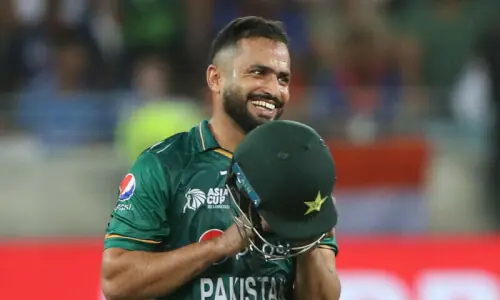
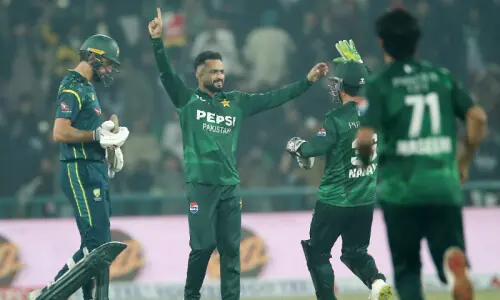
All-rounder Mohammad Nawaz sanctioned for breaching ICC's anti-doping code
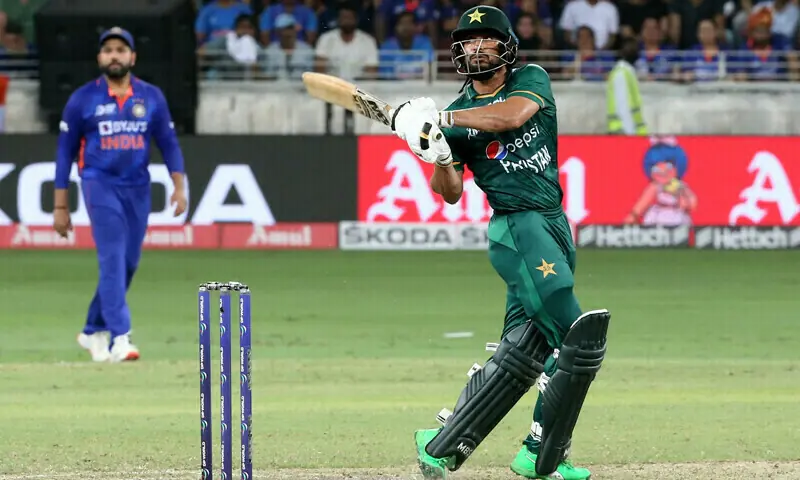
All-rounder Mohammad Nawaz has been sanctioned by the International Cricket Council (ICC) after testing positive for a cannabis-related substance, the cricket governing body said on Friday.
In April, the Pakistan Cricket Board (PCB) had sent the player’s medical history to the ICC after it was reported that he failed a dope test conducted during the T20 World Cup staged in Sri Lanka and India.
In a press release issued on Friday, the ICC said that the 32-year-old cricketer had tested positive for Carboxy-THC — a metabolite of THC, the psychoactive component in cannabis — after a doping test carried out after Pakistan’s T20 World Cup 2026 match against the Netherlands in Colombo on Feb 7.
Carboxy-THC is classified as a Substance of Abuse under the ICC’s Anti-Doping Code.
“Nawaz admitted to the offence and demonstrated that the substance had been used out-of-competition, in a manner unrelated to sport performance,” it said.
The ICC handed the player a “three-month period of ineligibility” but noted that this was backdated to May 1 as Nawaz began a voluntary provisional suspension on that date.
Additionally, he committed to a substance abuse rehabilitation programme, the completion of which reduced the period of ineligibility to one month, it said.
Having accepted the sanction and committed to the rehabilitation programme, the player’s provisional suspension has been lifted after having been served for two-and-a-half months, the ICC added.
“Subject to Nawaz completing a substance abuse treatment programme to the ICC’s satisfaction, Nawaz will not be required to serve any further period of ineligibility,” it said.
However, in line with the anti-doping code, his records from the Netherlands match — and subsequent matches until May 1 — have been disqualified.
In the past, two pacers — Shoaib Akhtar and Mohammad Asif — had faced two- and one-year bans, respectively, after failing drug tests prior to their participation in the ICC Champions Trophy in 2006.
Former Test spinner Yasir Shah had also received a three-month ban for failing a dope test in 2015.
Additional input from Reuters