Talks continue as protest over Ziarat attack enters fifth day
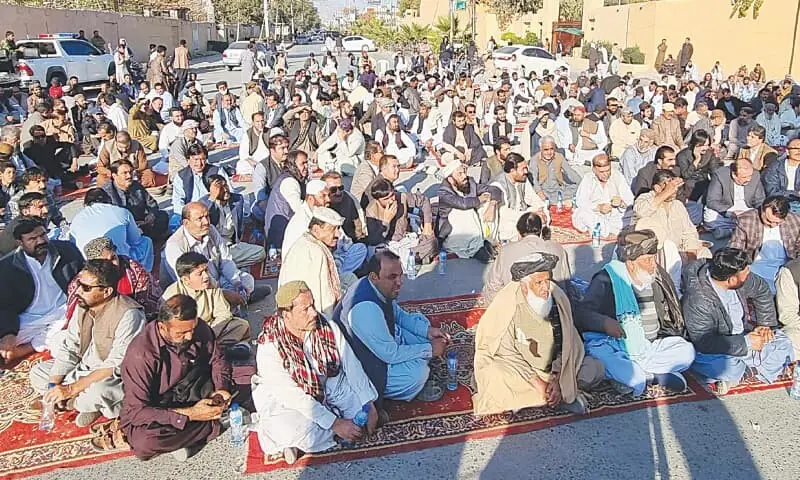
QUETTA: Negotiations between a government committee and representatives of the families of police personnel martyred in the Ziarat terrorist attack continued on Monday at a sit-in protest camp, which resumed after a one-day gap.
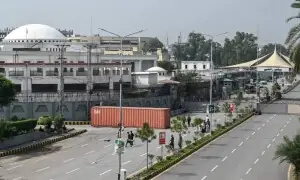
The sit-in protest at Koila Phatak entered its fifth day. The families of the martyred police personnel and camp organisers remained seated with the seven bodies of the officers, refusing to bury them until all their demands are accepted. Family members demanded justice for the victims of terrorism.
Their demands include establishing an independent and empowered judicial commission to investigate the Ziarat terrorist attack.
They are also demanding the elimination of terrorist groups from Ziarat, Harnai, Hanna Urak, Shaban, Zarghoon and other affected areas, as well as the restoration of the Levies Force.
The government team held talks with representatives of the All Parties Alliance and the victims’ families. Negotiations remained underway late into the night. Throughout the day, political party leaders, civil society members and tribal elders visited the sit-in camp.
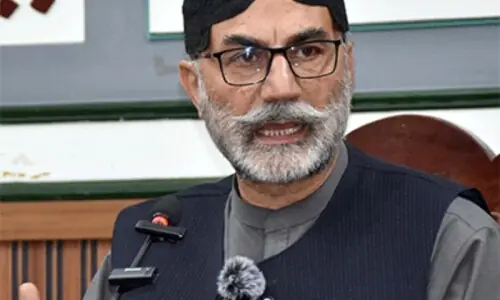
Senior politician and former Senator Nawabzada Lashkari Raisani addressed the protesters, calling for a grand jirga to address Balochistan’s political and security challenges. He alleged that recent bloodshed in Pashtun areas is linked to land acquisition and resource policies under the Mines and Minerals Act and the Defence Housing Authority Act. He said the latest incidents are part of a continuing cycle of violence spanning seven decades.
Mr Raisani argued that the DHA Act would displace local tribes around Quetta, intending to settle outsiders who could later hold key offices. He also criticised the Mines and Minerals Act for potentially stripping Balochistan’s people of control over their natural resources.
Stressing that there is no division between the Baloch and Pashtun communities, he condemned attempts to create ethnic divisions. He said that he and ex-CM Nawab Raisani are prepared to convene a large jirga to discuss Balochistan’s future.
Published in Dawn, July 14th, 2026