Computing power boosts manufacturing


 0
0
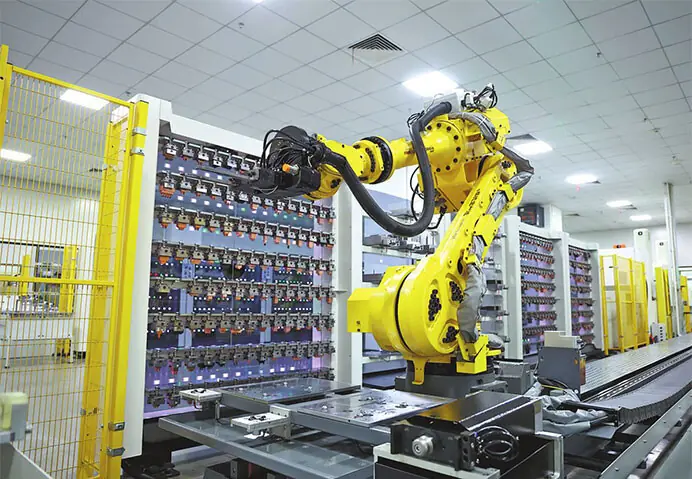

GUANGZHOU: In a production hall in Huizhou, Guangdong province, rows of television sets move along an automated assembly line. At one workstation, a robotic system connects signal and interface ports on each unit, a task that was once a manual operation.
Powered by 3D vision and artificial intelligence, the system has helped TCL — one of China’s leading consumer electronics makers — achieve a product pass rate of 99.8 percent since it was introduced last year, said Lei Dengsi, a senior engineer with TCL Industry.
The scene reflects a broader transformation taking place across China’s manufacturing sector, which is moving beyond traditional advantages of scale and labor, and using computing power, data and artificial intelligence to build smarter and more flexible factories. At TCL, this shift has progressed from automation to digitalisation and now to intelligent manufacturing.
“In the past, production management relied heavily on workers’ experience and fragmented systems, which made it difficult to respond quickly to problems,” said Chen Zhanyuan, deputy general manager of TCL Industry’s smart display business unit.
With intelligent manufacturing systems, factories are becoming more connected, data-driven and flexible, Chen said. China has been the world’s largest manufacturing country for 16 consecutive years.
With traditional manufacturing still making up much of its industrial base, the transition toward smart manufacturing has become a key step in the country’s industrial upgrading.
Published in Dawn, July 13th, 2026