0
0


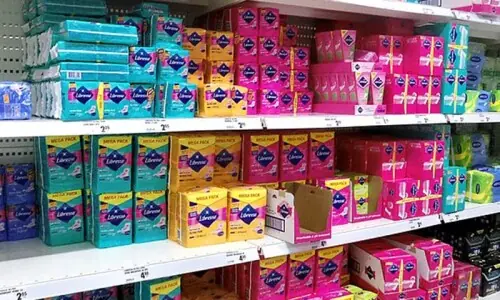
THE TV was on in the background when the finance minister delivered his budget speech. The usual noise: opposition members on their feet, slogans, desk-thumping. I wasn’t listening. Then two words cut through it: ‘sanitary pads’. I put down what I was doing; the government was removing the tax on sanitary products.
The finance minister had said ‘sanitary pads’ on the floor of the National Assembly, on live television, with the ease of a man reading out grain prices. The information minister then hailed the decision.
I thought immediately of my late editor, Tahir Mirza. In 2024, I wrote in this space about the complaints we received when a sanitary pad advertisement ran on the back page of a mid-week magazine I edited at this paper. Readers had written in. Colleagues had raised eyebrows. Mirza sahib took the calls in his stride. People need time to accept change, he said.
The noise in the Assembly hasn’t changed. The comfort with which those two words were said has.
The change did not come from government enlightenment. It was dragged in. In February, a colleague interviewed Mahnoor Omer, the young lawyer who took the government to court over the tax in September last year. She called Omer inspiring. Time Magazine thought so too when they named her one of their women of the year. She led an incredible awareness campaign.
Two decades ago, the fight was an advertisement on the back page of a magazine. Now it is a petition in the Lahore High Court. The battlefield moved from the newsroom to the courtroom, and it won. Mirza sahib had said people need time to accept change. The time, it turns out, was two decades.
The tax is gone but the shame at the counter remains.
But watch what happens at the counter. The tax is gone, and still the shopkeeper reaches for the brown paper bag the moment a woman picks up a packet of pads. Some stores keep the bags stacked beside the shelf, ready, so the wrapping can be done quickly. As if the transaction itself must be shortened. As if shame has a duration, and the kindest thing anyone can do is reduce it.
The finance minister can say the word in parliament. The object still cannot be seen crossing a counter. That is the distance between a word winning and a woman winning. And even this is the story of the woman who reached the counter at all.
So, what did the victory buy?
Here the numbers turn cold. A 2024 study by Unicef and WaterAid found that only 12 per cent of women and girls in Pakistan use commercially produced pads. The rest manage with cloth and improvised materials, many without clean water or a private toilet.
For the woman who was never at the counter, the tax cut changes nothing. You cannot discount your way to a customer who could not enter the shop.
Even for the women who can, the arithmetic is unfinished. The 18pc sales tax was removed, and the government also announced the removal of customs duty on imported sanitary pads. However, concerns remain about duties on some imported raw materials used by local manufacturers, which could continue to affect prices. Campaigners call the exemption a drop in the ocean.
And there is a warning from elsewhere: when Malawi scrapped its taxes on menstrual products, shelf prices did not move. The saving vanished somewhere between the treasury and the counter.
It has been a week since our exemption took effect. I’ll be checking whether the price of a packet has dropped by 18pc. Because, to reiterate: the brown paper bag is still at the checkout. The shopkeeper still reaches for it unasked. The shame still has its little rituals, and no budget line abolishes those.
And something else has not changed: the silence. The same speech that removed the tax on sanitary pads removed it on contraceptives. Almost no one has mentioned it. There were no celebrations, no headlines, no interviews. Perhaps because contraception has not yet found its Mahnoor Omer.
Consider what the airwaves tell us. Pemra allows ads confined to hours when few are watching, in language so carefully policed it can barely say what it is selling. No brand wants to build a campaign that can be taken off air by a complaint.
So, the provinces run their gentle messages about family planning and child spacing, and the products themselves go unnamed. This is how silence works in Pakistan. The word is allowed, technically, somewhere, after hours, in terms vague enough to offend no one and inform no one.
Sanitary pads escaped that fate because someone said the word plainly, again and again, until a finance minister could say it too. Contraception is still waiting for someone to say it against the noise.
The writer runs writing workshops in Karachi.
X: @LedeingLady
Published in Dawn, July 12th, 2026